By Bhagyashree Panghanti, Assistant Projects Officer of MHM
Menstruation is a natural part of a woman’s life. Every month, women experience periods for about four to seven days. During this time, many women face stomach pain, back pain, tiredness, mood changes, and discomfort. Some also suffer from health conditions such as PCOS, PCOD, anaemia, and severe menstrual pain. These are real health issues and should be taken seriously.
Menstrual Hygiene Management (MHM) is not only about cleanliness. It is also about health, dignity, education, and equality. Even today, menstruation is often treated as a private women’s issue, and many men stay away from the topic. This thinking needs to change. When girls miss school or women suffer from poor health, families and communities are affected too.
“Menstrual health is not just a women’s issue — it is a domain of social justice and human rights in which men’s active participation is indispensable.” — UNICEF, 2021
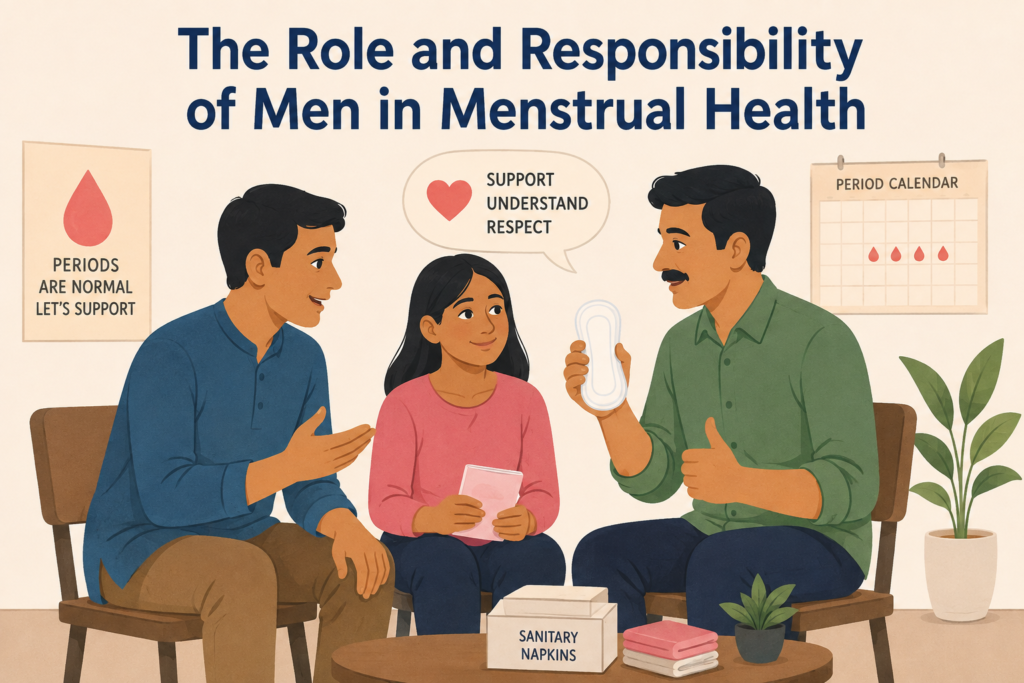
AI-generated image for illustrative purposes
PCOS, PCOD, and Other Health Conditions
Menstrual health includes several medical conditions. According to ICMR, around 20% of women of reproductive age in India are affected by PCOS. This condition can cause irregular periods, weight gain, hair loss, and difficulty in becoming pregnant. Other conditions such as Endometriosis, Fibroids, PMDD, anaemia, and thyroid disorders also affect women’s health. NFHS-5 reports that 57% of women in India are anaemic. More than 40 million women in India live with thyroid-related conditions. Men can support women by understanding these problems, encouraging treatment, and helping them access healthcare.
“PCOS is not only a menstrual disorder — it is a long-term condition linked to cardiovascular disease, diabetes, and mental health. Timely treatment and family support are equally essential.” — World Health Organization (WHO)
Social Realities and Challenges
Many girls and women face difficulties in managing menstruation safely. In urban slums, families often live in small houses with limited privacy, poor toilets, and water shortages. In rural areas, myths, lack of information, and poor facilities create additional challenges. WaterAid India reports that more than 30 million girls miss school because of poor sanitation facilities. Many families also struggle to afford sanitary products, forcing women to use unsafe alternatives.
“71% of girls in India have no knowledge of menstruation before it begins — bridging this information gap is not only the teacher’s responsibility; it is also the responsibility of men at home.” — UNICEF India, 2020
The Role of Men: From Home to Society
Men can make a big difference in supporting menstrual health. Fathers can talk openly about menstruation, husbands can share household work, and brothers can treat their sisters with respect and understanding. Men can help by buying sanitary products, supporting medical treatment, helping with household tasks, and making sure women get enough rest. Listening with care and showing empathy can also improve women’s emotional well-being.
“Men’s active participation in domestic work is not merely help — it is a fundamental pillar of gender equality, with a direct and positive impact on women’s physical and mental health.” — UN Women, 2022
Environmental Responsibility
India throws away nearly 12 billion disposable sanitary pads every year. Many of these contain plastic and take hundreds of years to break down. Men can support the use of eco-friendly options such as biodegradable pads, reusable cloth pads, and menstrual cups. They can also help improve safe waste disposal in communities.
Breaking Myths and Creating Change
Many myths about menstruation still exist. Some people believe that menstruating women are impure or should not take part in normal daily activities. These beliefs have no scientific basis and can harm women’s confidence, health, and opportunities. Every man can help bring change by learning the facts, speaking openly, and treating menstruation with respect. Whether as a father, brother, teacher, employer, or community leader, men have an important role in creating a supportive environment.
“When men speak openly about menstrual health, the mental wellbeing of women in the family improves significantly, and the use of health services increases.” — Journal of Global Health, 2019
CYDA’s Approach
CYDA believes that menstrual health is everyone’s responsibility. Through awareness sessions in schools and communities, CYDA involves boys, fathers, male community members, and local leaders in discussions on menstrual health, PCOS, PCOD, and related issues. This helps build understanding and shared responsibility.
Conclusion
Menstrual health is not only a women’s issue. Men can support women by sharing responsibilities, providing emotional support, helping with healthcare, challenging myths, and promoting dignity and equality. When men become active partners in menstrual health, families become stronger, girls stay in school, women stay healthier, and communities become more equal.
Menstruation is a natural process, and supporting menstrual health is everyone’s responsibility. Real change begins at home
