
Peace Series-6
By ImpactLens Correspondent
Today, we are witnessing increasing levels of violence in different forms, including interpersonal conflicts, emotional violence, and structural violence that affects communities every day. Addressing these challenges requires collective action, greater awareness, and a commitment to building a culture of peace.
With this objective, CYDA participated in a two day Residential Peace Camp organized by the National Peace Committee, Jalgaon. The camp provided an opportunity to learn about peace building approaches and explore ways to strengthen and expand such initiatives within communities. Through these efforts, it aims to inspire young people to become active advocates of peace and contribute towards creating a more harmonious, inclusive, and nonviolent society.
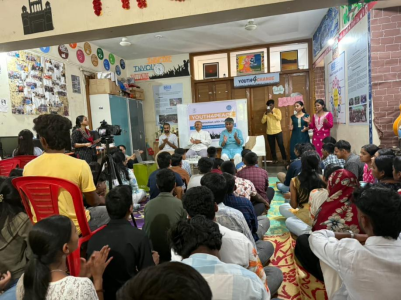
Recognizing that a peaceful society needs leaders who can promote peace and positive change, a session titled “Empowering Youth to Become Peacebuilders of Tomorrow” was organized in Youth Resource center, Yerawada, Pune. The session featured Mr Rajagopal P. V., a renowned Gandhian activist and founder of Ekta Parishad, who shared his thoughts and experiences on peace and social change. The programme was also attended by Mr Yogesh Mathuria, popularly known as Viswamitra, who has travelled across many countries on foot to promote peace, and Mr. Pravin Jadhav, Executive Director of CYDA. Together, they shared their experiences and insights on nonviolence, leadership, and the role of youth in building a peaceful society.
While addressing the youth, Mr. Rajagopal P.V. appreciated them for coming together at CYDA and participating in the leadership training programme to understand the concept of nonviolence. He stated that this itself is a very important step towards building a peaceful society.
A powerful message shared during the interaction was the importance of learning to resolve problems through dialogue rather than violence. According to him, individuals take on different roles throughout their personal, professional, and social lives, and conflicts are inevitable. However, the way conflicts are addressed determines the outcome. Solutions achieved through violence are often temporary because they suppress the problem instead of addressing its root cause. Lasting solutions can only emerge through dialogue, understanding, and communication. Developing these skills, he said, is essential for practising nonviolence and building peaceful relationships and communities.
Key Learnings from the Session
The session provided valuable insights into the importance of nonviolence, ethical leadership, and peaceful conflict resolution. Drawing from everyday experiences and social realities, Mr. Rajagopal highlighted how violence is often normalized in society and emphasized the need to nurture dialogue, compassion, and understanding from an early age. The following were the key learnings shared during the session:
1. Violence is Often Normalized from Childhood
The discussion highlighted how children are exposed to violence from an early age through toys, games, films, and social media. Toy guns and violent games often present hurting or killing as exciting and entertaining. Such influences gradually reduce sensitivity, compassion, and concern for others. Young people were encouraged to question and challenge these influences that normalize violence in society.
2. Social Media Can Influence Attitudes and Behaviour
Attention was drawn to the large amount of content on social media that promotes violence, kidnapping, crime, and aggression. While positive content is available, much of the material consumed by young people can negatively shape attitudes and behaviour. Youth were encouraged to use social media as a tool for learning, awareness, and positive change rather than being influenced by content that glorifies violence.
3. Entertainment Often Glorifies Violence
The role of films and other forms of entertainment in promoting violence was also discussed. Violence is frequently portrayed as an effective solution to problems, and many people consume such content without reflecting on its impact. Young people were urged to critically examine these messages and avoid accepting violence as a normal way of dealing with conflicts.
4. Bullying Begins at an Early Age
The issue of bullying in schools was identified as a major concern. Children often learn from an early age that those who have power can dominate those who are weaker. Bullying can be direct, involving physical assault, or indirect, involving verbal abuse, humiliation, and emotional harm. Such experiences can have serious consequences and may even discourage children from attending school.
5. Dialogue is More Powerful than Violence
A key message of the session was that dialogue is far more effective than force in resolving conflicts. Nonviolence, according to Mr. Rajagopal, means giving importance to communication, discussion, and mutual understanding. Strong dialogue and communication skills help people address disagreements peacefully, change perceptions, and find lasting solutions. In many situations, dialogue can achieve outcomes that violence and force cannot.
6. Nonviolent Conflict Resolution Should Be Learned Early
The importance of teaching children and young people peaceful ways of addressing disagreements from an early age was strongly emphasized. Values and skills developed during childhood often shape behaviour throughout life. When people learn to solve problems through dialogue and understanding, they are more likely to contribute to peaceful communities and societies.
7. Leadership Rooted in Values and Nonviolence
The session also explored the connection between leadership and nonviolence. Every individual has the potential to become a leader, just as a tiny seed has the potential to grow into a giant banyan tree. Leadership is not about power or authority but about guiding society in the right direction through values, responsibility, and service. Ethical leadership can inspire positive social change, and nonviolence forms its foundation. Violence grows when it is encouraged and promoted, just as a tree grows when watered. Similarly, nonviolence flourishes when kindness, compassion, respect, understanding, and positive relationships are nurtured in everyday life.
8. Peace Clubs Can Promote a Culture of Peace
As a practical step towards building a peaceful society, the idea of establishing Peace Clubs in schools was proposed. Similar to Environment Clubs, Peace Clubs can provide a platform for students to discuss issues, resolve conflicts through dialogue, and practise peaceful problem solving. Developing these skills is an important step towards promoting nonviolence and creating a culture of peace.
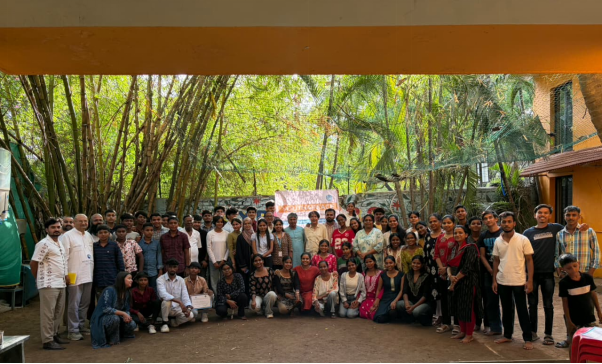
While sharing his experiences from the Peace Walk, Mr Yogesh Mathuria, popularly known as ViswaMitra, who has travelled across many countries to promote peace, encouraged the youth to spread the message of love, humanity, and friendship wherever they go. He urged them to continue their efforts with dedication and never give up on promoting peace and understanding among people.
Mr. Pravin Jadhav highlighted that the current social environment makes it important to prepare young change makers who can understand, discuss, and address social issues. Positive change begins when individuals adopt a constructive mindset and inspire others to do the same.
The session concluded with a strong commitment from the youth to promote peace and discourage violence in their communities to the best of their ability. They expressed their willingness to actively participate in peace building efforts and shared their action plans for creating a more peaceful, inclusive, and harmonious society.

This Post Has 2 Comments
Great 👍 recourses.
Youth are the pillars to build peace in presence confusing world 🌎
I had a good experience in got to know about how people’s are promoting violence indirectly in society and how to control it i got to know about little about peace there’s a lot more left to know slowly we all we move towards the path of peace and promoting it in society.