
By Mathew Mattam
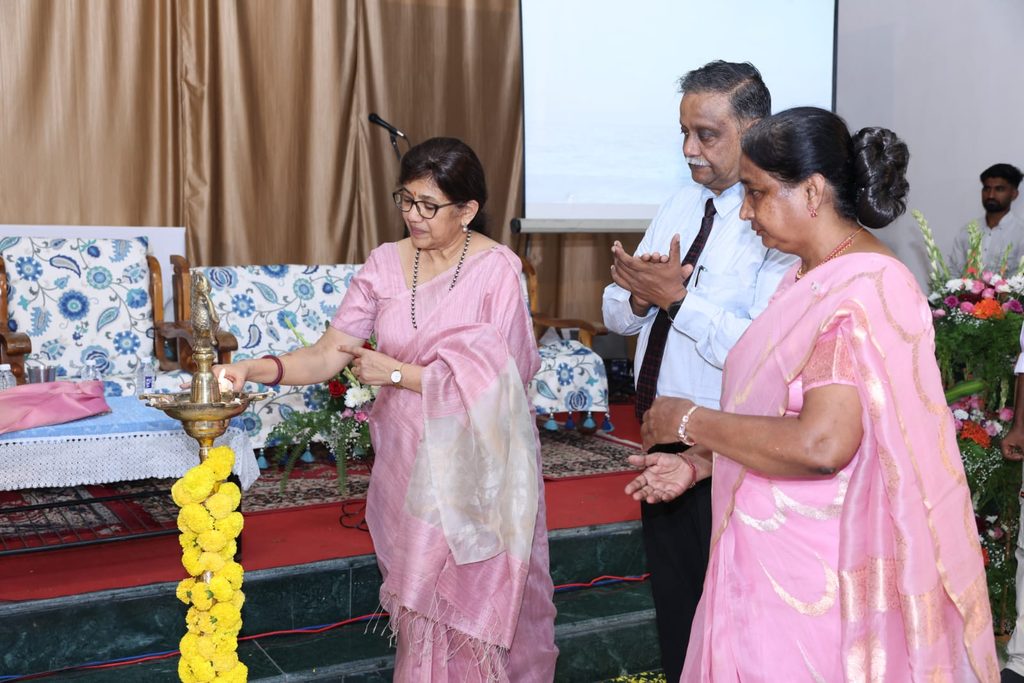
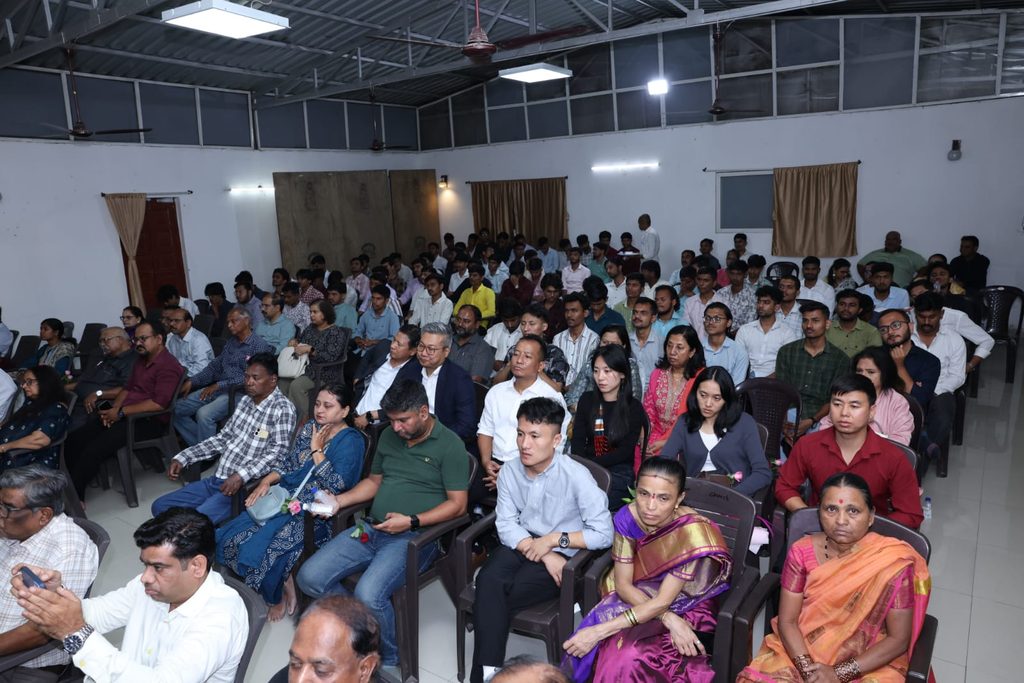
Celebrating the 99th Ashram Day and Launching the Centenary Year of Christa Prema Seva Sangh, Pune from faith to fellowship, from spirituality to sustainability, and from a century of service to a new century of transformation, said Adv. Vandana Chavan as chief guest of the occasion. Some institutions are remembered for their magnificent buildings, others for their achievements. But a few institutions become part of the living conscience of society. Christa Prema Seva Sangh (CPS Ashram), Shivajinagar, Pune, is one such institution.
As CPS Ashram celebrates its 99th anniversary and launches its centenary year, we celebrate much more than the passage of time. We honour an extraordinary journey of faith, courage, cultural integration, religious harmony, social service and human transformation.
For nearly a century in Pune, this Ashram has been a sanctuary for spiritual seekers, a home away from home for students, a meeting place for people of diverse cultures and a living example of unity amidst diversity.
A Revolutionary Vision Rooted in Indian Spirituality
The story of Christa Prema Seva Sangh began in 1922, when Reverend Jack C. Winslow founded Christa Seva Sangha at Miri in Ahmednagar district. His vision was remarkably progressive: Christianity could be lived and expressed through Indian culture, traditions and spiritual practices rather than being confined to Western customs.
The Ashram embraced khadi, vegetarian food, bhajans, Indian musical instruments, simplicity and communal living. It recognised that spirituality transcends cultural boundaries and that faith becomes meaningful when it respects the traditions of the society in which it is practised.
The Ashram subsequently moved to Pune in 1927–28, establishing its presence in Shivajinagar. At a time when colonial divisions and racial hierarchies shaped society, the Ashram promoted equality between Indians and Europeans, emphasising shared responsibilities, mutual respect and service. This was not merely a religious experiment. It was a courageous social statement that human dignity must rise above race, religion, nationality and social status.
A Living Laboratory of Ecumenism and Pluralism
One of the most remarkable contributions of CPS Ashram has been its commitment to interfaith understanding and ecumenical fellowship. Its early gatherings brought together Hindus, Muslims, Parsis, Christians, students, teachers, intellectuals and social reformers. People could engage in meaningful conversations without surrendering their individual beliefs or identities.
From its Anglican origins, the Ashram evolved into an ecumenical Catholic-Protestant community in 1972, demonstrating that institutions can remain faithful to their spiritual foundations while expanding their circle of inclusion.
In today’s world, where religious differences are too often exploited to create mistrust and division, this legacy assumes extraordinary significance. True spirituality does not demand uniformity. It celebrates diversity, protects dignity and builds bridges across differences.
CPS Ashram reminds us that tolerance alone is insufficient. We must move beyond merely accepting differences towards genuinely respecting, appreciating and learning from one another.
A Place That Inspired Extraordinary Lives
The history of CPS Ashram is enriched by its association with remarkable personalities who contributed to India’s spiritual, intellectual, artistic and social development. Deenabandhu C. F. Andrews, a close associate of Mahatma Gandhi, represented the moral courage to challenge colonial injustice. Verrier Elwin, who joined the Sangh in 1927, subsequently dedicated much of his life to understanding India’s tribal communities. Artist Angelo da Fonseca expressed Christian spirituality through Indian artistic traditions.
The Ashram’s association with Mahatma Gandhi and Father Bill Lash further reflects its openness to dialogue across religious traditions. These associations demonstrate that the greatness of an institution is not measured by its infrastructure or financial resources alone, but by the people it inspires, the ideas it nurtures and the transformations it makes possible.
Forty Years of Personal Association and Gratitude
My own association with CPS Ashram stretches back more than four decades. I consider it a privilege to remain connected with an institution that has contributed so meaningfully to my understanding of spirituality, human relationships and community life. During those years, the Ashram welcomed students from different parts of India and the world, including Africa, Northeast India and the Middle East. It was more than a hostel or a spiritual retreat. It was a community where people learned to live together, respect cultural differences and develop lasting friendships.
For thousands of students and visitors, CPS Ashram has offered belonging, guidance, reflection and opportunities for personal transformation. Its corridors, prayer spaces and gathering places hold countless untold stories of friendship, compassion, struggle, discovery and hope.
The Ashram is not simply a place where people have lived. It is a place that has lived within people long after they departed.
From Ecumenical Spirituality to Environmental Spirituality
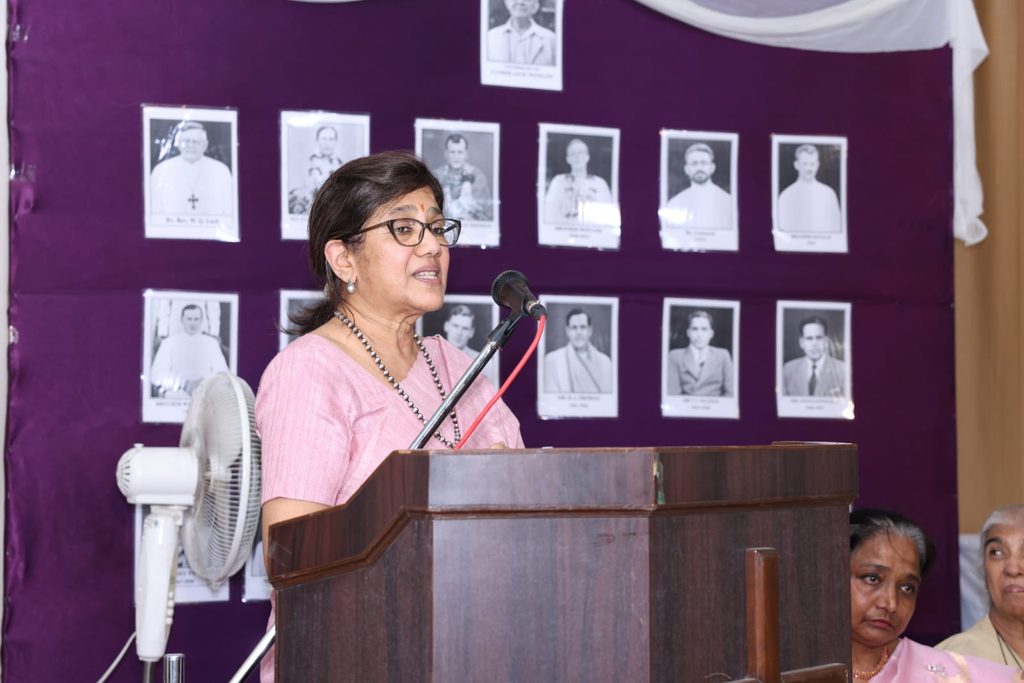
The 99th Ashram Day celebrations marked another significant moment in this historic journey. As a chief guest of the occasion, Adv Vandana Chavan’s inspiring suggestion to develop CPS Ashram into a Centre for Environmental Spirituality offers a compelling direction for its next century. Environmental spirituality recognises that caring for nature is not separate from spiritual life. Protecting rivers, forests, biodiversity, soil and air is an expression of reverence for creation and responsibility towards future generations.
At a time when climate change, environmental degradation, pollution and unsustainable consumption threaten our common future, spirituality must inspire ecological responsibility.
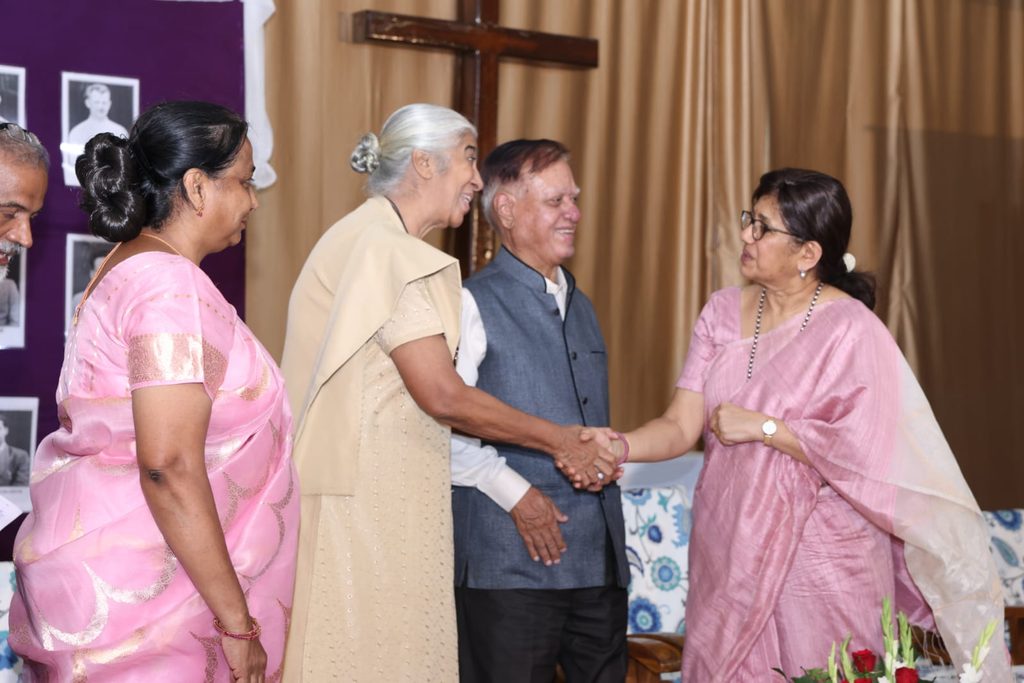
Echoing the Bishop Rev. Manoj Kate, recollected the experience of St Francis Assisi as the patron saint of the Ashram. Bishop recalled the Ashram’s traditions of simplicity, shared living, modest consumption and respect for life provide a strong foundation for this transformation. Environmental protection should not remain confined to conferences, declarations or symbolic tree-planting ceremonies. It must become part of everyday behaviour, institutional practices and community action, he said.
The same ecological relevance to human life was also shared by Dr Sundeep Salvi, the internationally renowned respiratory specialist, who is also the chairperson of the ashram.
A Centenary Vision: Engaging Youth, Protecting Nature
As CPS Ashram enters its centenary year, it has an opportunity to become a vibrant centre where spirituality, environmental education and youth leadership converge.
The Ashram could initiate youth environmental leadership programmes, interfaith dialogues on ecological responsibility, sustainable living workshops, heritage and nature walks, waste-reduction initiatives, biodiversity conservation activities and community campaigns for protecting local ecosystems.
Young people from colleges, universities, civil society organisations and faith communities could come together to learn, reflect and undertake practical environmental action.
The Ashram itself could progressively demonstrate environmentally responsible practices through waste segregation, composting, water conservation, energy efficiency and sustainable consumption. In his address, Ashish James recollected the history of CPS ashram and its growth so far.
Most importantly, it could become a space where young people discover that spirituality is not merely about personal peace, but also about social justice, ecological responsibility and collective well-being.
This would give contemporary meaning to the pioneering vision of Reverend Winslow, connecting the Ashram’s historic commitment to human fellowship with the urgent need for harmony between humanity and nature.
The Next Hundred Years Begin Today
A centenary celebration should not merely commemorate the past. It must inspire a renewed commitment to the future.
The challenge before CPS Ashram is to preserve its heritage while responding creatively to emerging social, spiritual and environmental realities.
Can the Ashram become a nationally recognised centre for interfaith understanding? Can it inspire a generation of environmentally responsible young leaders? Can it demonstrate how simplicity, sustainability, compassion and spirituality can shape a more peaceful society?
These are possibilities worthy of its extraordinary legacy.
As we celebrate 99 years and launch the centenary year, we express our gratitude to the founders, spiritual leaders, wardens, students, alumni, volunteers, supporters and countless individuals who have sustained this institution across generations.
The greatest tribute we can offer them is not simply to preserve the Ashram as a monument of the past, but to strengthen it as a living movement for the future.
Let the centenary of CPS Ashram mark a new beginning — from ecumenical fellowship to ecological harmony, from spiritual reflection to environmental action, and from a legacy of service to a future of shared responsibility.
May CPS Ashram continue to be a place where faith inspires compassion, diversity strengthens fellowship, young people discover their purpose, and humanity learns to live in harmony with nature.
A century of faith. A century of fellowship. A new century of hope for people, planet and purpose.

This Post Has One Comment
It was great to attend this program and listen glorious past and present of the ashram. We’ll organiz with love and affection. Thank you Mathew Mattam, Peter, Sangita Madam, Sandip Sir and Committee.