
By Bhumiputra Wagh
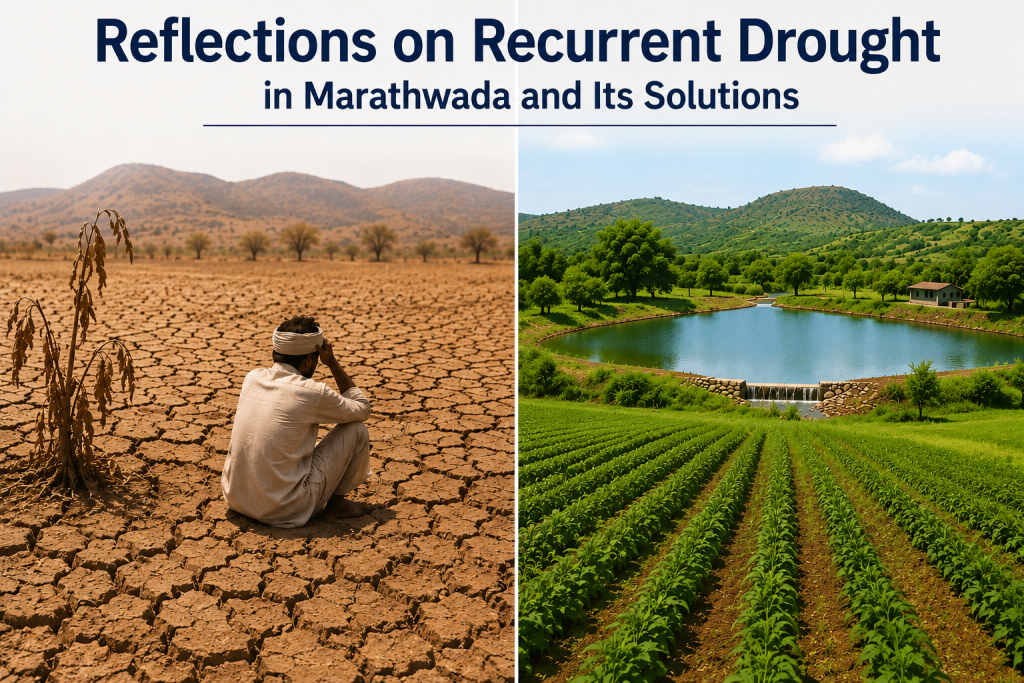
Marathwada, a region in the state of Maharashtra, is widely known as a drought-prone area. Every two to three years, the region faces severe drought conditions. Irregular rainfall, declining groundwater levels, deforestation, inadequate water conservation measures, and climate change have pushed farmers into a cycle of recurring hardship. Drought reduces agricultural productivity, creates fodder shortages for livestock, and causes significant financial losses to farming communities. Therefore, both the government and citizens must adopt long-term and effective solutions.
When we examine the causes of drought, it becomes clear that Marathwada receives less rainfall than many other regions. Moreover, the rain that does fall often comes in short, intense bursts, causing most of the water to run off rather than seep into the ground. Reservoirs, ponds, and wells fail to recharge adequately. Excessive water consumption, cultivation of water-intensive crops such as sugarcane, and the decline of forest cover further worsen the drought situation.
In reality, large-scale tree plantation and conservation have become the need of the hour. When forests disappear, rainwater directly washes away fertile topsoil. Natural forests and grasslands play a crucial role in increasing groundwater reserves. Rainwater first falls on trees and vegetation and then slowly infiltrates the soil through their root systems, helping recharge underground water sources. Dense vegetation also helps regulate temperature by reducing the direct impact of solar radiation on the Earth’s surface.
Trees produce oxygen, maintain environmental balance, and help keep the atmosphere cool. Without trees, the sun’s rays directly heat the land, increasing temperatures and accelerating environmental degradation. Soil erosion intensifies, groundwater reserves diminish, and the risk of severe water scarcity grows. If this trend continues, future generations may face an acute water crisis. The warning signs are already visible, making immediate action essential.
Pollution must be controlled. Trees must be planted and, more importantly, protected. Riverbanks, streams, and watershed areas should be covered with dense vegetation. This will reduce soil erosion, slow water runoff, and improve groundwater recharge. Clean and sustainable water sources can only be maintained through healthy ecosystems.
Many researchers and environmental experts have repeatedly highlighted these facts. Yet, neither society nor governments have acted with the urgency the situation demands. If meaningful change is to occur, every citizen must actively participate in tree plantation, forest conservation, water resource protection, and responsible water use. Farmers should gradually shift away from highly water-intensive crops such as sugarcane in drought-prone regions. Only then can nature continue to support human life and livelihoods. Otherwise, the future may become increasingly difficult and unpredictable.
As renowned water conservation advocate Madhukar Dhas, often known as Jalnayak, used to say: “When the rains arrive, begin drought-prevention work immediately.”
This vision and commitment should inspire every citizen. We must act today to protect tomorrow.
Measures to Be Taken by the Government and Citizens
1. Strengthen Water Conservation
Construct farm ponds, deepen streams, build check dams, earthen bunds, and percolation tanks in every village. Every drop of rainwater should be captured and conserved.
2. River Linking and Groundwater Recharge
Desilt rivers and redirect surplus water to drought-prone areas. Launch large-scale groundwater recharge initiatives.
3. Change Cropping Patterns
Encourage farmers to cultivate low-water crops such as sorghum, pearl millet, pigeon pea, chickpea, and oilseeds. Increase subsidies for drip and sprinkler irrigation systems.
4. Tree Plantation and Forest Conservation
Undertake large-scale afforestation programs and ensure long-term protection of planted trees. Increased forest cover helps improve rainfall patterns and groundwater recharge.
5. Crop Insurance and Financial Assistance
Strengthen crop insurance schemes and ensure timely, transparent compensation for farmers affected by drought.
6. Employment Guarantee Programs
Implement rural employment programs effectively during drought periods. Water conservation projects can simultaneously create jobs and strengthen local resources.
7. Awareness and Training
Provide regular training to farmers on water conservation, climate-resilient agriculture, and modern farming techniques.
8. Creation of Protected Green Zones
All barren hills, valleys, rivers, streams, and watershed areas should be protected through the establishment of ecological buffer zones extending at least 100–200 meters around them. Large-scale afforestation should be carried out on barren hills and degraded lands, followed by strict protection and maintenance. Restoring these natural ecosystems is essential for increasing groundwater recharge, preventing soil erosion, and ensuring long-term environmental sustainability
