
Diksha Govind Mhetre, Coordinator, Green Youth Movement
Five days into the Green Wari movement, it became evident that this journey was never merely about collecting discarded plastic. It evolved into a powerful story of hope, resilience, collective action, and the extraordinary relationship between faith and environmental stewardship. Every kilometre walked alongside the Warkaris revealed that true service is not confined to temples or rituals; it is equally expressed through caring for the land that carries millions of pilgrims on their sacred journey. The Green Wari initiative has demonstrated that environmental responsibility can become a living expression of devotion, inspiring a new generation to protect both faith and nature.
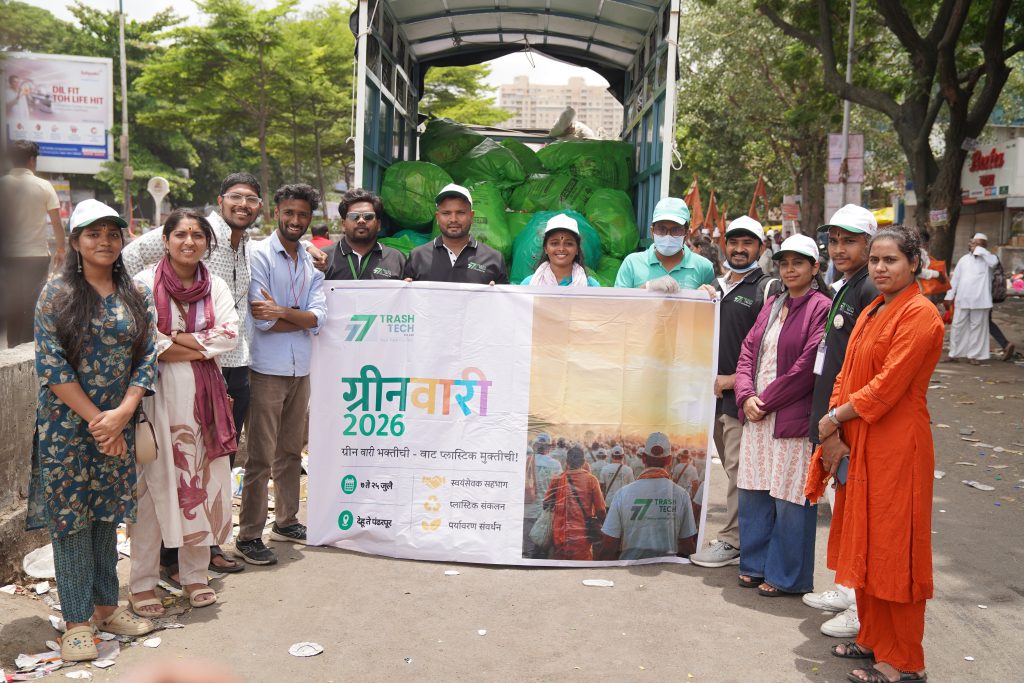
The journey, however, did not begin on the roads leading to Pandharpur. Weeks before the first footsteps of the Wari, volunteers of the Green Youth Movement, together with partner organisations, invested countless hours preparing for the campaign. Young volunteers underwent orientation sessions, collection bags and safety materials were arranged, awareness messages were designed, and teams were organised to walk with the Dindis throughout the pilgrimage. Every volunteer carried a shared vision—to contribute towards making one of India’s oldest spiritual traditions cleaner, greener, and more environmentally conscious.
Then nature intervened. On 7th and 8th July, relentless monsoon rains forced the Wari routes from Dehu and Alandi to remain closed. For the millions waiting to continue their pilgrimage, it was an unavoidable interruption. For the Green Wari volunteers, it was a moment of deep disappointment. Months of planning suddenly stood still. The carefully prepared logistics could not move forward, and uncertainty overshadowed the enthusiasm that had built over several weeks.
Yet, the volunteers refused to surrender to discouragement. Everyone understood that once the Wari resumed, plastic collection would become significantly more difficult. Waterlogged roads, soaked plastic waste, slippery pathways, and continuous walking under unpredictable weather would test both physical endurance and determination. Despite these challenges, not a single volunteer suggested abandoning the mission. Their commitment reflected the very spirit of the Wari itself—perseverance in the face of adversity.
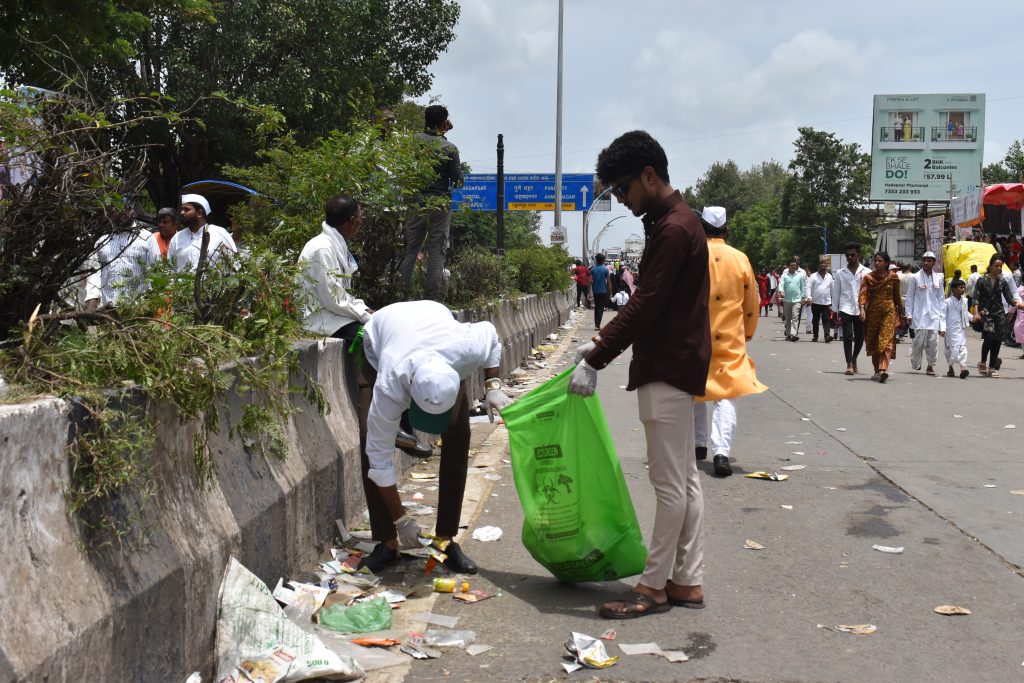
Then came the morning of 9th July. The skies opened not with rain but with sunlight. To many, it appeared to be an ordinary change in weather. For the Green Wari volunteers, however, it felt deeply symbolic. After days of relentless rainfall, the clear sky arrived precisely when the movement needed renewed hope. From that day onward, the routes covered by the volunteers remained largely free from heavy rain, allowing them to continue their environmental mission with fresh energy and determination.
Many quietly expressed what they felt in their hearts—that Mauli himself had blessed the movement. Whether interpreted as coincidence or divine grace, the moment strengthened the morale of every volunteer. Faith provided the emotional strength that transformed physical labour into joyful service.
This experience reflects the timeless beauty of the Wari. The Wari is not merely an annual pilgrimage; it is one of the world’s oldest continuing mass movements of faith. For over eight centuries, lakhs of Warkaris have walked nearly 250 kilometres from Dehu and Alandi to Pandharpur, singing the abhangs of Sant Tukaram Maharaj and Sant Dnyaneshwar Maharaj. Farmers, labourers, students, professionals, women, children, and elderly devotees walk together without distinction of caste, class, or status. Their destination is not simply a temple but a spiritual experience rooted in equality, humility, and devotion.
Few events in the world demonstrate such extraordinary collective discipline. Pilgrims willingly endure blistered feet, changing weather, minimal comforts, and long days of walking because their journey is guided by unwavering faith. The Wari proves that when belief inspires action, ordinary people become capable of extraordinary sacrifice.
Yet alongside this remarkable tradition lies a growing environmental challenge. Whenever millions of people travel together over several weeks, significant quantities of waste are inevitably generated. Plastic water bottles, food wrappers, disposable cups, plates, packaging materials, and other single-use plastics often accumulate along roadsides and resting places. Municipal corporations deploy sanitation workers, waste collection vehicles, and temporary cleaning systems throughout the pilgrimage. Numerous civil society organisations, environmental groups, and citizen volunteers also dedicate themselves to keeping the routes clean.
Despite these efforts, the volume of waste continues to exceed the capacity of existing systems. The core challenge extends beyond waste collection itself. It is fundamentally about behaviour.
Most Warkaris are deeply immersed in their spiritual journey. Their thoughts are centred on reaching Pandharpur and serving Vitthal. Environmental management rarely occupies their immediate attention, not because they lack concern for nature, but because waste disposal has never been consciously integrated into the culture of the pilgrimage. This creates an important opportunity rather than a criticism.
If the Wari has successfully shaped the behaviour of millions for more than 800 years, it possesses the remarkable potential to inspire environmental responsibility as well.
Imagine every Dindi carrying separate bags for biodegradable and plastic waste. Imagine clearly marked waste segregation stations at every halt. Imagine environmental messages woven into Abhangs, Kirtans, and community announcements rather than relying solely on posters and signboards. Imagine children proudly identifying themselves as “Green Warkaris,” encouraging their parents and fellow pilgrims to protect the environment throughout the journey.

Faith has always been one of humanity’s most powerful instruments for changing behaviour. People remove their footwear before entering temples without enforcement. They patiently wait in long queues for darshan. They rise before dawn and walk for weeks because devotion gives meaning to discipline. Environmental responsibility can become part of that same culture of devotion. Protecting rivers, roads, trees, and landscapes need not be viewed as separate from spirituality. Instead, caring for creation can become an integral expression of worship itself.
After all, if the Earth is considered sacred, then keeping the pilgrimage clean becomes another offering to the Divine. The first five days of the Green Wari movement have reinforced a profound lesson. Transformational change does not emerge solely through government policies, sanitation infrastructure, or waste collection vehicles. It begins when ordinary citizens voluntarily choose responsibility over indifference.
Every plastic bottle collected by a volunteer carries a message. Every Warkari who chooses a dustbin over the roadside strengthens the movement. Every child who reminds parents not to litter becomes an ambassador of environmental change.
These actions may appear small in isolation, yet history repeatedly reminds us that every great social movement has been built upon millions of small acts performed consistently by ordinary people.
The Green Wari is therefore far more than a cleanliness campaign. It represents a vision where India’s spiritual heritage and environmental responsibility move forward together. It demonstrates that faith need not stand apart from sustainability. Instead, devotion can become one of the nation’s strongest forces for ecological transformation.
As the pilgrimage continues towards Pandharpur, the footsteps of the Warkaris carry not only centuries of tradition but also the possibility of a greener future—one where every step of faith leaves behind not plastic waste, but a legacy of environmental responsibility for generations to come.

This Post Has One Comment
Good experience narration!