
Human Interest Story: 3
In a small village in Tamil Nadu, there lived a respected man known to everyone as Muthu Master. He walked through the village wearing a shirt and dhoti, spoke with confidence, smoked beedis, worked hard, and carried himself with the authority of a man who had seen many struggles in life. People greeted him with respect. Children called him “Master.” Neighbors trusted him. For nearly four decades, Muthu Master was simply another hardworking man in the village.
But behind this identity lay an extraordinary secret. Muthu Master was not born a man. Muthu Master was Pechiyammal, a woman, a widow, and above all, a mother who sacrificed her own identity to protect her daughter and survive in a world that often-showed little mercy to women living alone.
The story began many years ago when Pechiyammal was a young woman trying to earn a living after being left to face life’s difficulties alone. She had a daughter to raise and very limited support. In rural Tamil Nadu, a single woman without the protection of a husband often faced economic hardship, social judgment, and insecurity.
One evening, as she walked to the factory where she worked, an incident occurred that would change her life forever.
A truck driver stopped her on the lonely road. What followed was a frightening experience that filled her with fear and helplessness. That dark evening made her realize how vulnerable she was as a woman travelling alone. The incident deeply disturbed her. She began to fear every journey, every lonely road, and every unfamiliar face.
That night she made a decision that few people could even imagine.
If society respected men and feared women living alone, she would become a man. It was not an act of rebellion. It was an act of survival.
Pechiyammal cut her hair short. She began wearing men’s clothes. She changed her mannerisms, her speech, and even the way she walked. She adopted a new name — Muthu.
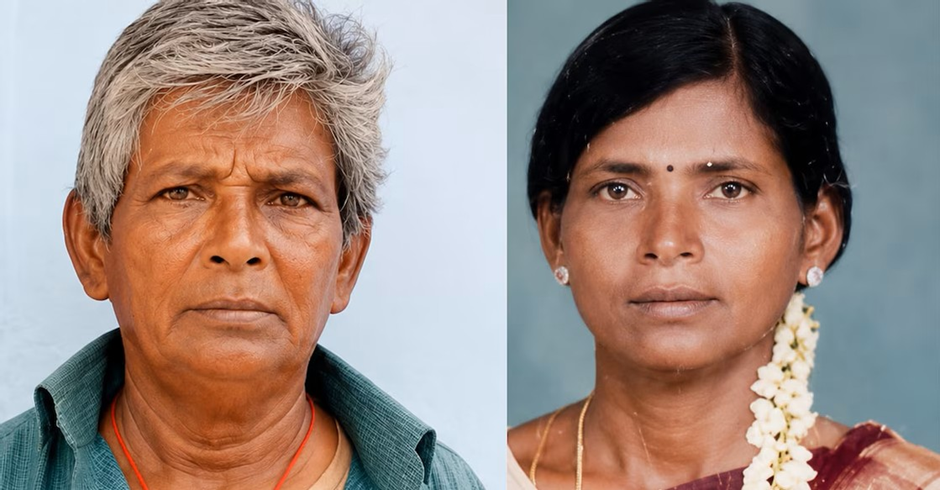
Slowly, the village accepted the new identity. As years passed, Muthu became Muthu Master.
People saw a hardworking man who earned his living honestly. Nobody questioned his identity. Nobody knew the truth hidden behind the masculine appearance.
Living as a man gave Pechiyammal something she had never experienced before — safety.
She could walk freely at night. She could travel without fear. She could work without unwanted attention. People treated her with respect rather than suspicion. The world that had once frightened her now allowed her to survive.
Yet the transformation brought its own burdens. Every morning, she had to become Muthu again. Every conversation required caution. Every friendship had limits. Every social interaction demanded careful attention. She had to constantly protect the secret that had become her life.
To strengthen her male identity, she adopted habits commonly associated with men in her village. She smoked beedis in public. She spoke in a firm voice. She avoided situations that might expose her true identity.
The disguise that protected her also imprisoned her. There were festivals she could not celebrate freely. Friendships she could not fully enjoy. Emotions she could not openly express. She lived with the constant fear that someone might discover the truth.
But whenever the burden became too heavy, she looked at her daughter. Everything she did was for her child.
She wanted her daughter to grow up safely, receive an education, and live with dignity. By becoming Muthu, she was able to earn money, protect her family, and shield her daughter from many hardships.
Years turned into decades. Children who once played in the village became adults. Governments changed. Roads improved. Technology entered village life. But Muthu Master remained the same.
Thirty-seven years passed. For an entire generation, Muthu Master was simply part of the village landscape. Nobody imagined that behind the weathered face, the rough hands, and the masculine identity was a woman who had sacrificed her own life to protect her child.
Eventually, the truth emerged. People who had known Muthu for decades were shocked. Many could not believe that the man they respected was actually Pechiyammal. But as they learned her story, surprise turned into admiration.
What they discovered was not deception. They discovered courage. They discovered sacrifice. They discovered the extraordinary strength of a mother.
Pechiyammal’s story forces society to confront uncomfortable questions. Why did a woman feel safer living as a man? Why must women struggle for security and dignity? Why are single women often left vulnerable to violence and exploitation?
Her life reveals not only personal courage but also the failures of society to protect women.
At the same time, her story demonstrates the limitless power of parental love. A mother may sacrifice comfort, identity, and even personal freedom for the well-being of her child.
For thirty-seven years, Pechiyammal buried her own identity so that her daughter could live with security and hope.
Today, the world remembers her as Muthu Master. But perhaps her greatest identity is neither Muthu nor Master.
She is remembered as a mother whose love was stronger than fear, whose courage defeated adversity, and whose life became a remarkable testimony to sacrifice and survival.
In a world that often celebrates heroes in uniforms and positions of power, Pechiyammal reminds us that some of the greatest heroes live quietly among us, carrying extraordinary stories behind ordinary faces.
(Courtesy Malayala Manorama)

This Post Has One Comment
Excellent story. It not only reflects the courage, resilience, and sacrifice of Pechiyammal, but also raises some serious questions about our so-called “civil society.”
Why should a woman have to disguise herself as a man for 37 years just to protect herself and her daughter? If a single man can live independently without fear or inhibition, why should a single woman have to face such challenges?
The story compels us to introspect. Even as we continue to speak about gender equality, why do such disparities still exist? Why should women be paid less for doing the same work? Why should they have to fear working in male-dominated environments? And why do families still feel compelled to ask their daughters or sisters whether there are other women at their workplace before they feel reassured?
It is high time we changed our mindset and worked towards building a society that is truly inclusive—one that offers equal dignity, opportunity, and safety to everyone, irrespective of gender, religion, caste, or creed.