
By Suryakant Chavan
For a small dairy farmer, every litre of milk matters. Behind each litre lies the daily effort of caring for animals, growing fodder, managing expenses, and ensuring the herd remains healthy and productive. For Raju Arvind Babar of Manegaon, Sangola, dairy farming is the foundation of his family’s livelihood and financial security.
Raju belongs to a family of 10 and owns five acres of agricultural land. Dairy farming is his primary source of income. To ensure adequate feed availability throughout the year, he devoted a significant portion of his land to fodder crops such as maize, elephant grass and other green fodder. However, despite having access to good-quality fodder and putting in considerable effort to care for his animals, infertility and delayed conception had become a major concern. Animals were taking longer to conceive, resulting in extended calving intervals and reduced productivity. This affected the regularity of milk production and increased the cost of maintaining non-productive animals, putting additional financial pressure on the family.
Raju realized that improving the reproductive health and overall nutritional management of his animals was essential for making dairy farming more productive and sustainable. However, identifying the right nutritional interventions and using them appropriately remained a challenge.
A New Hope emerged
Under the Comprehensive Village Development Program, CYDA, with the support of SBI Mutual Fund, reached out to Raju with technical guidance and nutritional support to address a major challenge in his dairy farming—poor fertility and delayed conception in cows. Infertile cows that failed to conceive at the right time increased the cost of dairy management, as they continued to require fodder, water, labour, and other care without contributing to the next cycle of milk production. Longer periods between calving also meant higher feeding costs and reduced income for the farmer. This was an important concern for Raju, as maintaining non-pregnant animals for extended periods placed an additional financial burden on his family.
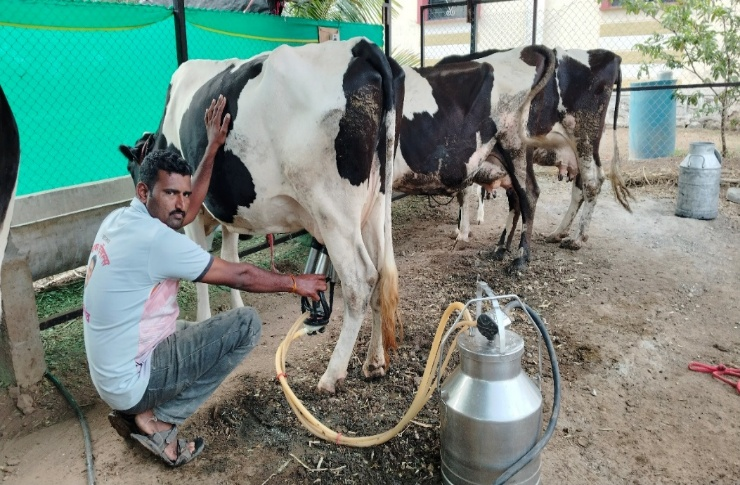
The intervention focused on an important aspect of dairy farming that is often overlooked—balanced nutrition and mineral supplementation for improving reproductive health and productivity. Raju received 25 kg of mineral mixture and 10 kg of Vimicon mineral supplement, along with practical training on scientific dairy management. For Raju, the training was as important as the material support because it helped him understand the importance of regular mineral supplementation and proper feeding practices. He started providing 50 grams of mineral mixture per milch cow per day, along with the recommended quantity of Vimicon—15–20 grams for calves and 50–60 grams for adult cattle.
Following the intervention, Raju began observing positive changes in his animals. The cows became healthier, more active, and stronger, while their overall condition improved. The cows that had previously faced difficulty in conceiving started showing heat symptoms more regularly and were able to conceive successfully after timely breeding. The delays in breeding and conception were reduced, helping improve the reproductive cycle of the herd. As 4 cows conceived and progressed towards the next calving, Raju was able to reduce the period for which animals remained non-productive while still consuming fodder and requiring regular care. This helped lower unnecessary fodder expenses and improve the efficiency of his dairy enterprise.
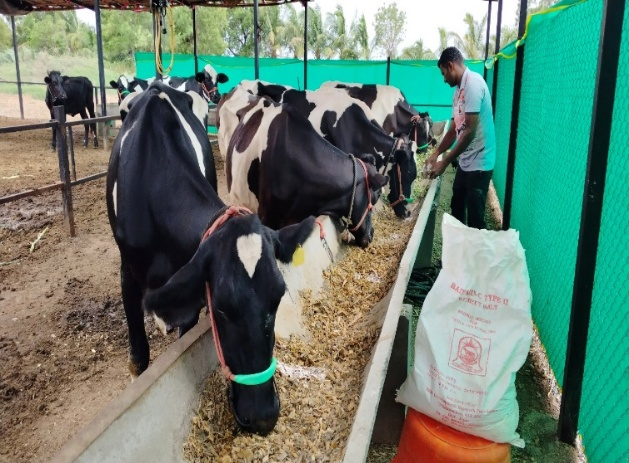
Along with improved reproductive health, Raju also observed an improvement in milk production. The combined benefits of better nutrition, timely conception, and improved animal health helped increase his dairy income and strengthened dairy farming as a more reliable source of livelihood for his family.
Key Outcomes
The biggest change can be seen in Raju’s confidence, hope and strength for his dairy farm. What started as support from the project has now become a regular part of his daily dairy work, He now purchases mineral mixture from the market every month and provides it to his milch cows daily as per the recommended dosage.
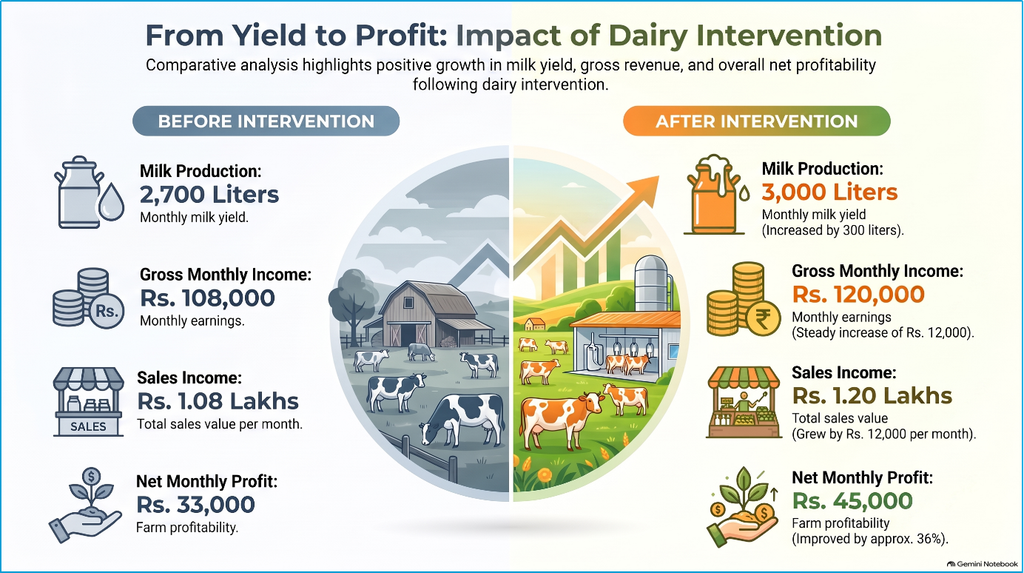
“The intervention has improved both the productivity of my dairy animals and the income of my family,” Through the CYDA, I learnt scientific dairy management practices to increase milk production, improve animal health, and strengthen the economic security of my family – says Raju. Earlier, my cows produced around 2,700 litres of milk every month. After regularly feeding 50 grams of mineral mixture to each milch cow, my monthly milk production increased to nearly 3,000 litres – says Raju
