By Yogesh Nerpagar, Managing Director, WASHMITRA
India has made significant progress in expanding water, sanitation and hygiene (WASH) infrastructure. Government programmes such as the Swachh Bharat Mission and Jal Jeevan Mission have helped increase access to toilets, tap water, handwashing stations, solar pumps and water-treatment systems.
These investments have changed the way many communities access basic services. More households have tap connections, more schools have toilets, and WASH facilities have become an important part of public infrastructure. But building infrastructure is only the first step. The bigger challenge is keeping these facilities functional over time.
A broken tap, damaged toilet, faulty water pump or electrical problem can make an entire facility unusable. In many rural and remote communities, finding a skilled person nearby to repair such systems is not easy. As a result, infrastructure created to improve people’s lives may remain unused or poorly maintained. This creates a gap between building WASH infrastructure and keeping it working.
India’s WASH infrastructure is growing, but functionality remains a challenge
The Jal Jeevan Mission has significantly expanded access to tap water. As of 3 March 2026, around 15.82 crore out of 19.36 crore rural households, or 81.71%, were reported to have tap water supply in their homes (Ministry of Jal Shakti, 2026a). However, access to infrastructure does not automatically mean reliable service. The 2024 Functionality Assessment found that 98.1% of households in surveyed villages had tap connections. When quantity, quality and regularity were considered together, 76% of household tap connections were found to be functional (Ministry of Jal Shakti, 2026b).
This distinction is important. A tap connection can exist, but its real benefit comes only when water is available in the required quantity, is safe and reaches the household regularly. The same challenge can be seen in schools. A Comptroller and Auditor General of India (CAG) audit found that 72% of the constructed school toilets surveyed did not have running water, while 55% did not have handwashing facilities. The audit also found that 30% of the constructed toilets were not in use (Comptroller and Auditor General of India, 2021).
According to UNICEF India, nearly half of all schools in both rural and urban areas in India lack basic handwashing facilities. These findings show that creating WASH infrastructure is important, but ensuring that facilities remain functional and usable is equally important.
The challenge begins after the infrastructure is built
Companies and NGOs also invest CSR funds in water and sanitation infrastructure, including handwashing facilities, community toilets and girls’ toilets in schools and anganwadis. Such investments can improve access to essential services, but the work does not end when the project is completed. When an implementing organisation moves away, communities may have limited access to trained technicians or resources for timely repairs. A broken tap, damaged toilet, faulty pump or electrical problem can remain unresolved if there is no local person with the skills and tools to fix it.
Government schools have some systems to support maintenance. School Management Committees and school authorities play an important role in school-level planning and upkeep. Under Samagra Shiksha, the Composite School Grant ranges from ₹25,000 to ₹1 lakh, depending on school enrolment. At least 10% of the grant is required to be spent on activities related to the Swachhta Action Plan. These funds can support routine cleanliness and basic maintenance. However, technical repairs are different. Plumbing, electrical work, pump repairs, solar systems and water-treatment equipment require people with specific skills and practical knowledge. The challenge, therefore, is not only about having infrastructure or funds. It is also about having skilled people available locally to maintain the infrastructure.
Rural youth need local opportunities
India has a large young population. Nearly 65% of the country’s population is below the age of 35. For many rural young people, however, employment opportunities within their communities remain limited. Agriculture continues to support millions of families, but it is not always seen by young people as a secure or attractive career. Many therefore look towards towns and cities for employment. The National Skill Development Corporation’s study on youth aspirations found that only about 5.6% of rural youth surveyed had a diploma, ITI, polytechnic or similar certification.
This points to an important opportunity. Young people need practical skills that can lead to employment or self-employment, while rural communities need skilled workers who can provide essential services locally. If young people can gain recognised skills and build livelihoods within their communities, they can become part of the solution to local problems.
There is therefore a clear connection between the two challenges. WASH infrastructure needs skilled local technicians, while rural youth need skills and opportunities to earn locally. This is the gap that the WASH Mitra initiative set out to address.
WASH Mitra: Connecting skills with community needs
The WASH Mitra Initiative emerged as a response to this need in 2018. The model trains young people as multi-skilled community engineers who can provide a range of services required for the maintenance of WASH infrastructure. WASH Mitras undergo an 18–21-day residential training programme covering plumbing, electrical systems, solar systems, water filters, masonry, carpentry, water testing, CCTV, accounting, digital payments and business registration.
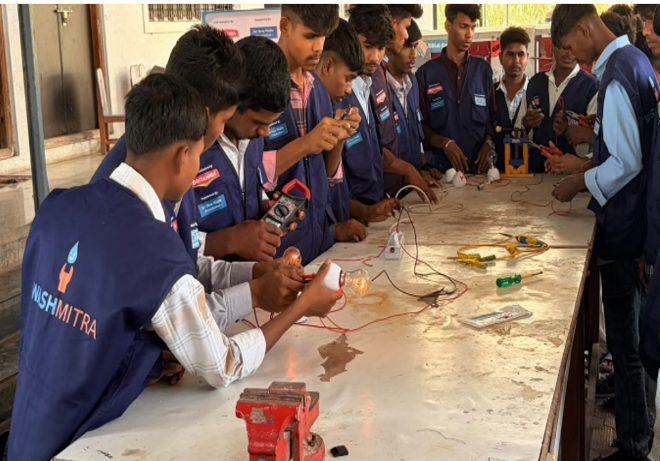
The training is designed around the practical needs that communities face. Instead of limiting a young person to a single trade, it provides multiple skills that can be used to address different WASH and related infrastructure requirements. This multi-skilled approach is particularly useful in rural areas. A community may not need separate people for every technical requirement. It may need one reliable person who can identify a problem, carry out basic repairs and provide timely support.
After completing the training, WASH Mitras receive certification and toolkits. They work as local service providers and can respond to repair and maintenance requirements in their own communities. The model also uses a digital application through which service requests, payments and repair records can be managed and tracked. This creates a more organised way of delivering services and reduces dependence on informal middlemen.
From informal worker to recognised professional
One of the important changes brought by the WASH Mitra model is the way it positions technical workers. A person who may previously have been known simply as a local plumber, electrician or repair worker can now have certification, a professional identity, tools and a structured way of receiving service requests. This change is important not only for income but also for dignity.
When a worker has recognised skills and a professional identity, it becomes easier for communities to see the person as a trained service provider. It can also help the worker build trust and develop a more organised livelihood.
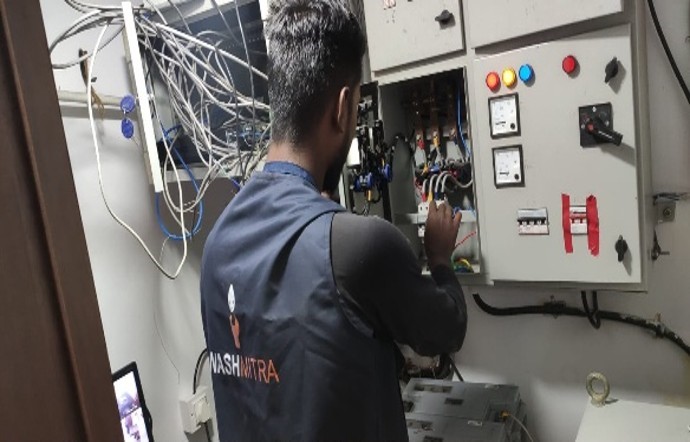
A total of 850 WASH Mitras have been trained across 29 districts in Maharashtra and 5 districts in Chhattisgarh. Since 2018, they have earned around ₹11.2 crore as technicians. The initiative has also helped 149 women enter traditionally male-dominated trades. In tribal areas, 120 tribal youth are maintaining WASH facilities in residential schools.
Building sustainability at the last mile
The real value of WASH infrastructure is seen only when people can use it safely and regularly. A toilet that cannot be used, a tap that does not provide water or a water filter that remains unrepaired cannot deliver the intended benefit. For this reason, operation and maintenance should not be treated as an activity that begins only when something breaks. It needs to be considered as part of the WASH system from the beginning.
This is where local maintenance capacity matters. WASH Mitras live close to the communities they serve. Their local presence means that minor problems can be addressed quickly instead of waiting for a technician from a distant town. Their multi-skilled training is another advantage. A single WASH Mitra can respond to different requirements involving taps, toilets, pumps, electrical systems, water filters and other infrastructure.
This approach can complement government programmes such as the Jal Jeevan Mission and Swachh Bharat Mission, which have invested heavily in creating WASH infrastructure. The Jal Jeevan Mission also recognises the importance of operation and maintenance and encourages communities to manage and maintain local water-supply systems. The idea is not to create a parallel system. It is to strengthen the last mile. Government programmes can create infrastructure and establish systems. Communities can participate in managing them. WASH Mitras can provide the technical support needed to keep these systems functioning.
India’s WASH journey is therefore moving beyond the question of whether a toilet, tap or water system exists. The more important question is whether it continues to work months and years after installation. WASH Mitras can help bridge this gap by bringing skilled, local technical support closer to the communities that depend on these facilities.
