
By Kishore Kale, Director, TrashTech
Every year, lakhs of Pilgrims (Warkaris) walk hundreds of kilometres to Pandharpur as part of Maharashtra’s centuries-old Wari pilgrimage. While this sacred journey represents devotion, equality, and community spirit, it also generates a significant amount of plastic waste, particularly single-use water bottles, food packaging and disposable materials discarded along the pilgrimage routes. Without proper collection and recycling systems, this waste pollutes villages, roadsides, water bodies and agricultural land, affecting both the environment and local communities.
Research has consistently highlighted plastic pollution as one of India’s most pressing environmental challenges. According to the United Nations Environment Programme (UNEP), plastic waste entering the environment threatens ecosystems, biodiversity, and human health. https://www.unep.org/topics/chemicals-and-pollution-action/plastic-pollution
India’s Central Pollution Control Board (CPCB) has also reported that single-use plastic remains a major contributor to municipal solid waste, requiring stronger community participation, segregation and recycling initiatives. https://cpcb.nic.in/overview-of-plastic-waste/
Large public gatherings and religious events are recognised as important opportunities to promote sustainable waste management and behavioural change. Recognising this challenge, Trash Tech launched the Green Youth Movement (GYM) Green Wari 2026 under the inspiring campaign message, “ग्रीन वारी भक्तीची — वाट प्लास्टिक मुक्तीची” (A Green Pilgrimage of Devotion – The Path to Freedom from Plastic). Rushikesh Choudhari, Project Coordinator of Trash Tech, writes – Green wari was conducted from 7 to 24 July 2026; the initiative transformed one of Maharashtra’s largest spiritual gatherings into a platform for environmental action by demonstrating that faith and sustainability can move forward together.
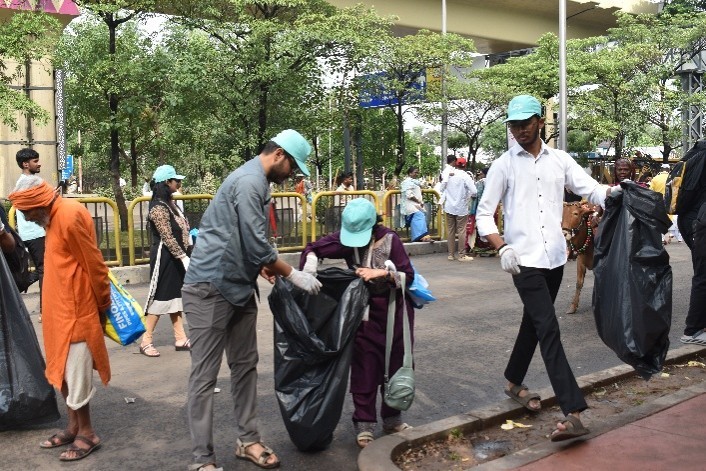
Representatives from government departments, educational institutions, CSR partners, civil society organisations and local communities joined hands, keeping the pilgrimage routes clean. A total of 497 youth volunteers, 91% more than the planned target, joined the 18-day journey on the Sant Tukaram Maharaj (Dehu–Pandharpur) and Sant Dnyaneshwar Maharaj (Alandi–Pandharpur) Palkhi routes. These volunteers contributed an average of 6 hours of service each day over the 18-day campaign period. This represents an estimated 53,676 volunteer-hours of environmental service. They collected discarded plastic bottles and wrappers, encouraged pilgrims to use dustbins, spoke with Warkaris about protecting the environment, and shared the message that caring for nature is also a form of devotion. The campaign covered 18 major Mukkam (halt) locations along the two Palkhi routes. These halt points served as key locations for volunteer engagement, awareness activities, plastic waste collection, and community participation.
The campaign adopted a coordinated and systematic implementation approach to address operational and environmental challenges.
- Deployment of trained volunteers across both Palkhi routes.
- Daily coordination with local administration, Gram Panchayats, and partner organizations.
- Continuous public awareness activities encouraging responsible waste disposal.
- Daily collection, segregation, temporary storage, and transportation of plastic waste for recycling.
- Regular communication among field coordinators, route teams, and campaign management through official reporting channels.
- Strong collaboration among government agencies, CSR partners, educational institutions, and community organizations.
Together, they collected 7,139 kgs of plastic waste, preventing it from polluting the pilgrimage routes and surrounding ecosystems. The collected plastic waste underwent micro-level segregation based on different plastic categories. After segregation, the recyclable plastic was processed through an agglomerator, where suitable plastic materials were prepared for recycling. The processed material was then handed over to authorized recycling partners, ensuring that the collected plastic was diverted from landfills and reintroduced into the recycling value chain.
Green Wari adopted a mobile collection model, where volunteers conducted plastic collection during the pilgrimage and carried out backside cleanliness drives after the Wari had passed through each location.
The other waste generated during the campaign was handed over to the respective local administration and municipal waste management authorities. These agencies transported and processed the waste through their existing municipal waste management systems following standard disposal procedures.
Along with collecting a large amount of waste, Green Wari encouraged people to keep their surroundings clean and change their behaviour. Pilgrims handed over plastic bottles directly to volunteers instead of discarding them, local communities appreciated cleaner halting points, and young volunteers emerged as environmental ambassadors. The initiative strengthened collaboration among municipal corporations, educational institutions, religious committees, corporate partners, and community organisations, representing how collective responsibility can address environmental challenges at scale. The Satara Police Association appreciated the commitment of the Green Wari volunteers and recognized the campaign as an important step towards environmental conservation during the pilgrimage.
The campaign also gave students and young volunteers an opportunity to develop leadership skills. By taking part in one of Maharashtra’s most respected cultural traditions, they gained practical experience in protecting the environment, working as a team, communicating with people, and serving the community. Their participation reinforced the belief that young people are not only future leaders but also active changemakers capable of driving sustainable development today.
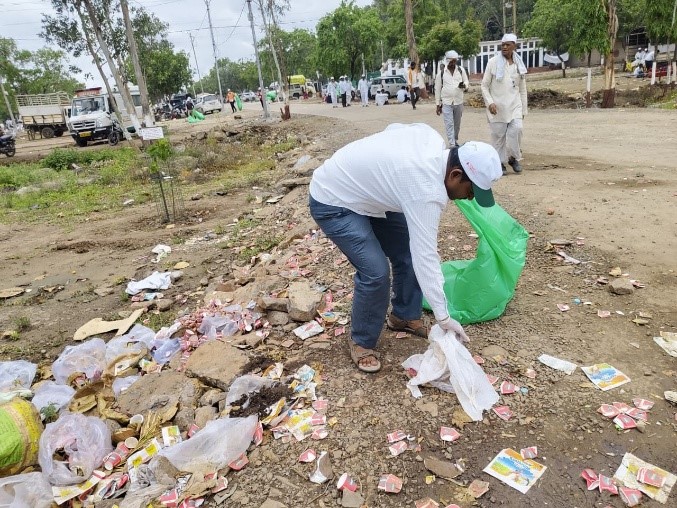
Volunteers participated in the following activities:
- Engaging in plastic waste collection activities.
- Encouraging pilgrims to dispose of waste responsibly.
- Assisting the volunteer teams at village halt locations.
- Supporting awareness activities within their communities.
- Coordinating with local administration to facilitate the smooth implementation of the campaign.
- Promoting the message of a clean and plastic-free pilgrimage.
Green Wari 2026 became a community-led environmental movement through active volunteer participation. It showed that successful waste management depends on partnerships, public participation, and lasting behaviour change. Over the next three years, the campaign aims to expand volunteer engagement, strengthen waste systems, deepen community involvement, and inspire similar initiatives across India.
Acknowledgement
Green Youth Movement sincerely thanks Terre des Hommes Foundation (TDH) and Terre des Hommes France for their valuable support in making Green Wari 2026 possible.
We also extend our heartfelt gratitude to Terre des Hommes France, AIILSG, Umicore, Bisleri – Bottles For Change, D. Y. Patil College, Pune Municipal Corporation, Pimpri Chinchwad Municipal Corporation, Zilla Parishad Pune, Sant Tukaram Maharaj Palkhi Sohala Committee, Sant Dnyaneshwar Maharaj Palkhi Sohala Committee, Christ College, SNDT College of Social Work, Pragatipath Social Foundation (Phaltan), Deccan College Yerwada, Karhamai Foundation (Saswad), local communities, Warkaris, and every volunteer, Warkaris, and every volunteer whose dedication transformed devotion into a movement for a cleaner and more sustainable Wari.
