
By Gangadhar Ghayar, Project Manager
For the farming families of Pembi Block in Shetpalle Village, Nirmal District, Telangana, agriculture is more than a source of income—it is the foundation of their livelihoods. Every season, farmers depend on rainfall and groundwater to cultivate their crops. Over the years, however, the village nala became heavily silted, reducing its capacity to store rainwater and recharge groundwater. As a result, irrigation water became scarce, while heavy rainfall caused water to overflow into agricultural fields, leading to waterlogging, crop damage, and the loss of fertile topsoil. Groundwater levels in wells and borewells continued to decline, making farming increasingly difficult and threatening the livelihoods of rural households.
Challenges
Before the intervention, farmers faced several water-related challenges:
- Water flowed into agricultural fields every year during the monsoon.
- Soil erosion resulted in the loss of fertile topsoil.
- Waterlogging caused crop damage during heavy rainfall.
- Groundwater levels declined in wells and borewells.
- Poor rainwater retention reduced groundwater recharge.
- Agricultural productivity declined, while barren lands remained underutilized due to inadequate soil moisture.
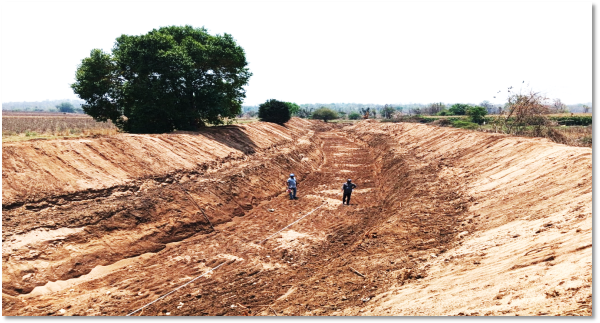
Recognizing these challenges, CYDA, under the HRDP 2.0 Project with financial support from HDFC Bank CSR, implemented a Nala Deepening Initiative to restore the village’s natural drainage system and improve its water-holding capacity. The accumulated silt was excavated to enhance rainwater storage, improve groundwater recharge, and ensure efficient drainage during the monsoon. The nutrient-rich excavated silt was transported to nearby barren and low-productivity lands, improving soil fertility and increasing their agricultural potential.
Key Outputs
- A total of 1,523 metres of nala was rejuvenated.
- 22,322.56 cubic metres of accumulated silt was removed from the nala.
- Fertile excavated soil was reused to improve nearby barren lands.
- Water conservation capacity within the village watershed was significantly enhanced.
Outcomes
- Improved rainwater retention enhanced groundwater recharge, with groundwater levels expected to increase by approximately 1 metre in 7 open wells and water availability expected to improve in 17 borewells.
- The intervention directly benefited 46 farming households through improved access to irrigation water.
- Reduced surface runoff, waterlogging, and soil erosion helped protect agricultural lands and improve land productivity.
- Improved water availability strengthened irrigation potential and promoted more reliable and sustainable agricultural practices.
- Better soil moisture created opportunities to cultivate previously barren and low-productivity lands.
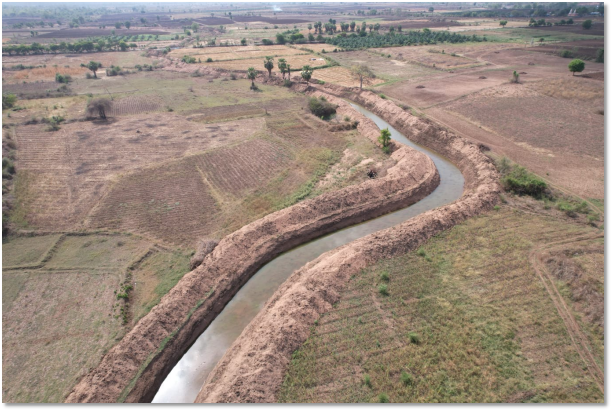
Among those who experienced this transformation is Krishna Maddewad, a Water User Group (WUG) member from Shetpalle Village. Reflecting on the impact, he shared:
“The Nala Deepening work has brought a remarkable change to our village. Earlier, a large quantity of rainwater used to flow away without benefiting our farms. Now, the deepened nala stores and safely carries the entire rainwater, resulting in significant groundwater recharge. The water levels in nearby open wells and borewells have improved, ensuring a reliable source of irrigation for agriculture. Even during periods of heavy rainfall, excess water is efficiently drained through the nala, preventing waterlogging and protecting our fields from soil erosion and the loss of fertile topsoil. Land that had remained fallow for several years is now being brought back under cultivation. With improved water availability, we are able to grow crops such as Cotton, Maize, Paddy, Turmeric, and vegetables during the Rabi and summer seasons as well. This intervention has not only strengthened our farming activities but has also enhanced our livelihoods by ensuring year-round water security.”
Today, the restored nala has become a sustainable community asset that has significantly strengthened water security and agricultural resilience in Shetpalle Village. Farmers now have greater confidence in planning their crops, groundwater availability has improved, and agricultural lands are more productive. By enhancing water conservation, improving irrigation potential, promoting responsible natural resource management, and strengthening rural livelihoods, the intervention has laid a strong foundation for sustainable agriculture and long-term rural development in Shetpalle Village.
