
By Impactlens Correspondent
“I came here to complete an internship. I left with a new way of looking at life.”
Those words, expressed in different ways by three young law students, capture something remarkable about internships at the Centre for Youth Development and Activities (CYDA). None of them joined expecting a life-changing experience. They came because their college required an internship. They left with stronger professional skills, greater confidence, a deeper understanding of society, and a renewed sense of responsibility towards India’s future.
Across India, thousands of university students complete internships every year. Many spend weeks making PowerPoint presentations, entering data into spreadsheets, or observing office routines. They receive certificates, add another line to their résumé, and move on.
Yet an internship can be far more than a requirement for academic credits. When thoughtfully designed, it becomes a bridge between education and employment, between theory and practice, and perhaps most importantly, between personal ambition and social responsibility.
For more than two decades, CYDA has believed that youth development cannot happen only inside classrooms. Young people grow when they engage with communities, solve real problems, conduct meaningful research, interact with diverse groups of people, and reflect on their own experiences. The stories of Ruchi Jaiswal, Soumita Pal, and Maliha Nawaz, second-year law students from Marathwada Mitra Mandal’s Shankarrao Chavan Law College, Pune, illustrate how experiential learning can shape not only careers but also character.
Learning Beyond the Classroom
The three students joined CYDA for a one-month internship between 8 December 2025 and 8 January 2026. Although they studied in the same college, each entered the organisation with different expectations.
Ruchi always wanted to work with an NGO and saw CYDA as her first opportunity to understand development work. Soumita was curious about how non-profit organisations function because she dreamed of establishing her own organisation in the future. Maliha admits that she initially treated the internship simply as another assignment that needed to be completed on time.
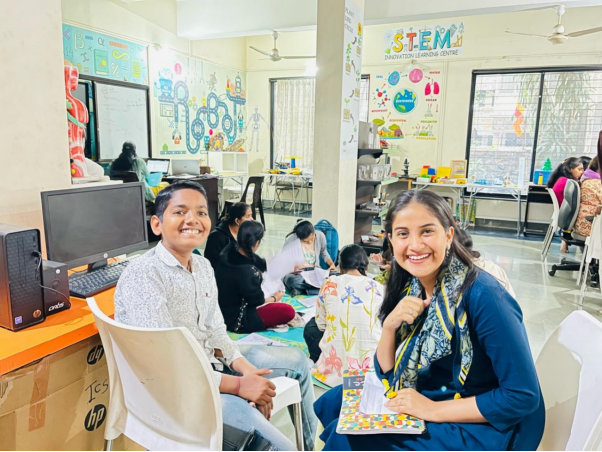
Within a few weeks, all three realised that CYDA expected much more than attendance. Instead of assigning routine administrative work, interns became active contributors to research, documentation, policy analysis, communication, and programme learning.
This responsibility immediately shifted their role from passive observers to young professionals.
Research That Matters
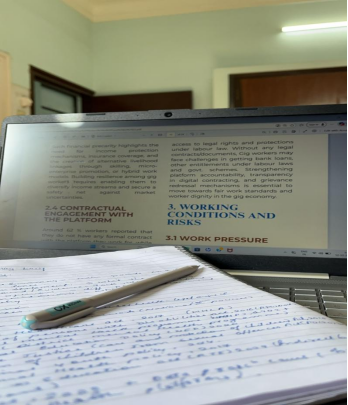
One of CYDA’s distinctive internship practices is assigning students research linked to contemporary public policy challenges. Rather than preparing academic summaries, the interns were asked to develop policy briefs on issues affecting millions of Indians.
Among the themes were:
- Youth mental health
- Adolescent mental health rights
- Consent, capacity and legal protection
- Social security for gig workers
- Employment rights in the platform economy
For law students, these assignments transformed constitutional principles and legal provisions into living realities. Research demanded extensive reading, critical analysis, verification of sources, and careful documentation.
Ruchi observed that she could now connect legal theory with the everyday struggles of ordinary citizens. Laws were no longer abstract concepts discussed in classrooms—they became instruments that could either empower or exclude communities.
Soumita discovered that meaningful research requires curiosity and patience. She intentionally reduced her dependence on artificial intelligence for writing and instead used technology only to refine language and improve presentation. “It helped me build my own understanding of the issue,” she reflected.
In an era increasingly dominated by AI-generated assignments, this lesson may be one of the internship’s most valuable contributions.
Listening Before Writing
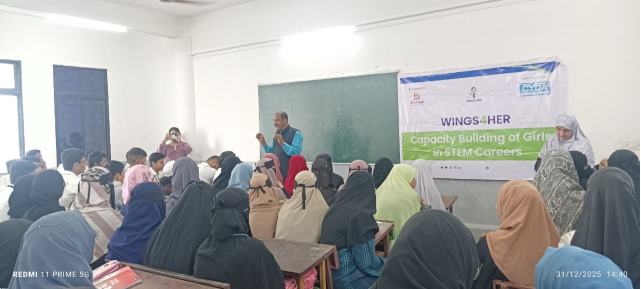
Perhaps the most transformative assignment involved documenting case stories. Interns travelled to communities, educational institutions, and youth programmes to interact directly with beneficiaries.
They interviewed students, adolescent girls, STEM participants, and young people who had benefited from CYDA’s interventions. Writing a case story demanded more than recording facts. It required listening with empathy. It required understanding people’s aspirations, fears, and achievements. It required accurately representing another person’s voice.
For young students with little previous exposure to communities, these conversations became moments of profound learning. Ruchi realised that behind every statistic lies a human story. Small interventions such as career guidance, mentoring, life skills education, and skill development can fundamentally change a young person’s confidence and future. The experience made her appreciate the importance of community-based development.
From Sympathy to Responsibility
Among all the reflections, one statement stands out.
Soumita wrote: “My biggest learning was not to feel sorry, but to feel responsible.” This sentence perhaps best describes the philosophy behind CYDA’s internship programme.
Many young people initially approach disadvantaged communities with sympathy. However, effective development practice requires something deeper. Communities do not need pity. They need opportunities, partnerships, knowledge, and systems that allow them to realise their own potential.
While interviewing girls participating in STEM programmes, Soumita witnessed remarkable resilience rather than helplessness. She later met a representative from Muskan Foundation who had herself grown up in the same marginalised community and had spent the last decade working for her own people.
For Soumita, this was a defining moment. Development was no longer about helping “others.” It was about enabling leadership from within communities. That understanding can never be acquired from textbooks alone.
Professionalism Is a Skill
Many university graduates struggle during their first employment because they have never experienced a professional workplace. CYDA deliberately exposes interns to organisational systems and expectations.
Assignments require:
- Professional email communication
- Documentation standards
- Time management
- Team coordination
- Deadline compliance
- Independent research
- Public interaction
- Reflective writing
Initially, these expectations appeared demanding. Maliha admits she often wondered whether interns were being asked to shoulder too many responsibilities. Yet as the internship progressed, she realised these responsibilities were preparing her for professional life.
By the end of the month, she described herself as more disciplined, more confident, and more career-focused. Similarly, Ruchi explained that interacting with unfamiliar people gradually removed her hesitation in public communication. These changes cannot be measured by examination marks, yet they often determine long-term career success.
Learning Through National Events
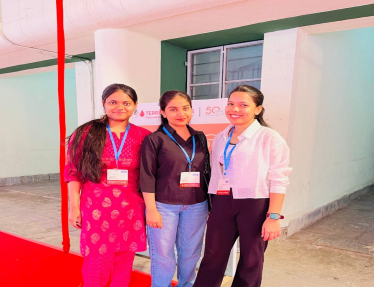
The internship also extended beyond office work. All three students volunteered during the 50th Anniversary of Terre des Hommes (TDH) India, organised by CYDA.
The event brought together development practitioners, community leaders, and participants from different Indian states. Interns documented participant experiences, interviewed delegates, collected feedback, and observed the management of a major national programme.
For many, it was their first opportunity to interact with experienced social development professionals. Listening to practitioners who had spent decades working in communities expanded their understanding of development far beyond what any classroom lecture could provide.
Mentorship Makes the Difference
A recurring theme across all three internship reflections is the role of mentorship. Each intern expressed deep appreciation for Mrs. Soumyashree, who supervised the programme. They describe her as patient, approachable, disciplined, and always willing to guide. Whether responding through email, WhatsApp, or face-to-face conversations, she consistently encouraged interns to improve rather than merely complete assignments.
Good internships require good mentors. Tasks teach skills. Mentors shape attitudes.
The professionalism, patience, humility, and work ethic demonstrated by mentors often become lasting lessons for young professionals.
Character Before Career
The greatest achievement of the internship was not simply improved writing, research, or communication.
It was character formation. Each student described becoming:
- More confident
- More disciplined
- Better listeners
- More patient
- More socially aware
- More grounded
- More responsible
- More empathetic
These qualities cannot be acquired through lectures or examinations. They emerge only when young people are trusted with meaningful responsibility and encouraged to reflect on their experiences. In an age where employers increasingly seek emotional intelligence, ethical judgement, teamwork, and adaptability, such experiences become invaluable.
Why India Needs Better Internships
India today has one of the world’s largest youth populations. By the end of this decade, nearly one in every five working people globally will be Indian. Preparing this generation requires much more than academic excellence. Young people need opportunities to understand society, interact across cultures, appreciate diversity, solve real-world problems, and develop ethical leadership.
Universities alone cannot accomplish this task. Civil society organisations, businesses, educational institutions, and governments must work together to create meaningful experiential learning opportunities. Internships should become laboratories for citizenship, leadership, innovation, and nation-building.
The CYDA Model
CYDA’s internship programme demonstrates that youth development is most effective when it integrates four dimensions:
Learning through research and policy analysis.
Experience through community interaction and field exposure.
Reflection through documentation, dialogue, and mentorship.
Transformation through personal growth and professional responsibility.
The experiences of Ruchi Jaiswal, Soumita Pal, and Maliha Nawaz show that even a one-month internship can influence a young person’s academic outlook, professional behaviour, and social consciousness. Certificates may acknowledge participation. Transformation is the true outcome.
Investing in India’s Future
Every internship represents an investment. The question is not whether students receive experience. The question is what kind of citizens that experience helps create.
At CYDA, internships are designed not simply to prepare employable graduates but to nurture compassionate professionals, ethical leaders, critical thinkers, and responsible citizens.
The stories of these three young women remind us that when organisations trust young people with responsibility, expose them to real social challenges, encourage rigorous thinking, and provide caring mentorship, internships become much more than educational requirements.
They become pathways to leadership. And when thousands of such young leaders enter society every year, the impact extends far beyond individual careers. It contributes to building a stronger, more inclusive, and more compassionate India.
As India prepares to become the world’s youngest workforce, institutions must ask not merely how many interns they host, but how many future leaders they help shape. That is the true measure of an internship—and the enduring legacy of CYDA’s youth development journey.
