
Citizens unite across political and religious lines, calling for firm enforcement, public accountability and protection from noise pollution.
By ImpactLens Correspondent
More than 1,000 citizens took to the streets of Pune on Sunday, 6 September 2026, demanding a complete ban on high-decibel DJ systems during festivals, religious processions, political gatherings and anniversary celebrations. The peaceful rally reflected growing public anger over excessive noise, traffic congestion and what participants described as continued inaction by the Maharashtra government and Pune police.
Organised by the Punekars Against Loudspeakers Forum, the non-political march began at Balgandharva Chowk and concluded at the Pune Municipal Corporation headquarters. Elderly citizens, people affected by illness, social activists, representatives of civil society organisations and members of different political parties participated in the demonstration.
Carrying handmade placards and banners, the demonstrators raised slogans demanding freedom from deafening sound systems. “Turn off the noise, DJ—we swear it in the name of Pune!” was among the slogans that resonated through the city streets.
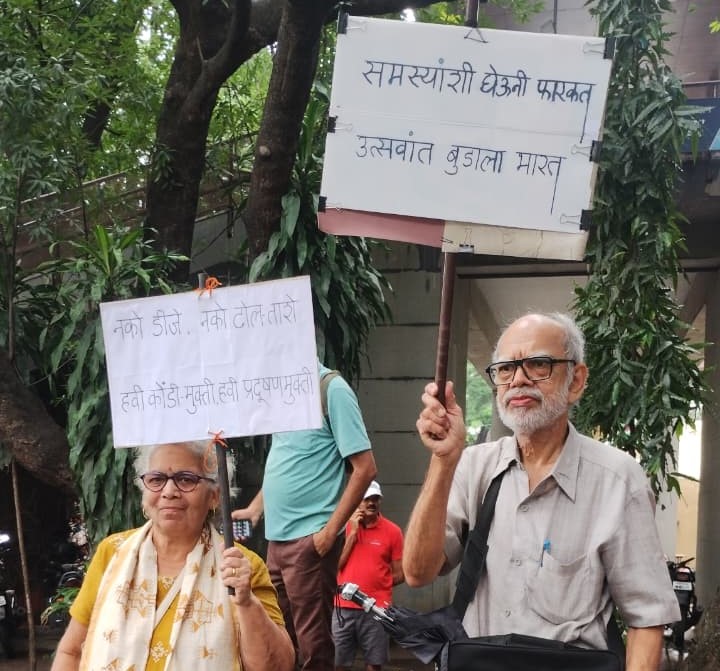
The protest was not directed against any particular religion, festival or community. Participants repeatedly clarified that their demand applied equally to all religious, social, caste-based and political events. Their message was simple: the right to celebrate cannot override the right of citizens to health, peace, mobility and safety.
A Public-Health Concern
Excessive noise is often dismissed as a temporary inconvenience associated with festivals. For residents, however, the consequences can be serious. Children, senior citizens, hospital patients, pregnant women, people with heart conditions, persons with disabilities, and those experiencing anxiety or sensory sensitivity can be particularly vulnerable to sustained high-decibel sound.
The impact extends beyond hearing impairment. Prolonged exposure to extreme noise can disturb sleep, increase stress, aggravate health conditions and affect mental well-being. Loud processions also cause traffic congestion, restrict access to homes and hospitals, and make routine movement difficult.
One resident described how the final two days of the Ganesh festival effectively turn the family’s home into a prison.
“We have suffered from noise pollution and traffic jams for years. During the last two days of the Ganesh festival, our house becomes like a jail. We cannot step out even for a moment. We urge the government and police to bring discipline to the festival by prioritising a ban on loud music,” the resident said.
Clear Demands for Accountability
The memorandum submitted by the forum called for preventive action rather than temporary or selective enforcement. Its principal demand was a ban on high-decibel DJ systems before the festive season began.
The protestors also asked the authorities to publicly release the names and contact details of officers responsible for enforcing noise regulations. They demanded that real-time noise-level data and details of enforcement action be published daily on official websites. These demands move the debate beyond a simple call to “reduce the volume.” They seek transparent, measurable and accountable enforcement. Citizens want to know who is responsible, how noise levels are being monitored, what action is being taken against violations, and what remedies are available to those harmed.
The forum maintained that occasional warnings, symbolic seizures of equipment or selective action against a few organisers would not resolve the problem. Effective enforcement must be consistent and must apply without discrimination.
Solidarity Beyond Religious and Political Identities
One of the rally’s most significant features was the coming together of people from different faiths, political backgrounds and social organisations.
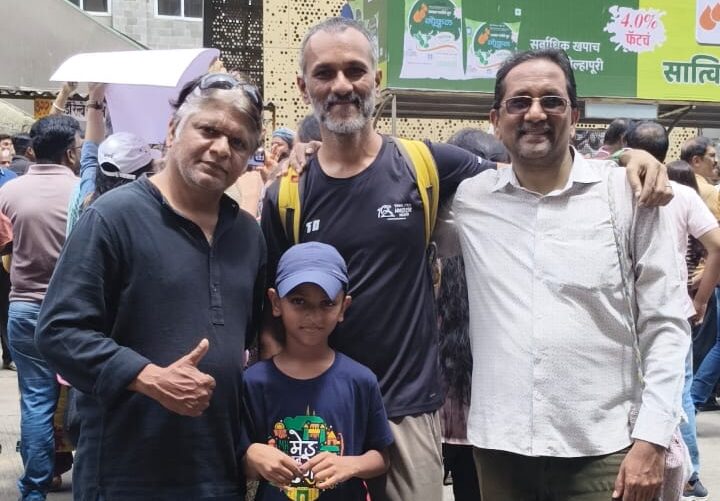
“Seeing atheists and believers come together in Pune to protest against the misuse of DJs during festivals was deeply moving,” said participant Ashok Nirgulkar. “It reminded me that shared concerns can dissolve boundaries and create genuine solidarity.”
NCP (SP) leader Sunil Mane, who said he joined the rally as a citizen, also highlighted its inclusive character. “There is unanimity among Pune’s educated population that DJ music should have no place in our festivals, religious events or anniversary celebrations,” Mane said. “Members of Hindu, Muslim and Christian communities joined the protest and strongly demanded that DJ music be banned from festivities.” He criticised both the state government and police for failing to take firm action against ear-splitting sound systems.
Celebration Should Be Grand, Not the Noise
Harendra Godambe, another participant, said the growing dependence on DJs had begun to redefine the nature of festivals themselves.
“Festivals today appear to be celebrated according to the availability of DJs rather than the true meaning of the occasion,” he said. “The noise makes it unbearable for people to remain inside their own homes. Such sound levels should not be permitted.”
Gautam Jambhulkar expressed the same concern in a concise appeal: “The celebration should be grand, not the noise. Let us celebrate Ganesh Utsav with devotion, culture and peace—not with excessive DJ noise. India’s festivals celebrate our rich diversity, strengthen communities, and preserve cultural heritage. Yet excessive use of DJs and loudspeakers can harm children, senior citizens, patients, students, and animals. Celebration is everyone’s right, but respecting others’ peace and well-being is our shared responsibility. Young people can lead the change by promoting traditional arts, cultural programmes, environmental initiatives, and community participation. Let every festival be filled with devotion, culture, inclusion, and joy. Let the celebration be grand—not the noise”
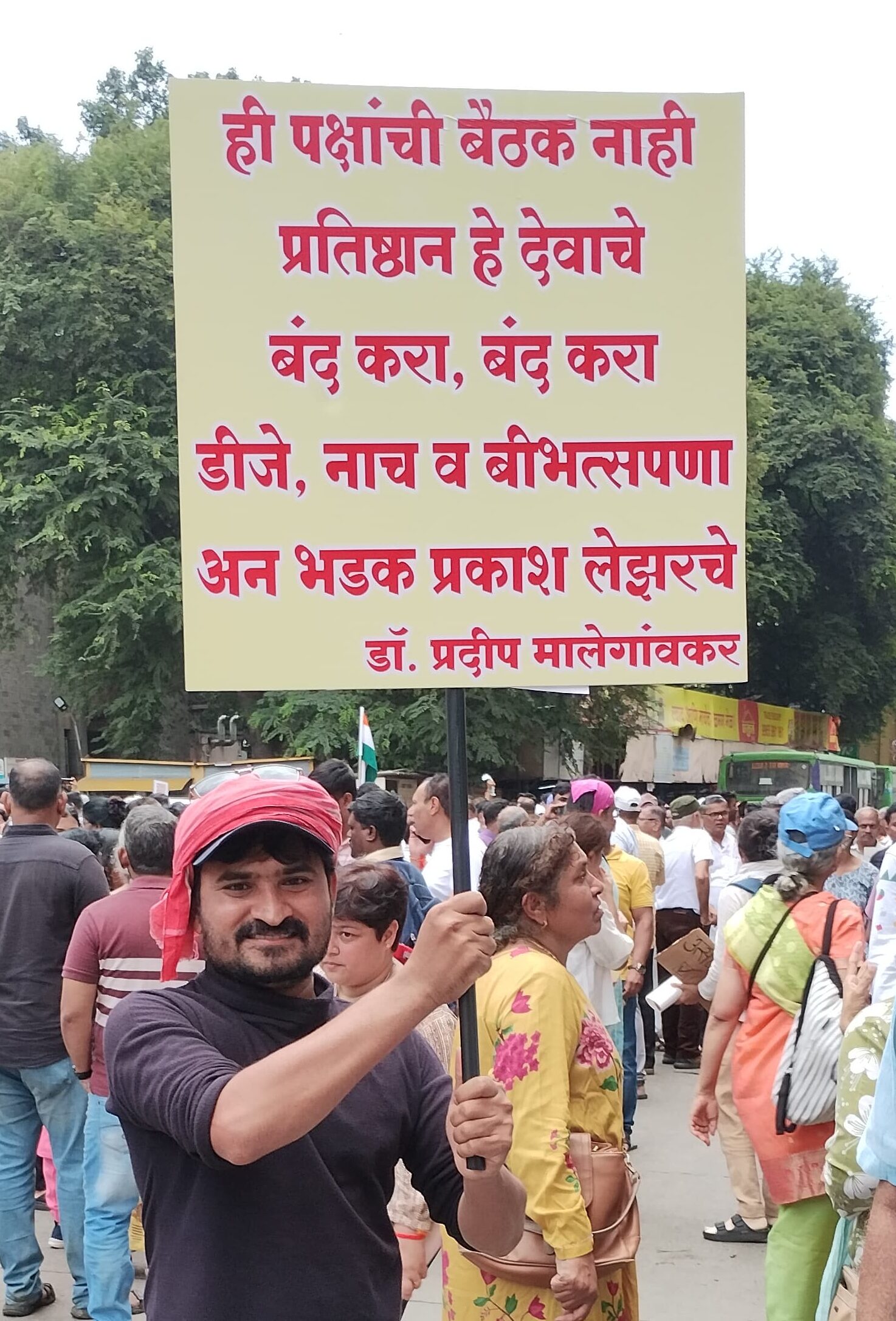
This distinction is at the heart of the movement. The protestors are not opposing festivals, music or public celebrations. They are asking whether devotion and cultural pride must be demonstrated through extreme volume. Pune possesses a rich tradition of music, theatre, public dialogue and community celebration. Citizens argue that this heritage should encourage creativity and cultural expression, not competitive noise.
Vidyanand Bapat, who had initially raised the DJ issue during a Ganesh festival preparatory meeting organised by the municipal corporation and police, did not attend the rally. It was reportedly the second related protest he had missed within a week, and no reason was given for his absence.
A Test of Responsive Governance
The rally presents Pune’s administration with a clear test. Noise-control rules have meaning only when they are enforced impartially and consistently. Authorities cannot act firmly in one locality while ignoring violations elsewhere, nor should enforcement depend on the religious or political identity of an event’s organisers.
The government, police, municipal authorities, festival committees and citizens must work together to create celebrations that are joyful, inclusive and safe. This requires advance communication of permissible limits, continuous monitoring, action against violations, protection for complainants and public disclosure of enforcement results.
More importantly, Pune must reject the false choice between culture and public health. Festivals can remain vibrant without causing suffering. Music can enrich celebrations without becoming a weapon against neighbourhoods. Religious freedom and cultural expression can coexist with citizens’ constitutional rights to health, dignity, and peaceful living. Through this protest, citizens are demanding responsive governance and responsible celebration. Their voices have come together across religious, political and social boundaries. The question now is whether the government and police are prepared to listen and, more importantly, to act.
