
By Ganesh Waghmode, Agricultural Expert
In the drought-prone region of Sangola in Maharashtra, smallholder farmers often struggle with water scarcity and uncertain rainfall. One such farmer is Mr. Sunil Itape from Diksal village. He belongs to a family of five members and depends completely on farming for his livelihood. He owns 3.5 acres of agricultural land. He used to use traditional methods to cultivate crops such as maize, bajra, jowar and fodder crops. Around 1.5 acres were used for maize cultivation, 1 acre for bajra, and the remaining area for fodder crops such as jowar and maize for livestock.
Sunil traditionally followed conventional farming and irrigation practices. His farming depended largely on unpredictable rainfall and flood irrigation, where water was supplied through open channels across the field. This resulted in considerable water wastage through runoff and evaporation, uneven distribution of water, increased weed growth and soil degradation. Due to irregular rainfall and inefficient irrigation practices, crop productivity remained low.
For the last eight years, Sunil had experienced unstable income from farming. Earlier, he cultivated traditional crops with very low yields and earned approximately Rs. 20,000 to Rs. 25,000 annually. The limited availability of water and dependence on rainfall made it difficult for him to improve productivity or increase his farm income. He was also hesitant to cultivate high-value crops because of the fear of uncertain returns and the risk of crop loss due to inadequate water availability.
Under the Comprehensive Village Development Programme, implemented by Centre for Youth Development and Activities (CYDA), with support from SBI Mutual Fund, a drip irrigation system along with technical guidance was provided to Sunil and 30 other farmers involved in fruit and vegetable cultivation.
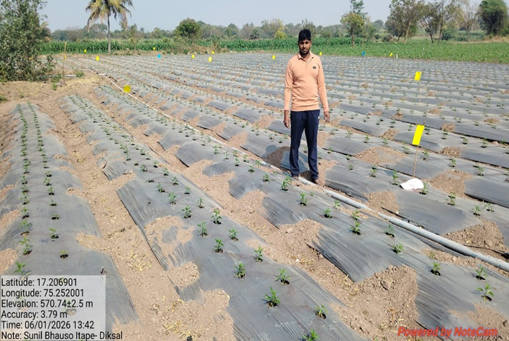
In mid-2025, Sunil installed a drip irrigation system on his one-acre plot. The system helped him use water more efficiently and provided uniform irrigation to the crop. In December 2025, he cultivated chilli, a high-value crop, by planting 5,000 seedlings at a spacing of 5 ft × 1.5 ft. The total cost of installing the drip irrigation system was Rs. 49,570/-, of which Sunil contributed 20%, amounting to Rs. 9,914/-, towards the installation cost. Along with the irrigation system, he received technical guidance on its operation and maintenance, helping him gradually become familiar with the new irrigation practice.
Transformation through Drip Irrigation
The installation of the drip irrigation system brought significant changes to Sunil’s farming practices. Within three months of installing the system, he was able to harvest his chilli crop. The drip system supplied water precisely to the root zone of the plants, ensuring targeted and efficient use of water. Unlike conventional flood irrigation, the system helped reduce water loss through evaporation and runoff. This enabled Sunil to cultivate more crops with less water. The controlled application of water also reduced unnecessary moisture across the field, which helped reduce weed growth. The improved irrigation system not only helped Sunil manage the available water more efficiently but also gave him greater confidence to cultivate a high-value crop such as chilli. Instead of flooding the entire field, water is supplied directly to the roots of the plants, minimising water wastage and improving productivity.
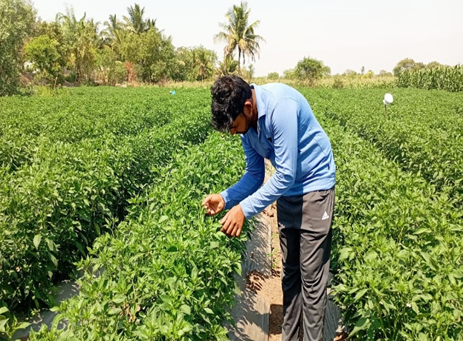
“The drip system helped me use water wisely. Now every drop reaches the roots of the crop, and I don’t worry as much about water scarcity. Before this support, I was afraid to grow high-value crops. With the guidance and drip irrigation system, I was able to successfully cultivate chilli.” Sunil Itape
The adoption of drip irrigation and chilli cultivation brought significant improvements in Sunil’s farm productivity, water use and income. He has completed 10 harvests, with an average yield of 320 to 350 kg per harvest. So far, he has harvested around 3.5 tonnes of chilli and expects another 3 to 3.5 tonnes from the upcoming harvests, taking the total expected yield to around 6.5 to 7 tonnes. The drip irrigation system helped reduce water consumption by approximately 60% to 70%. Sunil sold the harvested chillies in the Sangola and Jat markets at a price of Rs. 40 to Rs. 45 per kg. He has earned approximately Rs. 1.4 lakh from chilli sales and expects an additional Rs. 1 to 1.5 lakh from the upcoming harvests.
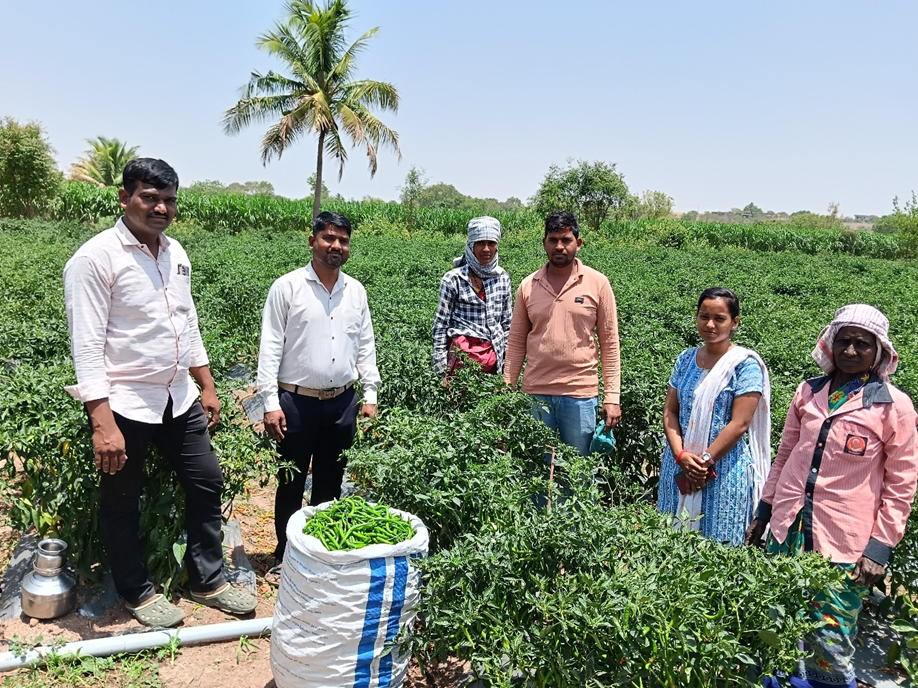
With the increased productivity and income, Sunil’s annual agricultural income has increased from approximately Rs. 20,000 to Rs. 25,000, with an expected net profit of around Rs. 2 to 2.25 lakh. The increased income has helped him manage household expenses, repay agricultural loans, support his children’s education and invest in improved farming inputs. It has also reduced his financial stress and increased his confidence in farming as a sustainable livelihood option. With this experience, Sunil is now willing to adopt more modern and sustainable farming techniques in the future. Looking at the positive results of Sunil’s experience, several farmers in the village have started showing interest in adopting drip irrigation. His experience has demonstrated the benefits of efficient water use, improved crop productivity and the potential for higher farm income, encouraging other farmers to consider adopting the practice.
