
Heat, Caste and the Erasure of Intergenerational Knowledge in North Karnataka
By Jinu Sam Jacob, Development Practitioner, Bengaluru
Recent climate discourse has increasingly foregrounded human mobility as a central consequence of environmental change. However, the dominant framing of such mobility as “climate migration” remains analytically inadequate in contexts marked by historical inequality, caste-based exclusion and development-induced dispossession. Drawing on field observations from Koppal and Gadag in North Karnataka, this perspective argues for a conceptual and political shift: from “climate migrants” to environmental refugees and from viewing frontline communities as passive victims to recognizing them as climate faculties. Such a reframing foregrounds the coercive nature of displacement, where mobility is driven not by choice but by the erosion of viable livelihoods. It also challenges the epistemic hierarchy that privileges formal scientific knowledge while marginalizing intergenerational, experience-based understandings of climate and ecology. Finally, it calls for repositioning frontline communities at the centre of climate discourse, not merely as subjects of vulnerability but as agents whose knowledge and labour have historically sustained both local ecosystems and broader economies.
From Variability to Breakdown
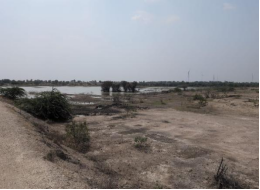
Semi-arid regions of North Karnataka have long been characterized by climatic variability. Agricultural labourers in these regions have historically navigated uncertain rainfall, fluctuating water availability and seasonal shifts through intergenerationally transmitted practices. These include decentralized water harvesting systems, adaptive cropping decisions and seasonal migration as a form of livelihood diversification. However, field evidence suggests that over the past decade, these systems have come under significant stress. Community-built check dams and water harvesting structures are no longer replenished as they once were. Rainfall patterns have become erratic, often concentrated in short bursts rather than sustained periods. Groundwater levels have declined, a trend corroborated by the Central Ground Water Board (CGWB 2020).
The International Labour Organization estimates that heat stress will significantly reduce labour productivity in sectors such as agriculture (ILO 2019). In these regions, the impact is already visible in declining agricultural workdays and increasing livelihood insecurity among landless labourers. This shift marks a transition from manageable variability to systemic breakdown.
Caste, Land and Differential Vulnerability
Climate impacts are mediated through existing social and economic structures. In Koppal and Gadag, agricultural labourers are predominantly landless and belong to historically oppressed and marginalized caste groups. Data from the National Sample Survey Office indicates persistent land inequality, with Scheduled Castes disproportionately represented among the landless (NSSO 2019). Landlessness constrains adaptive capacity. Without access to land or capital, agricultural labourers cannot invest in irrigation, diversify production, or absorb shocks. Their dependence on wage labour makes them highly vulnerable to fluctuations in agricultural demand. As the Intergovernmental Panel on Climate Change acknowledges, vulnerability to climate change is shaped by socio-economic conditions (IPCC 2022). Yet, the integration of caste as a structural determinant remains limited within mainstream climate frameworks.
Development-Induced Dispossession
The vulnerability of these communities is further compounded by historical processes of land acquisition for energy projects, mining and infrastructure development. While such projects are framed as contributing to national development, their local impacts are unevenly distributed. Compensation frameworks, guided by the Right to Fair Compensation and Transparency in Land Acquisition, Rehabilitation and Resettlement Act, 2013, primarily recognize formal landowners. Agricultural labourers, despite their dependence on these lands for livelihood, are largely excluded from compensation and rehabilitation processes. This produces a layered form of dispossession, where communities already marginalized by caste and landlessness are further displaced by development interventions.
From Seasonal Migration to Environmental Displacement
Historically, agricultural labourers in these regions engaged in seasonal migration as a form of adaptive strategy. Local agricultural work for part of the year was supplemented by migration to other regions during lean periods. However, the interaction of climate stress with persistent livelihood insecurity and poverty is now reshaping this pattern in fundamental ways. Declining water availability, rising heat and reduced agricultural workdays have sharply constrained local earning opportunities, intensifying income poverty among landless households. As noted by the International Labour Organization, climate-induced heat stress is already reducing labour productivity in sectors such as agriculture, further eroding rural livelihoods (ILO 2019).
In recent years, field observations from Koppal and Gadag suggest a significant shift: migration is no longer limited to individual male workers but increasingly involves entire families. “Earlier only men used to go and come back. Now the whole family goes,” as one respondent noted. This reflects the deepening of distress, where the village economy can no longer sustain even subsistence-level survival for those left behind. The movement toward cities such as Bengaluru and Hyderabad is thus not a temporary coping mechanism but an enforced relocation of households.
This shift marks a transition from adaptive, cyclical mobility to distress-driven, long-term displacement. The term “climate migrants” fails to capture this intensifying coercion. In contrast, the framing of environmental refugees foregrounds how climate change, livelihood collapse and structural poverty converge to force entire families out of their socio-ecological contexts.
Epistemic Exclusion and Climate Faculties
A critical dimension of this crisis lies in the systematic marginalization of intergenerational knowledge systems. Agricultural labourers in semi-arid regions have, over generations, developed finely tuned understandings of ecological processes, including rainfall variability, soil behaviour, cropping thresholds, and seasonal indicators. These are not anecdotal insights but cumulative, practice-based knowledge systems that have enabled survival under conditions of uncertainty. In effect, they constitute a form of embedded climate knowledge grounded in lived experience and continuous adaptation.
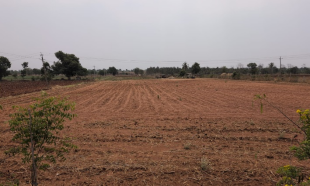
Yet, this knowledge remains structurally excluded from dominant climate science and policy frameworks, which continue to privilege model-based, technocratic, and externally validated forms of expertise. Even where vulnerability is acknowledged, the epistemic authority of frontline communities is not. As reflected in global assessments such as those by the Intergovernmental Panel on Climate Change, local knowledge is often referenced but rarely operationalized in decision-making processes (IPCC 2022). This produces a condition of epistemic exclusion, where communities are simultaneously visible as sites of impact but invisible as producers of knowledge.
This exclusion is not incidental; it has material consequences. By disregarding intergenerational knowledge, policy frameworks risk designing adaptation strategies that are misaligned with local ecological realities, while also erasing the intellectual and practical contributions of those who have historically sustained these landscapes. It is in this context that this article advances the concept of climate faculties. Recognizing frontline communities as climate faculties is a deliberate political and epistemic intervention. It shifts the discourse from vulnerability to capability, from passive victimhood to active knowledge production, and from external solutionism to grounded, community-led adaptation. More importantly, it demands that climate governance move beyond token inclusion toward substantive recognition, where the knowledge of frontline communities is not merely documented but institutionally embedded, materially valued and compensated.
The Politics of Vocabulary
Language is never neutral; it is an instrument through which power is exercised and politics is enacted. Those who hold institutional, economic and epistemic power also shape the vocabulary through which reality is described and understood. By renaming conditions of injustice into neutral or technical terms, language becomes a tool that depoliticizes inequality and shifts attention away from structures of power. What is experienced as hunger becomes malnutrition, displacement becomes migration, and dispossession becomes development.
In this process, the language of the oppressed, which names reality in direct and political terms, is overwritten by a normalized vocabulary that makes structural violence appear routine, manageable and inevitable. The politics of language therefore lies in who has the authority to define reality and whose words are legitimized. Reclaiming language is not merely about semantics; it is about restoring visibility to injustice, reasserting agency and challenging the narratives that sustain inequality.
Toward an Equity-Based Framework
The disproportionate burden of climate change on marginalized communities necessitates a shift toward equity-based approaches. This includes:
- Expanding compensation frameworks beyond land ownership to include livelihood loss
- Institutionalizing access and benefit sharing mechanisms in development and energy projects
- Integrating community knowledge into climate adaptation strategies
- Ensuring meaningful participation of frontline communities in just energy transitions
Without such measures, climate policy risks reproducing and deepening existing inequalities by embedding climate action within the same structures that have historically marginalized frontline communities. When compensation remains tied to formal land ownership, landless agricultural labourers who are often the most affected continue to be excluded from relief and rehabilitation. When renewable energy expansion proceeds without access and benefit sharing, it mirrors earlier patterns of extractive development, transferring land and resources while offering little in return to those who depend on them. When adaptation strategies privilege technocratic solutions over lived, intergenerational knowledge, they displace local practices rather than strengthening them. As noted by the Intergovernmental Panel on Climate Change, vulnerability is socially differentiated, yet policy responses frequently fail to operationalize this insight (IPCC 2022). The result is a paradox: climate interventions intended to build resilience may instead intensify precarity, consolidating advantages for those with assets and voice, while pushing already marginalized communities further into dispossession and forced displacement.
Conclusion
The experiences of Koppal and Gadag are indicative of broader patterns observed in regions such as Bundelkhand, Marathwada and drought-prone areas of Rajasthan. Across these geographies, climate stress does not operate in isolation; it intersects with caste, land inequality and development-induced dispossession to produce conditions of forced displacement. What is unfolding is not a story of mobility, but of systemic expulsion from viable livelihoods.
Reframing this displacement as environmental forced migration and recognizing frontline communities as climate faculties are essential steps, but they are not sufficient on their own. Without embedding these shifts within an equity-driven policy framework that ensures compensation beyond land ownership, access and benefit sharing and meaningful participation in climate and energy transitions, existing interventions will continue to reproduce the very inequalities they claim to address. The challenge, therefore, is not only to rename the crisis, but to redistribute power, resources and recognition.
Until then, the movement of agricultural labourers will continue to be misread as migration rather than what it is: displacement under constraint. They are not climate migrants. They are environmental refugees.
They did not choose to leave; They were left with no choice
They are not climate migrants; They are environmental refugees
References
- Central Ground Water Board (2020): Dynamic Ground Water Resources of India.
International Labour Organization (2019): - Working on a Warmer Planet: The Impact of Heat Stress on Labour Productivity and Decent Work.
- Intergovernmental Panel on Climate Change (2022): Sixth Assessment Report Working Group II.
- National Sample Survey Office (2019): Land and Livestock Holdings Survey.
- Government of India (2015–16): Agriculture Census of India.
- World Bank (2021): Groundswell Report Part 2.
- NITI Aayog (2022): India’s Booming Gig and Platform Economy Report.

This Post Has One Comment
Wooowwww Sam….what a piece….deeply grounded with sharp political stand….enjoyed reading your article….’environmental refugees’, ‘dispossession’, ‘epistemic exclusion’ and ‘climate faculties’…learned these new words…..Thanks Sam….!!