By Kishor Kale, TrashTech Pvt Ltd
India’s Waste Crisis Is a Resource Crisis. Every morning, India wakes up to a mountain of missed opportunities. Thousands of tonnes of plastic, paper, metal, glass, textiles, and food waste are dumped in open plots, set on fire by roadsides, or pushed into rivers. We call it kabad. Landfills call it a burden. The atmosphere calls it methane. Our children call it normal. But at TrashTech Pvt Ltd, we call it something else: India’s largest untapped resource. Because waste is not the end of a product’s life. It should be the start of a new one.
Our Promise: Zero Waste India Through Circular Thinking. TrashTech was built on one belief: No material should die in a landfill when it can live in the economy. We design and run end-to-end, technology-enabled waste systems that do three things: Recover every gram of value from waste. Empower communities to segregate at source. Prove impact with live data, not promises.
Today, across 5 states, we partner with service providers, Local bodies, CSRs and NGOs, industries, and citizens to turn dumping grounds into recovery grounds.
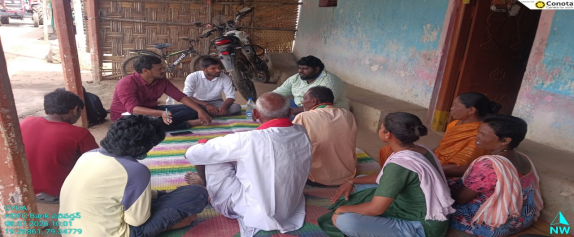
We Don’t Start with Trucks. We Start with People. A Material Recovery Facility fails if households mix wet and dry waste. A compost plant fails if communities don’t believe in segregation. So before we build infrastructure, we build understanding. TrashTech teams work with households, schools, sanitation workers, SHGs, youth volunteers, and Gram Panchayats. Through street plays, door-to-door coaching, school programs, and ward meetings, we make one idea clear: Your bin decides whether India burns waste or builds with it.
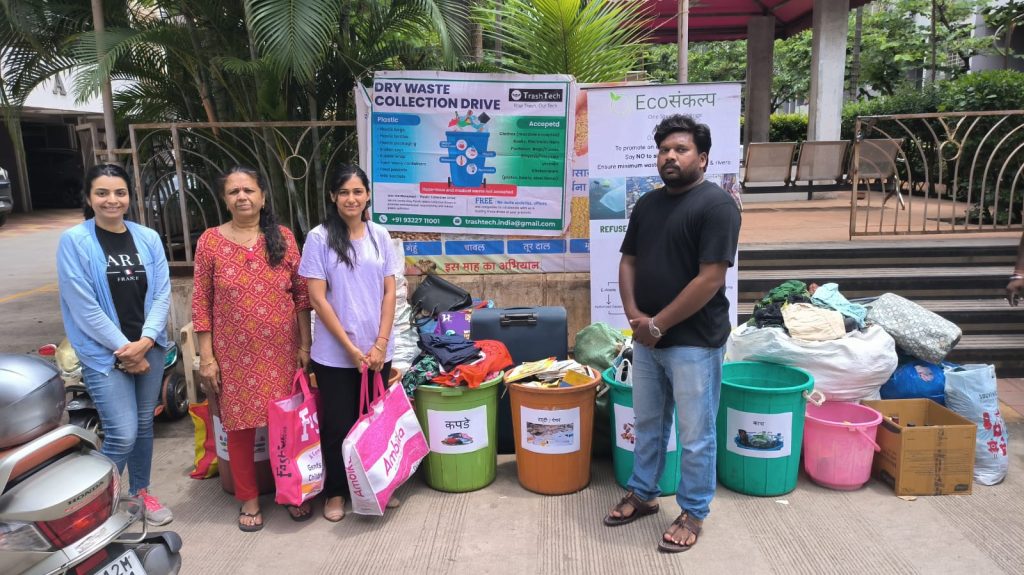
This is BCC, IEC, and IPC in action. This is how 42,000+ households now segregate daily. This is why 2,554 doorstep collections happen every single day without waste piling up. Because you cannot manage waste until you manage behavior. Integrated Systems That Turn Kabaad into Capital Once segregation starts, TrashTech’s scientific chain takes over: Source Segregation → Clean streams of dry, wet, and reject waste Door-to-Door Collection → GPS-tracked vehicles, 88% collection efficiency Material Recovery Facilities → 5 active MRFs sorting plastic, paper, metal, glass, textiles Organic Processing → Compost centers converting food waste into soil nutrition Plastic & E-Waste Recovery → Channeling materials back to authorized recyclers Digital Dashboard → Every kg tracked. Every trip logged. Every tonne of carbon saved is measured. The result? 634 tonnes of waste were scientifically managed instead of dumped.
419 tonnes of dry waste recovered — plastic and paper now back in factories, not rivers. 215 tonnes of wet waste composted — methane avoided, farms nourished.20+ Safai Sathis are employed with dignity, safety gear, and fair wages. These are not just operations. They are proof that the circular economy works at the village and city scale.
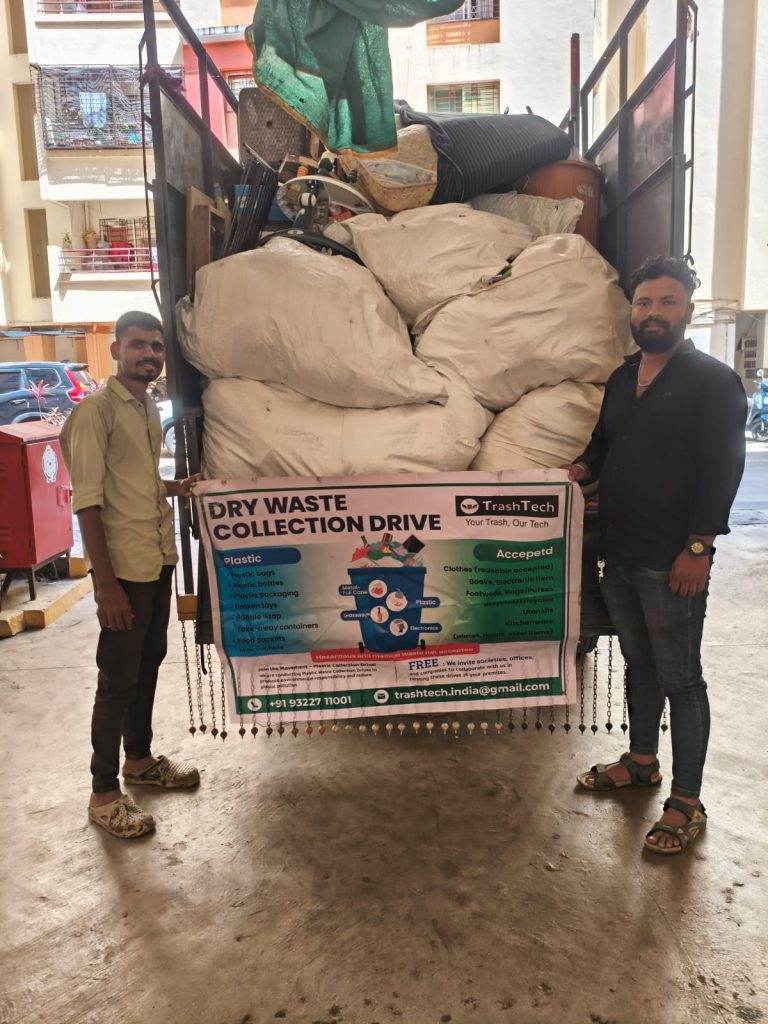
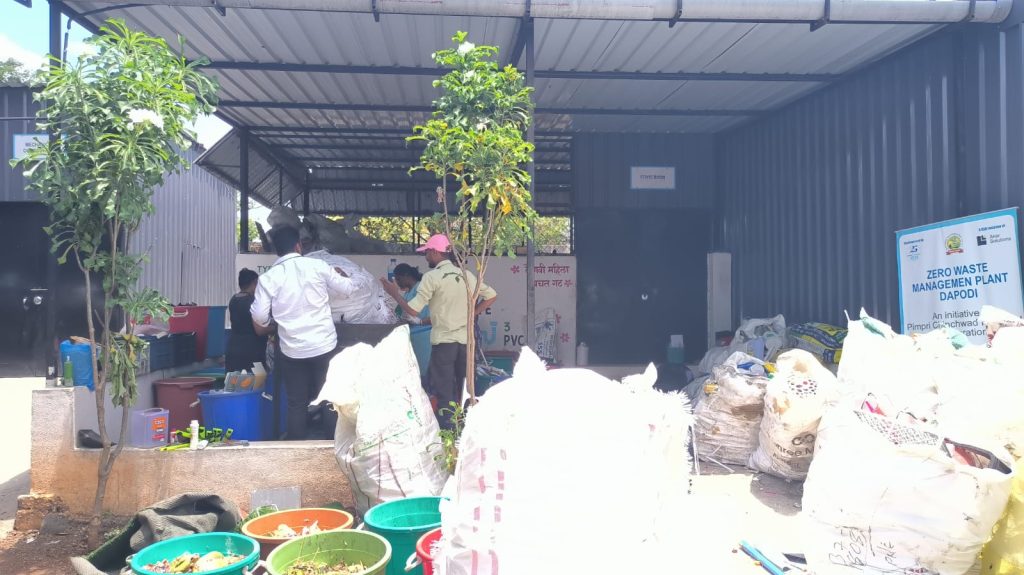
Impact You Can See, District by District: Dapodi MRF, Maharashtra – Our urban flagship. 361 tonnes managed. 284 tonnes of dry waste back in the economy. Landfill saved, jobs created. Chitegaon MRF, Maharashtra – Rural decentralization done right. 183 tonnes handled. 130 tonnes of wet waste became compost for local farms. Villages cleaner, panchayats stronger. Shapar MRF, Rajkot, Gujarat – Serving industries and villages alike. 28 tonnes processed. Dry waste recovery strengthened local recycling markets. Rajayyapeta MRF, Andhra Pradesh – 56 tonnes of recyclables pulled out of the waste stream. Local recycling ecosystems revived. Kakatpur MRF, Odisha – Small town, big lesson. 6 tonnes managed. Proving that even rural clusters can run scientific, self-sustaining systems.
Each MRF is a policy classroom. It shows ULBs and GPs that decentralized, tech-backed models beat centralized dumping — financially, socially, environmentally.
Why This Matters to Decision Makers: Every tonne TrashTech recovers delivers 5 policy wins: Lower GHG Emissions – 215 tonnes of wet waste composted = methane avoided. Reduced Virgin Extraction – 419 tonnes of dry waste = less mining, less deforestation. Landfill Lifespan Extended – Waste diverted means cities don’t need new dumping grounds. Green Jobs Created – Safai Sathis, supervisors, data analysts, compost technicians.
CSR & EPR Compliance – Industries meet legal mandates through verified recovery. This is Swachh Bharat in numbers. This is Circular Economy in action. This is Climate Action at the ward level.
A Message to Everyone Who Still Dumps Waste: That plastic bag you throw away today will outlive your grandchildren. That food waste you mix with paper will rot in a landfill, release gas, and warm the planet your children inherit. That water bottle near the lake will break into pieces; the fish eat it, and you eat it later. But it doesn’t have to be this way.
When you segregate, you don’t just clean your street. You: Save a Safai Sathi from sorting rotten, mixed garbage by hand. Save a farmer by giving him compost instead of chemical fertilizer. Save a factory from importing virgin plastic. Save your city from spending crores on new landfills. Waste is not about what you throw. It’s about what you choose to recover.
The Road to Zero Waste India: TrashTech’s mission is simple: Make landfills history. We will do it with technology that tracks, communities that segregate, and policy that enables. We will do it by proving that every discarded bottle, every banana peel, every old newspaper is a resource waiting for its second life.
To decision makers: Partner with us. Your district can be the next Dapodi, the next Chitegaon.
To policy groups: Fund systems, not dumping. Mandate segregation, measure recovery.
To citizens: Start with two bins. End with a cleaner India. At TrashTech, we don’t count how much waste we collect. We count how much value we return. Because every community can be circular. Every material can be a resource. Every action can power a sustainable India.
Finally, at TrashTech Pvt Ltd — Turning Waste into Resources. Building Circular Communities. Powering Sustainable India.

This Post Has One Comment
This is a wonderful initiative!
I feel that our current generation is increasingly influenced by a culture of convenience, leading to the widespread use of disposable products, fast fashion, and a “use-and-throw” mindset. However, the concept of reusing and repurposing has always been a part of our traditions. A great example is ‘Kantha’ from Bengal, where old saris and dhotis were layered together and hand-stitched into beautiful quilts and other useful items.
We also need to realise that what one person calls “waste” may still have value for someone else. Nature is our best teacher—everything that is natural is recycled in one form or another. The real challenge begins with human intervention, as our pursuit of convenience often disrupts nature’s circular systems.
Kudos to Trash Tech for creating awareness and encouraging people to reduce waste through reuse and recycling. Initiatives like these are essential for building a more sustainable future.
Great initiative! 👏🏼