

(An analytical report on participant feedback from a Mental Health Perspective)
By Dr Nitin Jadhav, Joint Director, CYDA
Youth mental health is increasingly recognized as a foundational pillar of social and economic development. Adolescence and early adulthood are critical phases marked by identity formation, educational transitions, peer influence, career decision-making, and evolving family and social roles. While these transitions present opportunities for growth, they also expose young people to heightened psychological stress. Anxiety, persistent sadness, sleep disturbances, low self-esteem, relationship conflicts, and uncertainty about the future are common experiences that, if unaddressed, can affect long-term wellbeing and productivity.
This report presents a comprehensive analysis of mental health indicators for a total of 56 youth participants who completed a unique Stepping Stone intervention implemented by CYDA India. Based on intervention assessment data, the report examines changes in psychological distress indicators such as anxiety, sadness, and sleep disturbance, as well as improvements in emotional literacy, confidence, gender sensitivity, relational awareness, and hopefulness.
Grounded in resilience theory and the psychosocial model of mental health, this report not only documents measurable reductions in distress but also highlights the strengthening of protective factors that contribute to long-term psychosocial wellbeing.
The findings provide evidence for the effectiveness of community-based, youth-centered mental health programming and offer strategic insights for scaling preventive mental health initiatives.
Psychological and Physical Well-being:
- Anxiety and Nervousness
The pre-intervention findings showed that anxiety and nervousness were common among participants. Nearly 79% reported feeling anxious or nervous either “always” or “sometimes,” indicating high levels of emotional stress among the youth prior to the intervention. Only 21% reported experiencing anxiety rarely or not at all. This suggests that nearly 3 out of 4 youth were experiencing ongoing anxiety before the intervention.
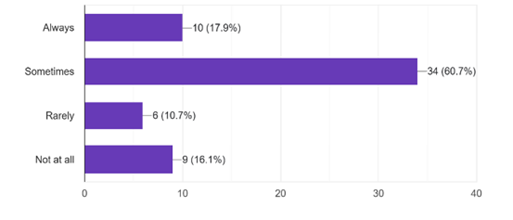
Before the Intervention
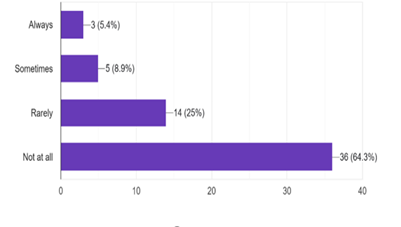
After the intervention
Source: Primary data based on respondents’ responses.
Following the intervention, a substantial decline in anxiety levels was observed. Around 86% of participants reported feeling anxious “rarely” or “not at all,” while only 14% continued to experience frequent anxiety. This reflects a 63% reduction in high anxiety levels.
a) Sadness and Low Mood
The pre-intervention assessment showed that 64.3% of participants frequently experienced sadness or low mood, while only 35.7% reported minimal or rare feelings of sadness. These findings highlight the emotional vulnerability and psychological burden experienced by many participants before the intervention.
Post-intervention results demonstrated a considerable improvement in emotional wellbeing. Around 83.9% of participants reported low or rare sadness after the workshop, while only 16.1% continued to experience frequent sadness. The intervention contributed to a 48.2% reduction in persistent low mood.
The improvement reflects enhanced emotional resilience, improved coping mechanisms, and increased emotional expression among participants. Through participatory discussions and psychosocial activities, the intervention helped youth better understand and manage their emotions.
b) Sleep Disturbance Due to Stress
Stress-related sleep disturbance emerged as another major concern during the pre -assessment. More than half of the participants reported difficulty sleeping due to stress and overthinking, reflecting the close relationship between emotional stress and physical wellbeing.
Following the intervention, only 12.5% continued to report sleep-related stress, while 87.5% reported minimal or no disturbance in sleep patterns. The intervention resulted in a 41.1% reduction in sleep-related stress.
c) Emotional Awareness and Coping Capacity
One of the most significant outcomes of the intervention was the improvement in emotional awareness and emotional expression among participants. The workshop created opportunities for youth to reflect on their emotions, identify emotional triggers, and build healthy communication practices.
Nearly 94.6% of participants agreed that they understood their emotions better after the workshop. Similarly, 89.3% reported feeling more comfortable expressing their emotions, while 91.1% stated that they had become more confident in setting personal boundaries. Participants demonstrated increased confidence in discussing personal concerns and expressing feelings in healthier ways.
One participant shared:
“Earlier, I was not able to talk so much. After this workshop, today I do not feel any fear in talking to anyone.”
d) Self-management and Self-efficacy
The intervention also contributed significantly to strengthening self-management skills and self-efficacy among participants. More than 90% of participants reported that they had started using healthier ways to cope with stress and felt more comfortable seeking help when required.
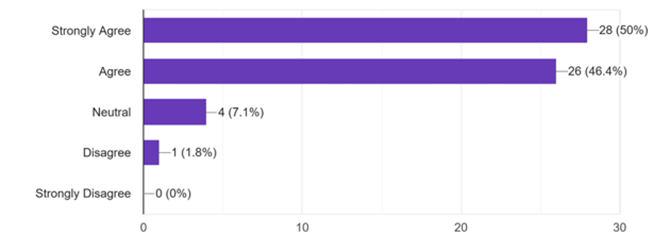
Source: Primary data based on respondents’ responses on seeking help when needed.
One participant noted:
“I am trying to implement more positive thinking in my daily routine life.”
Another participant shared:
“I have started understanding my emotions in a better way.”
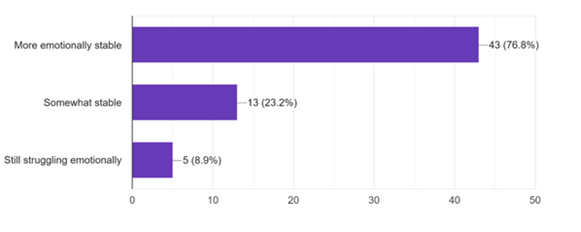
Source: Primary data based on respondents’ perceptions of emotional stability.
2) Gender Sensitivity and Healthy Relationships
The intervention showed a strong positive impact on participants’ understanding of gender equality, respectful relationships, and emotional connectedness. More than 90% of participants expressed strong agreement with principles related to gender equality and shared responsibility within relationships. Participants also reported feeling more connected to peers and family members after the sessions.
In addition, 98.2% of participants stated that they felt hopeful about their future following the intervention. Hopefulness is widely recognized as a major protective factor against depression, emotional distress, and self-harm ideation.
Participants reflected on the importance of respect, empathy, and supportive relationships in their personal lives.
One participant stated:
“I should speak respectfully and respect every person.”
Another shared:
“My family is most important and valuable in my life.”
3) Respect for Diversity and Inclusion
The workshop created greater awareness and acceptance regarding diversity, gender identity, and sexual orientation. Nearly all participants expressed agreement on respecting individuals irrespective of their sexual orientation or identity.
One participant shared: “Now, I found myself connecting more openly with the LGBTQIA+ team than I ever expected, which has been truly meaningful.”
4) Consent and Personal Boundaries
The intervention significantly improved participants’ understanding of consent, personal safety, and healthy boundaries. More than 90% reported increased confidence in saying “No” in uncomfortable situations and respecting the boundaries of others.
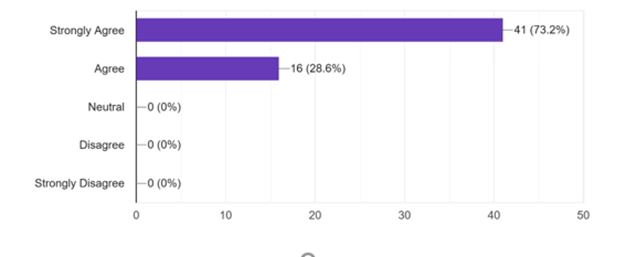
Source: Primary data based on respondents’ views on whether consent is necessary in all intimate relationships.
Participants demonstrated stronger awareness regarding mutual respect, consent in relationships, and gender-equitable behaviour.
One participant shared: “Now onwards, I will never judge people and also try to bring change first in me.”
Another participant noted: “I am less hesitant now and feel confident in communicating about sensitive topics.”
5) Understanding Sexual Pressure and Gender Norms
The intervention helped normalize conversations around sexuality and reproductive health among young participants. More than 90% strongly agreed that sexuality should be discussed openly, while 98% believed it is normal for young people to have questions related to sexuality. Participants showed improved comfort in discussing relationships, consent, emotions, and emotional wellbeing.
One participant shared, “I gained a different perspective on women’s emotions and situations. I also realized that my partner’s sexual perspective might be different,” reflecting increased empathy and understanding of emotional and sexual boundaries.
The sessions also improved awareness about gender equality, masculinity, bodily autonomy, and mutual respect in relationships. All participants agreed that girls have equal rights to make decisions about their own bodies, while 91.1% agreed that boys should not be pressured to prove masculinity through sexual behaviour. The findings indicate reduced stigma and healthier perceptions of gender, relationships, and sexual behaviour among participants.
Conclusion:
The findings of this report clearly demonstrate that structured, participatory, and gender-sensitive youth interventions can significantly strengthen mental health outcomes. The measurable reduction in anxiety, sadness, and stress-related symptoms, alongside substantial improvements in emotional awareness, self-efficacy, healthy relationship attitudes, and hopefulness, reflects both immediate distress reduction and long-term resilience building. By integrating emotional literacy, sexuality education, gender equality, and life skills within a safe and supportive environment, the intervention has strengthened key protective factors that buffer against psychological vulnerability.
For CYDA India, the Stepping Stone model emerges as a scalable and evidence-informed framework for youth mental health promotion and prevention. The Stepping Stone workshop is not just an awareness session — it functions as:
- A preventive mental health intervention
- A resilience-building program
- A psychosocial empowerment model
- A relational wellbeing initiative
For CYDA India, the evidence supports:
- Scaling Stepping Stone as a preventive and promotive youth mental health model
- Positioning it within CSR-aligned psychosocial development initiatives
- Integrating career counselling with mental wellbeing programming
- Establishing youth mental health ambassador networks
- Creating longitudinal impact tracking systems
