
By Sandesh Shingade, District Coordinator, Nirmal (Pembi), Telangana
For most people, a street light is just a part of everyday life. Street lights are essential, particularly in rural areas, as they improve safety, security, and quality of life. They help women, children and elderly people move confidently after dark, support students in their studies, reduce accidents and safety risks, enable farmers to travel safely, and encourage social and community activities during evening hours.
But for the residents of Ragidubba, a tribal village in Pembi Mandal of Nirmal district, Telangana, darkness was more than an inconvenience—it affected everyday life. Ragidubba is home to around 50 tribal families who primarily depend on agriculture and daily wage labour for their livelihoods. The absence of street lights made it difficult and unsafe for nearly 80–100 villagers to move around after sunset.
Challenges Faced by the Community
- As evening approached, anxiety replaced routine activities as the village became quiet and restricted after sunset.
- Major roads, pathways, and public spaces remained completely dark, forcing villagers to walk 500 metres to 1 kilometre in poor visibility to reach farms, neighbouring houses, and community spaces.
- Mothers worried about family members returning home safely, while women and elderly residents hesitated to step outside at night.
- Farmers faced difficulties navigating dark pathways after long hours in the fields.
- Children rushed to complete their homework before darkness, limiting their study time.
- The constant risk of snake bites, insect attacks, accidental falls, and other safety hazards made night-time movement unsafe.
- Social interactions and community gatherings declined significantly after sunset.
Recognizing these challenges, CYDA India, with support from HDFC Bank Parivartan, intervened under the Holistic Rural Development Programme (HRDP 2.0). The process began with field visits, baseline assessments, and community consultations to understand the needs of the villagers. Four community meetings have been conducted, engaging around 45 villagers, including women, youth, farmers, and Self-Help Group members. During these discussions, the community repeatedly emphasized the urgent need for safe and reliable lighting.
Based on community feedback and site assessments, four solar street lights were installed at main locations, including the village entrance road, an internal pathway, a community gathering area, and a public utility access point.
The solar-powered systems provided a sustainable and environmentally friendly solution.
- Equipped with 12W–15W LED lights
- Automatic dusk-to-dawn operation
- 10–12 hours of battery backup
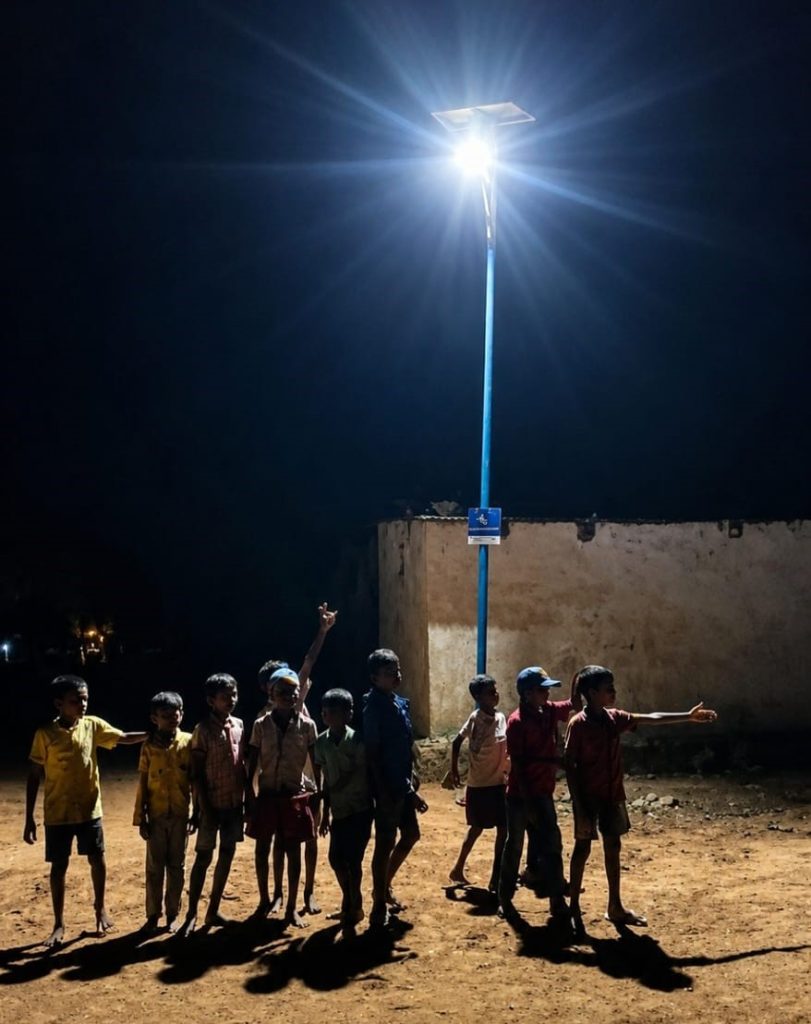
As the sun set and the solar street lights illuminated the village for the first time, Ragidubba experienced a new sense of safety and possibility. Roads that were once deserted after dark became accessible. Children gathered under the lights to study and spend time together. Women felt more confident attending meetings and visiting neighboring homes. Farmers could return safely from their fields without fear.
Impact of the Intervention
- Approximately 30–35 households and 70–75 villagers directly benefited.
- Nighttime fear and insecurity reduced by nearly 70%.
- More than 25 women reported improved confidence and mobility after sunset.
- Risks of accidental falls, snake bites, and insect-related incidents significantly decreased.
- Around 20–25 students gained access to safer study environments.
- Students reported an additional 1–2 hours of evening study time.
- Community meetings, social interactions, and gatherings increased after sunset.
- The village became safer, more connected, and more active during nighttime hours.
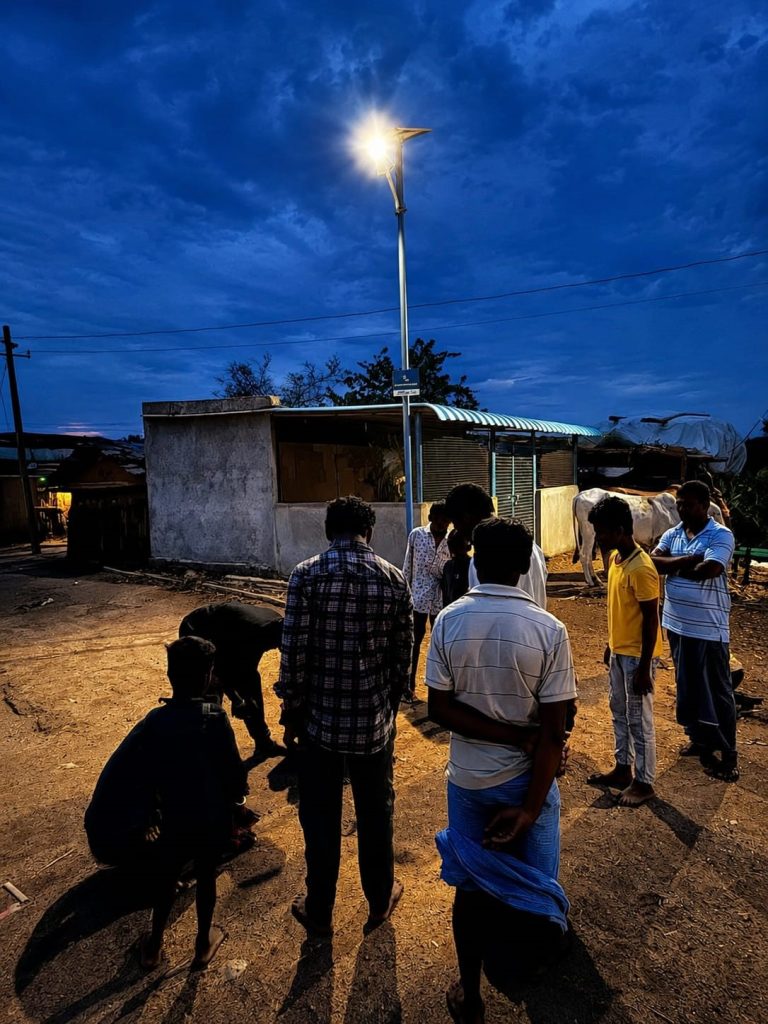
Today, the solar street lights continue to brighten not only roads and pathways but also the lives of the people who use them every day. To ensure sustainability, the responsibility for operation and maintenance has been formally handed over to the Gram Panchayat, with active support from community members.
What began as the installation of four solar street lights demonstrates how community participation, sustainable technology, and donor support can create lasting change. In Ragidubba, the lights have done much more than illuminate the village; they have restored confidence, strengthened community life, and inspired hope for a brighter future.
