By Swati Shirtar, Asst Director, CYDA
Every woman, girl, and child has the right to live with safety, dignity, and freedom from fear. Safety and protection are essential for healthy physical, emotional, and social development. When individuals feel safe at home, in school, at work, and in their communities, they are more confident to learn, express themselves, build relationships, and pursue their goals. However, sexual abuse, exploitation, harassment, and violence continue to threaten the well-being and future of many women and children. Such experiences can lead to fear, trauma, loss of confidence, poor mental health, and reduced participation in education, employment, and community life. Creating safe environments is therefore not only about preventing harm but also about enabling individuals to reach their full potential. Protecting women and children, promoting respect and equality, and encouraging communities to speak out against violence are essential steps towards building inclusive, supportive, and empowered societies where everyone can live with dignity and opportunity.
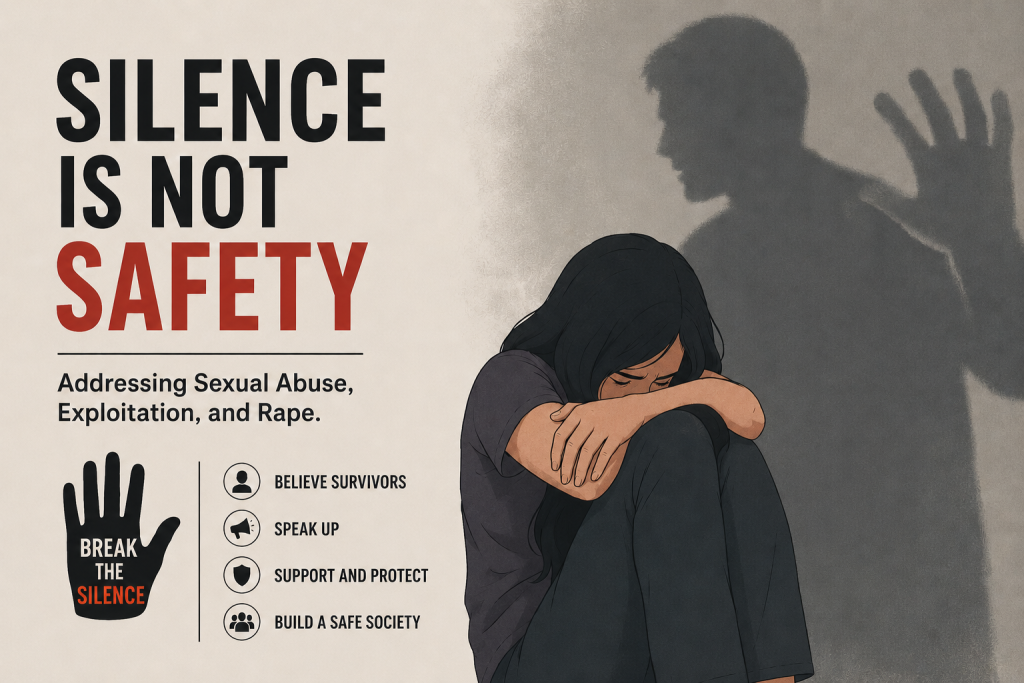
Unfortunately, for many people, this safety does not exist. Sexual abuse, exploitation and rape continue to destroy lives across societies, affecting women and children emotionally, physically, socially, and mentally. Sexual violence is not only a crime against an individual; it is a violation of human dignity and basic human rights. It creates fear, trauma, shame, and silence that can last for years. Many survivors are unable to speak openly because they fear blame, judgment, rejection, or threats from the abuser.
Understanding Sexual Abuse and Exploitation
Sexual abuse refers to any unwanted sexual act, behaviour, or touch without consent. Sexual exploitation occurs when a person is manipulated, forced, or pressured into sexual activities for someone else’s benefit, power, or financial gain. Most people believe danger comes from strangers, but many cases happen within families, neighbourhoods, schools, workplaces, and trusted relationships. Children are often abused by relatives, neighbours, or known persons. Women and girls are frequently targeted because of unequal power relations and harmful social attitudes.
The Reality Behind Closed Doors: Many survivors suffer in silence.
A young girl may be abused by a relative but remain quiet because she fears her family will not believe her. A woman may face sexual violence inside marriage or at work but avoid reporting it due to social pressure or financial dependence. In many communities, victims are blamed instead of supported. Families sometimes try to hide incidents to “protect family reputation,” while survivors are forced to carry emotional pain alone. Such responses discourage survivors from seeking justice and support. One common example is when a child experiences inappropriate touching by a family member but is told to “keep quiet.” Another example is when women facing harassment or assault are questioned about their clothing or behaviour instead of holding the perpetrator accountable. These attitudes strengthen the culture of silence and protect offenders.
Real incidents from Society
Recent incidents from different areas have once again highlighted how unsafe women and children can feel even in public and familiar spaces. The Nasarapur case raised serious concerns about the safety of women and girls in local communities and the need for stronger protection systems and awareness. Such incidents create fear among families and show how urgently communities must address violence against women and children. Similarly, the Swargate incident reflected the growing concern regarding women’s safety in public spaces and transportation areas. Cases like these remind society that safety cannot be taken for granted and that stronger preventive measures, accountability, and public awareness are necessary. These examples are not isolated incidents. They represent a larger social issue where survivors often struggle to receive justice, emotional support, and protection.
These examples are not isolated incidents.
They represent a larger social issue where survivors often struggle to receive justice, emotional support, and protection. Impact on Survivors Sexual abuse and rape deeply affect mental and emotional health. Survivors may experience: fear and anxiety, depression and trauma, loss of confidence, difficulty trusting others, social isolation, poor academic or work performance.
Children may become withdrawn, fearful, or emotionally disturbed. Without proper support, the trauma can continue throughout their lives.
The Need for Collective Action
Ending sexual violence requires collective responsibility from families, schools, communities, institutions, and governments. We must create safe spaces where women and children can speak openly without fear or shame. Awareness about consent, gender equality, child protection, and respectful relationships should begin early in schools and homes. Parents and teachers must listen to children carefully and believe them when they report unsafe behaviour. Communities should encourage reporting mechanisms, counselling services, legal support, and survivor-centred approaches. Police, schools, and local authorities must work together to strengthen safety systems and ensure justice for survivors. Most importantly, society must stop blaming survivors and instead hold perpetrators accountable.
Conclusion
No woman, girl, or child should live in fear inside their own home, community, or public space. Safety, dignity, and respect are basic human rights. Breaking the silence around sexual abuse, exploitation, and rape is the first step toward justice and protection. By creating awareness, supporting survivors, strengthening laws, and challenging harmful social attitudes, we can build safer communities where every person can live with freedom, confidence and dignity.