Y Syam Sundar Rao, Project Officer, CYDA
Vakatippa is a village located in U. Kothapalli Mandal of Kakinada District, Andhra Pradesh. It has approximately 1,172 households and a population of around 3,535 people. However, for several years, the Solid Waste Processing Centre (SWPC) in Vakatippa Gram Panchayat remained non-functional. As a result, collected waste was often mixed together, burnt or dumped in open areas. This led to environmental pollution, unhygienic surroundings and potential health risks for the community.
Despite having six Clap Mitras and waste collection and transportation vehicles, including two tricycles, one tempo and one tractor, the village faced several challenges in managing solid waste effectively. These included improper waste segregation, open dumping, plastic accumulation and limited community participation in scientific waste management. Before the intervention, the village had 17 plastic waste hotspots, contributing to pollution and poor environmental conditions.
The Intervention – A New Beginning
In collaboration with HDFC Bank and Vakatippa Gram Panchayat, CYDA initiated solid waste management inititaive in the village. The first step was to assess the condition of the existing SWPC and identify the requirements for making it functional again.
The team worked closely with the Panchayat, Clap Mitras, Green Members, and community members to create awareness about source segregation of wet and dry waste and the importance of proper waste disposal.
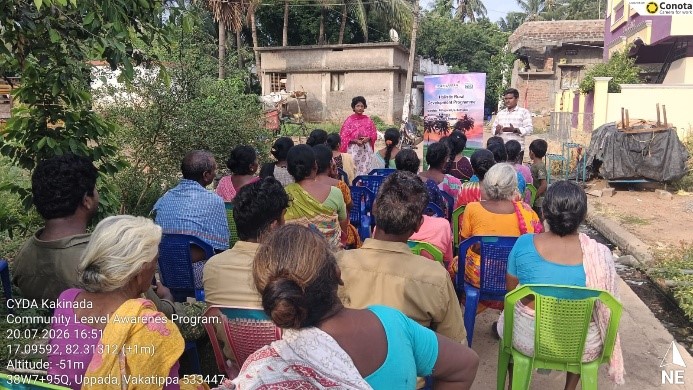
Door-to-door awareness activities were conducted, encouraging households to segregate waste at source. The community was also sensitized about preventing plastic hotspots and open dumping in the village.
As part of this initiative, the team and the Panchayat jointly identified 17 plastic waste hotspots in the village. Regular door-to-door awareness activities are being conducted by Community Resource Persons (CRPs) who explain the importance of Waste segregation at source and responsible waste disposal practices. Each CRP visits approximately 40 to 50 households per day to spread awareness and encourage community participation.
Functional SWPCs
The previously Non-functional SWPCs were gradually brought back into use. The centre became an important place for handling collected waste systematically.
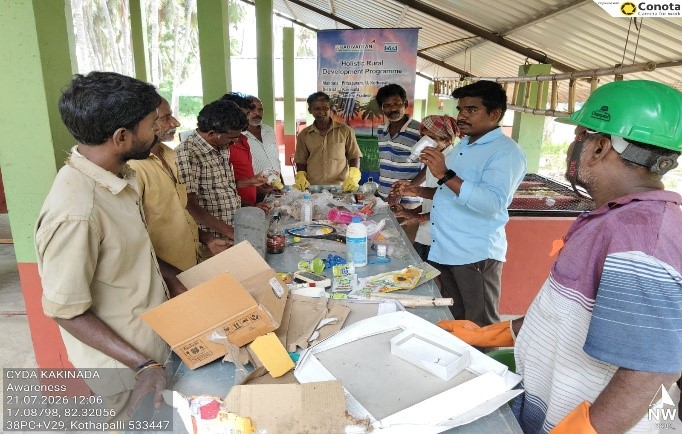
The team supported the renovation and painting of the SWPC centre. Grills were installed around the dry waste collection pits to improve safety, cleanliness, and proper storage. A weighing machine and dustbins were also provided to support the accurate measurement and monitoring of collected waste.
The Clap Mitras and sanitation workers were encouraged to ensure that waste collected from households was properly managed. Wet waste was promoted for composting, while dry waste was separated and directed towards recycling and further processing.
To support the Green Members in their work, masks and gloves were provided as protective and work-related materials. These efforts helped improve the working conditions, dignity, and motivation of the sanitation workers and Green Members.
Regular monitoring and community awareness helped improve the functioning of the waste management system.
Community Participation
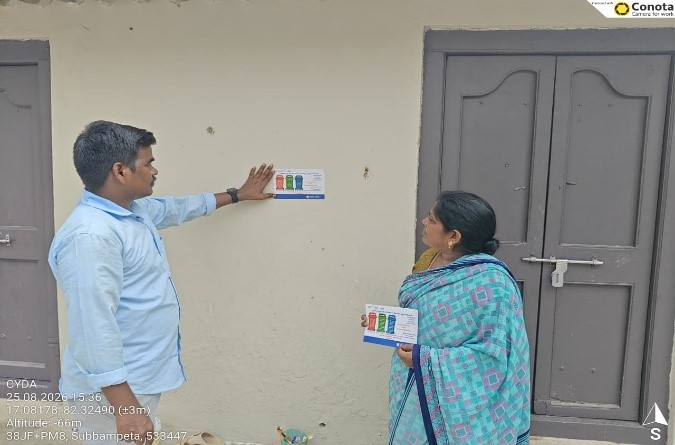
One of the major achievements was the increased involvement of the local community. At present, approximately 90% of community members are segregating wet and dry waste at the household level and handing it over to the Panchayat’s Green Members. This significant improvement was made possible through continuous meetings conducted by the CYDA team with the community, regular door-to-door awareness activities, and coordinated efforts with the Panchayat.
Residents began understanding that solid waste management is not only the responsibility of sanitation workers or the Panchayat, but a shared responsibility of every household.
In addition to door-to-door awareness, a large community meeting is organized regularly in the village. Approximately 40 to 50 community members participate in each meeting. These meetings provide an opportunity to discuss waste segregation, plastic reduction, cleanliness, and the responsibilities of households, Green Members, Clap Mitras, and the Panchayat.
Through continuous awareness activities, people were encouraged to:
- Segregate wet and dry waste at household level.
- Hand over segregated waste to the Panchayat’s Green Members.
- Avoid open dumping and burning of waste.
- Reduce the use of single-use plastics.
- Keep streets and public places clean.
- Prevent the creation of plastic and garbage hotspots.
- Support Clap Mitras and sanitation workers.
- Participate actively in community meetings and cleanliness activities.
The Change
The revival of the SWPC created a visible change in Vakatippa. A centre that had remained non-functional for years once again became part of the village’s waste management system.
The renovation, painting, installation of grills, and provision of a weighing machine improved the overall functioning of the SWPC. The support provided to Green Members through masks and blouses also strengthened their confidence and encouraged them to continue their work with greater commitment.
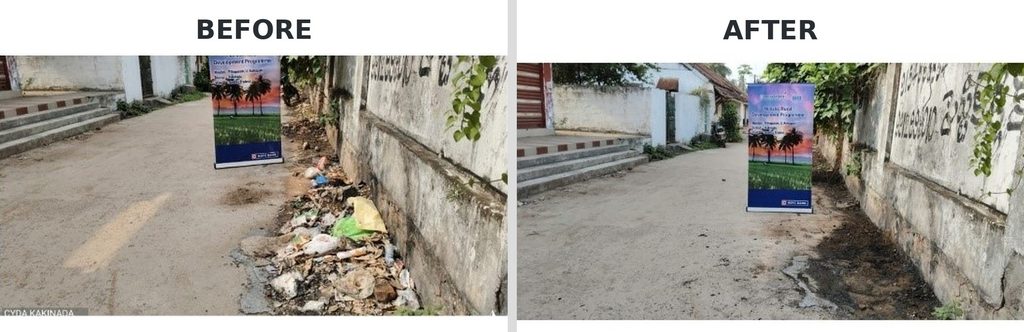
The joint efforts of the CYDA team and the Panchayat helped reduce the number of plastic hotspots from 17 to just 1 small remaining hotspot. Efforts are currently underway to remove this final hotspot as well.
The community meetings, daily door-to-door awareness activities, and collaboration with the Panchayat helped promote regular household-level waste segregation. At present, 90% of community members are segregating wet and dry waste and handing it over to the Panchayat’s Green Members.
Through daily door-to-door visits by CRPs and regular community meetings, awareness and participation among residents increased significantly. The initiative helped move the village from open dumping and burning towards organized waste management. Household-level segregation was promoted, and the Panchayat and sanitation workers became more actively involved in maintaining a cleaner environment.
The village has become cleaner, greener, and healthier, with no major plastic hotspots. Waste is now being processed systematically instead of being openly dumped or burnt. Wet waste is being converted into vermicompost, while dry waste is being segregated and prepared for recycling and further processing.
The SWPC currently receives approximately 5 to 8 kilograms of dry waste every day, demonstrating the regular participation of households and the improved functioning of the waste collection and processing system.
The success of Vakatippa shows that a clean village begins with a small change at every household – Segregate at Source, Manage Waste Responsibly, and Keep the Village Clean and Green.
