B. Bharadwaj Kumar, Field Supervisor (SWM), CYDA
Solid Waste Processing Centers (SWPCs) serve as vital public assets in curbing the indiscriminate dumping and open burning of waste across rural India. Despite individual efforts by Gram Panchayat secretaries at the local level, these centers often remain underutilized due to a lack of systematic operational management, field-level outreach, and stakeholder coordination.
Batajangalipalem Gram Panchayat and Ajay Nagar (hamlet village) were selected as key intervention areas under the solid waste management program implemented by CYDA with HDFC Bank Parivartan’s support. The program aimed to address long-standing waste accumulation issues, underutilized infrastructure, and urgent public health and sanitation needs.
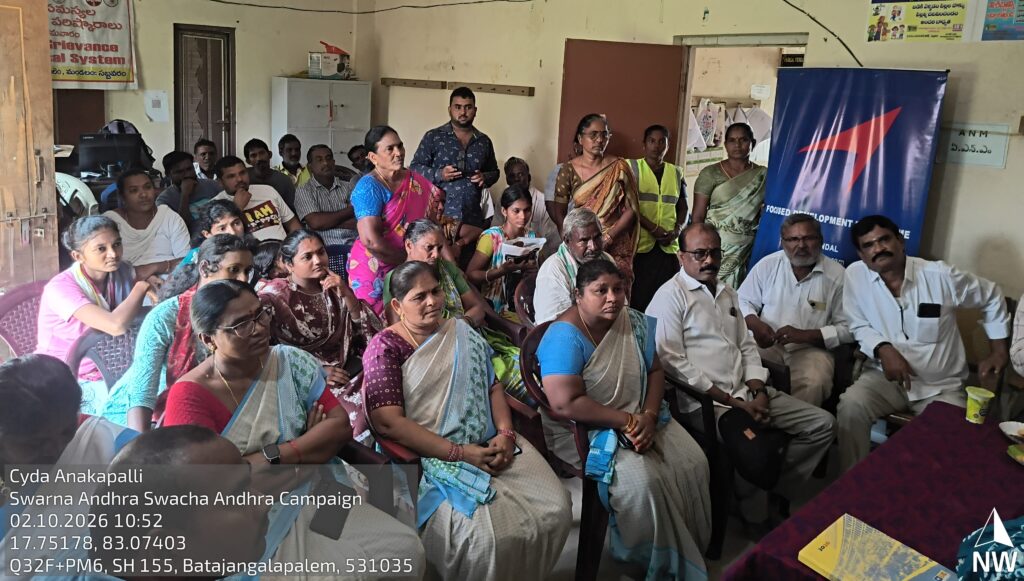
Previously, dry waste was collected with the help of ‘Green Members,’ yet collection volumes were low, waste segregation was inadequate, and open dumping was rampant. Segregation at source was almost entirely absent. Over the past 8 to 9 months (November 2025–August 2026), an integrated strategy combining Panchayat coordination, community mobilization, and operational revitalization transformed Batajangalipalem into an active model of a circular economy, recovering 780 kilograms of recyclable dry waste.
Preliminary Assessment: Structural and Operational Obstacles
In November 2025 a preliminary assessment was conducted across Batajangalipalem in collaboration with the Panchayat Secretary. The findings were verified through direct field inspections, a review of Gram Panchayat records, route surveys alongside sanitation staff, and household visits covering over 350 households.
- Non-functional SWPC center and lack of waste processing: Although a physical processing facility (shed) existed, no dry waste management or processing took place at the SWPC center, and no related records were maintained. Unsegregated household waste continued to be disposed of on the village outskirts, in open drains, or in waste-burning pits.
- Two hazardous open waste-dumping hotspots: Indiscriminate waste disposal led to two major open-dumping plastic hotspots. Frequent open burning at these sites resulted in environmental degradation, foul odours, and persistent smoke emissions.
- Field operations lacking proper supervision: The local sanitation team operated without daily route plans, standard monitoring checklists, or calibrated weighing equipment. This led to inconsistent oversight and a lack of accountability.
- Failure to segregate waste at source: Due to a near-total lack of adherence to prescribed household guidelines (approximately 0% compliance), clean recyclable materials—such as plastic bottles, caps, milk packets, and cardboard—were constantly mixed with wet organic and perishable waste.
Field-Level Actions: December 2025–August 2026
To establish a system characterized by accountability and sustainability, measures were implemented in phases between December 2025 and August 2026. A key aspect of this process involved integrating Gram Panchayat governance with technical support provided by CYDA.
a) Administration: Coordination with the Village Sarpanch and Panchayat Secretary (December 2025–January 2026)
High-priority coordination and review meetings were held with Sarpanch Sri P. Venkata Ramana and the Panchayat Secretary. A system was established to conduct review meetings every two weeks and inspect sanitation collection vehicles every fifteen days. As a result of this administrative coordination, the Gram Panchayat committed to implementing mandatory daily vehicle deployment schedules and formally integrating Panchayat sanitation workers into organized cluster operations.
b) Local Resource Appointment and Field-Level Accountability (January–February 2026)
A Community Resource Person (CRP) was assigned to inspect residential areas and oversee daily door-to-door collection routes. Supported by standardized household monitoring records, the CRP’s daily activities shifted from ad-hoc supervision to verifiable, household-level monitoring of source-segregated waste collection across the village streets.
c) SWPC Infrastructure Renovation (February–March 2026)
The previously dormant SWPC shed was renovated, including civil repairs, painting, and the installation of protective iron grilles. A segregation table was also set up to facilitate the primary sorting of dry waste. Essential logistics—including a calibrated weighing scale, a microphone for public announcements, heavy-duty weighing bags, aprons, gloves, and buckets for dry waste storage—were procured and utilized through project support.
The SWPC became fully operational in March 2026. A transparent daily weighing-logbook system was implemented to ensure the systematic storage, weighing, categorization, and recording of dry waste upon receipt.
d) Social Mobilization: Anganwadi and Door-to-Door Campaigns (April–May 2026)
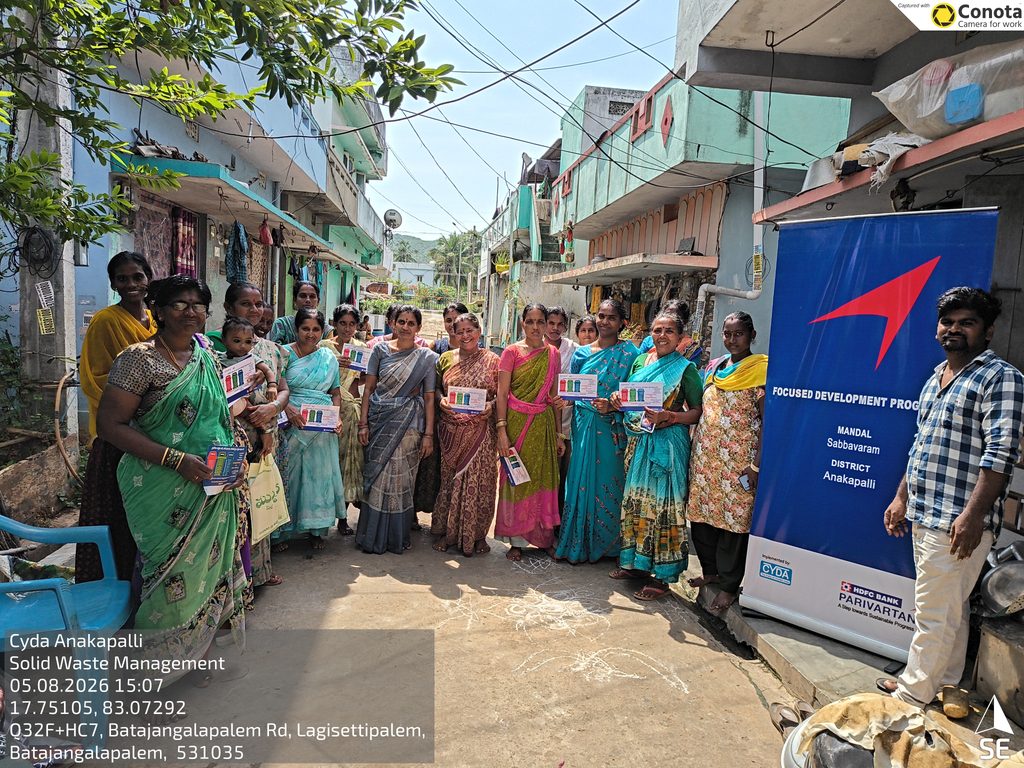
Extensive campaigns were conducted to reach over 350 families within the Batajangalipalem Panchayat. Assisted by a ‘Green Ambassador,’ a Community Resource Person (CRP) visited approximately 50 households daily alongside the daily waste-collection tricycle to raise awareness about wet and dry waste. Residents were advised to maintain separate bins for dry waste.
The CYDA team, in collaboration with the Anganwadi teacher, local women’s Self-Help Groups (SHGs), and youth volunteers, conducted door-to-door visits, affixed stickers, and provided live demonstrations on waste segregation. Acting as catalysts at the grassroots level, the Anganwadi and SHG networks educated women on separating perishable wet waste from recyclable materials such as plastic and paper.
e) Hotspot Cleanup Initiatives (June–July 2026)
A special drive was conducted in collaboration with the Gram Panchayat sanitation team to eliminate two major hotspots where waste had long been dumped in the open. By removing and diverting the accumulated legacy waste, these sites were transformed into clean, monitored areas. Through continuous monitoring and the installation of community information boards, the team successfully prevented the recurrence of waste dumping and burning.
f) Social Innovation: Integrating Sports with Solid Waste Management (August 2026)
To foster enthusiasm and raise awareness regarding solid waste management within the community, sports events were organized from August 2026 onwards. These included a volleyball tournament for the youth, where participants received new volleyball kits and winners were awarded prizes. Additionally, tug-of-war and Rangoli competitions were held for women, with prizes presented to the winners.
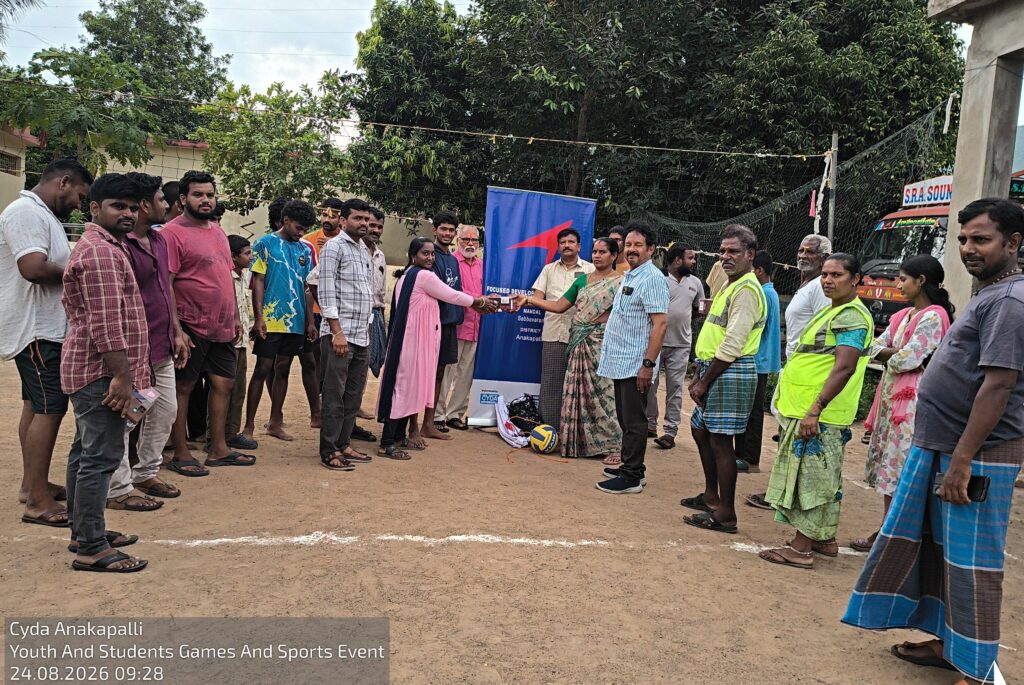
Attended by over 50 people—including Sarpanch P. Venkata Ramana, Vice Sarpanch Nookaraju, local women, and Anganwadi teacher Padmavati—the event reinforced messages concerning waste segregation and community cleanliness. This engagement fostered a greater willingness among residents to cooperate with daily waste-collection teams.
Measurable Outcomes and Quantitative Transformation
| Sector / Indicator | Baseline Status (November 2025) | Current Achievement (August 2026) |
| Dry waste intake and weighing | 0 kg recorded at the SWPC | 780 kg cumulative segregated recyclable dry waste processed and bagged |
| Open garbage and plastic-waste hotspots | 2 chronic open-dumping and burning hotspots | 0 active hotspots; both sites fully cleared and maintained clean |
| Source-segregation adoption | Near-zero compliance; mixed dumping | Over 70% of households regularly segregating dry and wet waste at source |
The Batajangalipalem SWM turnaround demonstrates that sustainable solid waste management requires effective institutional coordination, strong field-level supervision, and active community participation. Involving the Sarpanch and Panchayat Secretary as active partners, equipping CRPs and sanitation workers with the right tools and operational guidelines, and integrating social awareness initiatives with sports and festive events helped strengthen accountability, overcome community apathy, and foster civic responsibility. The experience highlights the importance of combining Panchayat coordination, systematic field operations, and community mobilization to achieve sustainable results in solid waste management.
