Why Peacebuilding Matters for me: Reflections from the Peace Builders Training.
By Priya Khadka, Team Lead Youth4Peace, Pune
On 4–5 June 2026, I joined the Peace Builders Training of Trainers (ToT) at the Youth Resource Centre, Pune, with curiosity and a desire to learn. I left the training with something much deeper—a renewed understanding of what peace truly means and a stronger commitment to contribute towards building a more inclusive and compassionate society.
Before attending the training, I often associated peace with the absence of war, violence, or conflict. Like many people, I believed that peace existed when communities were calm and there were no visible disturbances. However, over two intensive days of learning, reflection, and discussion, I realized that peace is much more than the absence of violence. Peace is about creating conditions where every person is treated with dignity, where diversity is respected, where differences are celebrated rather than feared, and where conflicts are addressed through dialogue instead of hostility.
The training challenged me to examine the realities that surround us every day. Many forms of injustice have become so common in society that we often fail to notice them. Discrimination based on caste, religion, gender, ethnicity, or economic status continues to affect millions of people. Bullying in schools, hate speech on social media, exclusion of marginalized communities, and everyday acts of intolerance have quietly become part of our social landscape.
What struck me most was the realization that these issues are not isolated incidents. They are interconnected and often stem from deeper social, economic, cultural, and political inequalities. The training encouraged us to look beyond visible conflicts and understand their root causes. Only by understanding these underlying factors can we begin to address them effectively and sustainably.
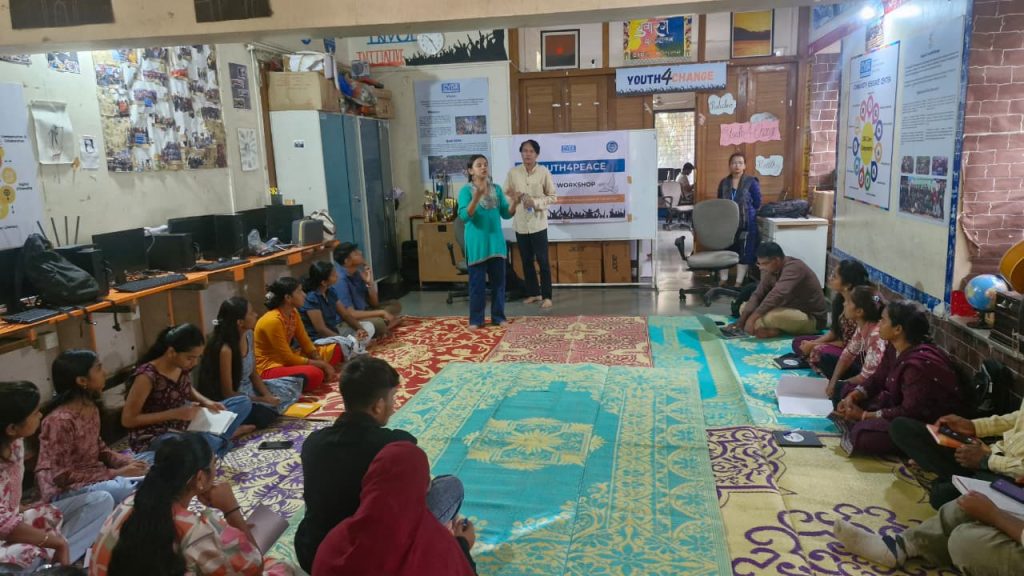
Today, peacebuilding has become more important than ever. Across the world, communities are becoming increasingly polarized. Social media, while offering opportunities for connection, has also become a platform where misinformation, stereotypes, and divisive narratives spread rapidly. Many young people grow up witnessing various forms of violence, prejudice, and discrimination. In such an environment, peacebuilding is no longer an optional activity—it is a necessity.
The Peace Builders ToT was designed to equip young people with the skills, knowledge, and confidence required to become agents of positive change. The program recognized a simple but powerful truth: youth are not merely the leaders of tomorrow; they are changemakers today. They possess the energy, creativity, and passion needed to build bridges across divides and create stronger, more cohesive communities.
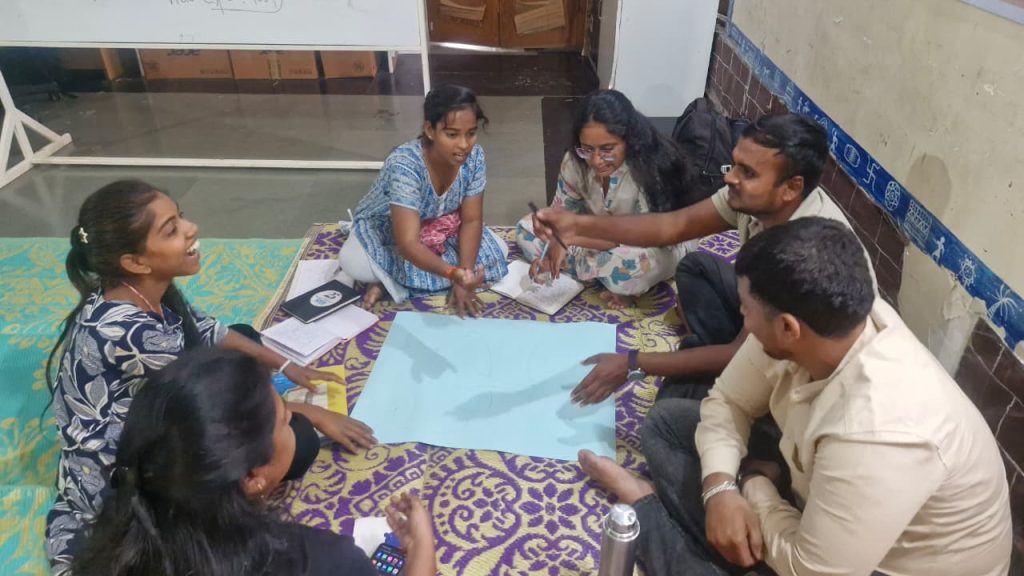
One of the most enriching aspects of the training was its participatory approach. Rather than relying solely on lectures, the sessions involved group discussions, conflict-mapping exercises, reflection circles, role plays, and collaborative problem-solving activities. These methods allowed us to engage deeply with real-life situations and explore practical ways of responding to conflict.
The training introduced us to essential peacebuilding skills such as active listening, empathy, nonviolent communication, conflict transformation, and dialogue facilitation. These are not only tools for addressing community conflicts; they are life skills that help us build healthier relationships in our families, educational institutions, workplaces, and social circles.
I was particularly inspired by the emphasis on empathy. In a world where people are often quick to judge, react, or criticize, empathy teaches us to understand another person’s experiences and perspectives. Peacebuilding begins when we learn to listen—not simply to respond, but to truly understand.
Another key lesson from the training was that peacebuilding is not limited to large-scale interventions. It begins with small everyday actions. It begins when we challenge discriminatory remarks, when we choose dialogue over confrontation, when we stand up for someone being excluded, and when we create spaces where different voices can be heard and respected.
As young people, we sometimes underestimate the influence we have within our communities. The training reminded me that change often starts with ordinary individuals taking small but meaningful actions. A conversation that promotes understanding, a community activity that brings diverse groups together, or a campaign that challenges harmful stereotypes can all contribute to building peace.
The training also encouraged us to move beyond awareness and towards action. Each participant was challenged to think about how we could apply these learnings within our own communities. Whether through awareness campaigns, youth dialogues, community engagement initiatives, or educational programs, we were inspired to become active peacebuilders capable of addressing local challenges through peaceful and inclusive approaches.
Reflecting on the experience, I now understand that peacebuilding is not a one-time event or a short-term project. It is an ongoing journey that requires patience, commitment, courage, and collaboration. Building peace means continuously working to strengthen relationships, promote justice, foster inclusion, and create opportunities for dialogue even when disagreements arise.
The Peace Builders Training of Trainers strengthened my belief that lasting peace can only be achieved when communities work together to address their differences through understanding rather than division. Sustainable peace is built not by avoiding conflict but by learning how to manage and transform it constructively.
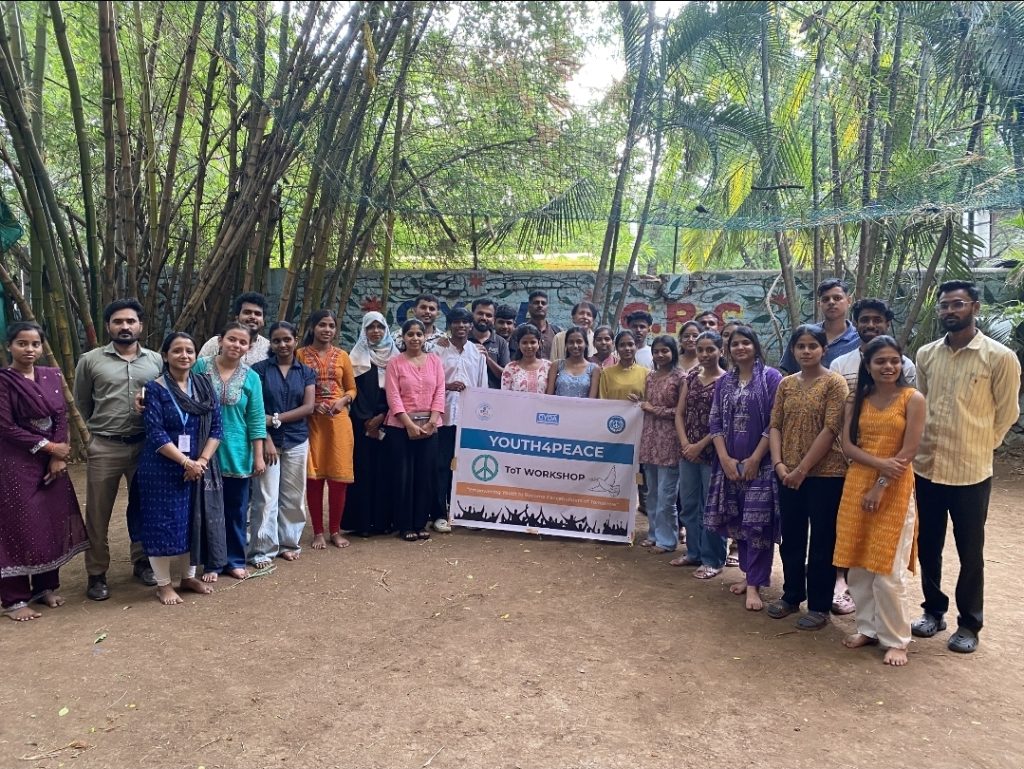
As I move forward, I carry with me not only the knowledge gained during the training but also a sense of responsibility. The lessons learned at YRC Pune must extend beyond the workshop walls and into the communities where they are most needed. Every act of kindness, every effort to promote understanding, and every initiative that brings people together contributes to a larger culture of peace.
The future we seek will not be created by governments or institutions alone. It will be shaped by ordinary youth who choose compassion over prejudice, dialogue over hatred, and cooperation over division. Peacebuilding begins with each one of us.
In a world often divided by differences, the courage to listen, understand, and work together may be the most powerful force for change.
“The future of peace is not determined by the absence of conflict, but by the courage of ordinary people who choose dialogue, understanding, and humanity over division.”
Jai Yuva Sakthi, Jai Rashtra Shakthi.