By Pramodini Naik, CYDA
Every year, 11 October is observed as the International Day of the Girl Child to recognise girls’ rights, address gender-based discrimination and promote equal opportunities for every girl. Established by the United Nations in 2011 and first observed in 2012, the day calls for collective action to ensure that girls can access education, healthcare, protection and leadership opportunities. It reminds us that empowering girls is not merely a matter of social justice; it is essential for building inclusive, equitable and sustainable societies.
India has made significant progress in girls’ education, healthcare and social development. However, gender discrimination, unequal access to resources and restrictive social norms continue to affect girls, particularly those from rural, tribal, economically disadvantaged and marginalised communities.
Health and nutrition: According to the National Family Health Survey-5 (NFHS-5, 2019–21), India’s sex ratio at birth was 929 girls per 1,000 boys. The ratio was 931 in rural areas and 924 in urban areas, highlighting the continuing challenge of gender preference. Although institutional deliveries and maternal healthcare have improved, adolescent girls continue to face nutritional deficiencies, anaemia, limited access to reproductive health information and barriers to menstrual hygiene. Early marriage and adolescent pregnancy further threaten their health, well-being and educational continuity. [1]
Education: Access to schooling has improved, but enrolment alone does not guarantee meaningful learning or completion of secondary education. NFHS-5 reported that 71.8% of females aged six years and above had ever attended school, with a substantial difference between rural areas (66.8%) and urban areas (82.5%). Girls from remote tribal villages may face additional challenges, including long distances to school, language barriers, household responsibilities, inadequate sanitation facilities and limited academic support. Child marriage and economic pressures can further interrupt their education. [1][2]
Employment and economic independence: Education must translate into skills, opportunities and financial autonomy. The Periodic Labour Force Survey (PLFS) 2023–24 reported a female labour force participation rate of 41.7% among people aged 15 years and above, compared with 78.8% for males. Female participation was 47.6% in rural areas and 28.0% in urban areas. While these figures indicate progress, they also highlight the importance of expanding access to vocational training, digital literacy, career guidance, safe workplaces and decent employment. These are adult and working-age indicators, not measures of girls’ employment alone, but they reflect the opportunities available as girls transition into adulthood. [3]
The challenges faced by girls are interconnected. Discrimination in health, education and employment cannot be addressed independently. Girls need safe environments, supportive families, relevant education, life skills and the freedom to make informed decisions about their futures.
CYDA’s Approach: Empowering Adolescents and Girls
The Centre for Youth Development and Activities (CYDA), established in 1999, is a youth-led voluntary organisation working to empower adolescents and young people, particularly those from underserved communities. Its approach focuses on enabling young people to become responsible, healthy, productive and independent adults.
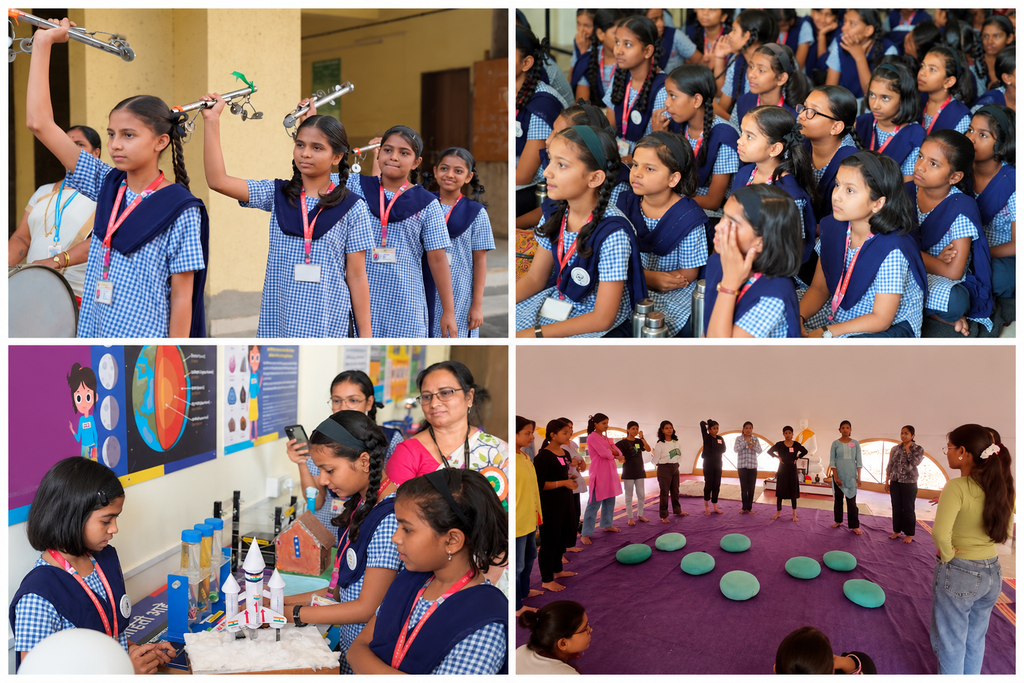
CYDA works towards creating an environment where adolescent girls are recognised as rights-holders, decision-makers and active participants in their own development. Its interventions connect education with life skills, gender equality, health awareness, digital learning and livelihood opportunities.
Through its Better Learning Programme, CYDA supports girls from tribal communities in Dahanu, Palghar district, by addressing learning gaps in subjects such as Mathematics, Science and English. The programme aims to strengthen academic confidence and support educational continuity. Its STEM initiatives encourage girls to explore science, technology and non-traditional career pathways, challenging stereotypes about women’s participation in technical fields. CYDA’s wider programmes also address gender sensitisation, menstrual hygiene management, adolescent health, digital skills, non-traditional livelihoods and inclusive participation. By engaging with communities, families, educational institutions and other stakeholders, the organisation seeks to address the social barriers that restrict girls’ choices and opportunities. Across its programmes, CYDA reports having impacted over 10 million lives and trained 200,000 adolescents and 50,000 young people. These figures represent the organisation’s broader reach, rather than girls alone. Its core commitment is to ensure that adolescents, especially girls from marginalised backgrounds, have the knowledge, confidence and opportunities to shape their futures.
Moving from Awareness to Action
On International Day of the Girl Child, the focus must move beyond celebration towards sustained action. Families must encourage equal opportunities, schools must provide safe and inclusive learning environments, communities must challenge harmful gender norms, and institutions must invest in girls’ health, education and economic empowerment. Every girl deserves the freedom to learn, express herself, make informed choices and pursue her aspirations without discrimination. When girls are healthy, educated, confident and economically empowered, they contribute not only to their families but also to stronger communities and a more equitable society.
Empowering a girl child is an investment in the future of the entire nation. Together, we must ensure that every girl has the opportunity to realise her potential and lead the change she wishes to see in the world.
References
- Ministry of Health and Family Welfare, Government of India. National Family Health Survey (NFHS-5), 2019–21: India Fact Sheet.
- UNICEF India. Adolescent Development and Participation and Gender Equality programme resources.
- Ministry of Statistics and Programme Implementation, Government of India. Periodic Labour Force Survey, Annual Report 2023–24.
