By Jayashree Sapkale, Program Manager, CYDA
Kaushalya Indas Rawatale is a resident of a rural village in Shahada Block. Having studied up to the 3rd standard, she lives with her family of six and primarily depends on agriculture and livestock for their livelihood. The family owns only one acre of irrigated farmland, which provides limited agricultural income and is insufficient to meet the household’s financial needs. To supplement their earnings, they maintained a small goat-rearing unit consisting of five animals. While goat rearing offered an additional source of income, the small herd size restricted its economic potential.
Challenges
The family faced several socio-economic challenges:
- Limited agricultural land and inadequate farm income.
- A large household with increasing financial responsibilities.
- Small livestock assets that generated only marginal returns.
- Limited capital to expand goat rearing into a sustainable livelihood.
These constraints made it difficult for the family to improve their economic condition despite their willingness to invest time and effort in livestock management.
Intervention and Implementation
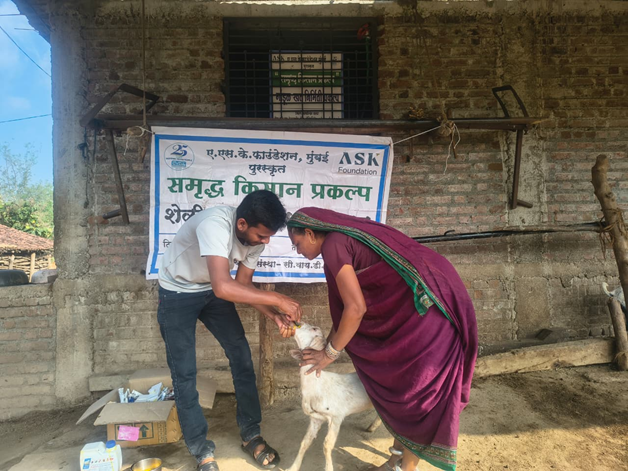
Recognizing the family’s existing experience in goat rearing and their potential to build a sustainable livelihood, the Samruddha Kisan Project, supported by ASK Foundation and implemented by the Centre for Youth Development and Activities (CYDA), provided targeted livelihood support. In March 2025, Kaushalya received four female goats and one breeding buck. The intervention aimed to strengthen the family’s existing livelihood rather than introducing a new activity. Along with the livestock support, the family adopted improved animal care and breeding practices, enabling healthy herd growth and better productivity.
Outcome and Impact
The intervention produced remarkable results within just one year.
- The goat unit expanded from 10 animals to 23 animals (20 goats and 3 bucks), more than doubling the family’s livestock assets.
- The family sold 2 bucks and 1 goat, generating an income of Rs.40,000/-.
- The additional income helped meet household expenses while creating opportunities for future investments in livestock and farming.
- Goat rearing has evolved from a supplementary activity into a dependable and growing livelihood source, strengthening the family’s financial resilience and reducing their economic vulnerability.
The intervention demonstrates how small, need-based livelihood investments can rapidly create productive assets, improve household income, and build long-term economic security for rural families.
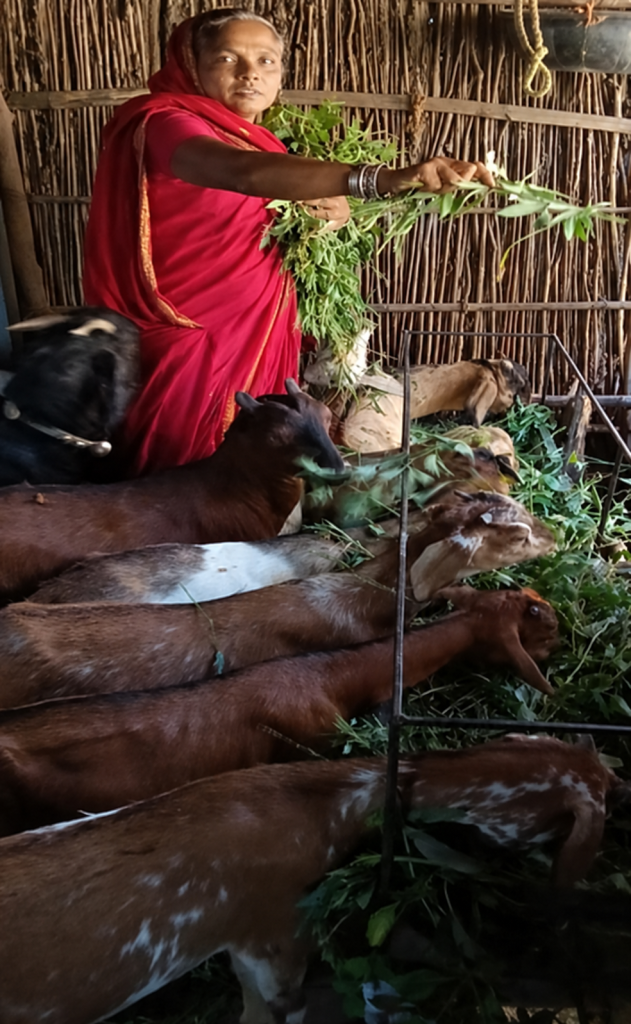
“Earlier, our small goat unit provided very little income, and meeting our family’s needs was difficult. After receiving support through the project, our herd has grown significantly, and we have already earned Rs.40,000/- from livestock sales. Goat rearing has now become an important source of income for our family, and we are hopeful of expanding it further in the coming years.”– Kaushalya Indas Rawatale. The existing livelihood practices through targeted asset support can generate substantial and sustainable economic outcomes. The timely assistance provided under the Samruddha Kisan Project enabled her family to transform a small goat-rearing activity into a productive livelihood enterprise. The significant increase in livestock assets and income within a short period reflects the effectiveness of community-based livelihood interventions in enhancing financial stability, promoting self-reliance, and securing a better future for rural households.