By B. Anil Kumar, Program Manager, CYDA
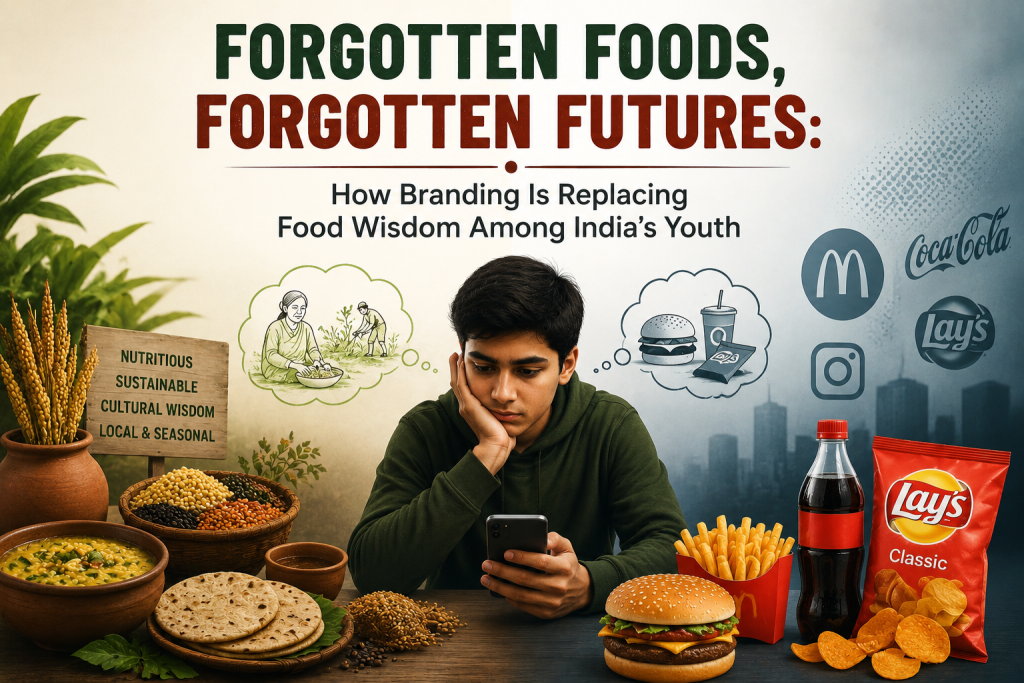
A seventeen-year-old boy can instantly identify Red Bull, Coca-Cola, Lay’s, Maggi, and dozens of other global food and beverage brands. He can recall advertising slogans, recognize celebrity endorsements, and even compare products promoted by social media influencers. Yet when asked to identify five edible greens growing around his village, he hesitates.
This contrast reflects a growing reality across India. Young people are becoming increasingly connected to brands while becoming disconnected from the food wisdom, biodiversity, and traditional knowledge systems that sustained generations before them. This is not merely a nutrition issue. This is far more than a question of food. It is about preserving cultural heritage, shaping young people’s choices, strengthening sustainable food systems, and addressing a critical development challenge that will influence the well-being of future generations.
The Rise of Branding Culture
Modern advertising has transformed the way people perceive food. Through television, smartphones, social media platforms, influencers, sports sponsorships, and celebrity endorsements, food companies communicate directly with young consumers every day.
A slogan such as “Red Bull gives you wings” is remembered by millions. Most people know it is not literally true, yet the message remains powerful because branding is designed to create emotional associations.
Repeated exposure creates familiarity. Familiarity builds trust. Trust influences purchasing decisions.
As a result, many young consumers learn more about food through advertisements than through families, schools, farmers, or nature itself.
When Food Literacy Declines
Food literacy refers to understanding where food comes from, how it is produced, its nutritional value, and its relationship with local ecosystems.
For generations, this knowledge was passed from elders to children. Families knew which greens emerged during monsoon, which fruits appeared in summer, which foods supported health during illness, and which crops survived drought conditions.
Today, much of this knowledge is disappearing. A teenager may recognize international brands instantly but may not identify local millets, indigenous pulses, medicinal plants, wild fruits, or seasonal greens growing nearby. This represents a profound loss of cultural and ecological knowledge.
The Foods That Never Had Advertisements
Traditional foods are rarely promoted through advertisements or marketing campaigns. They do not have celebrity ambassadors, television commercials, or social media influencers. Yet, these foods have nourished communities for generations.
Examples include Mahua flowers and seeds, traditional millets, indigenous rice varieties, native pulses, wild greens, seasonal tubers, and cold pressed oils. These foods are rich in nutrients, support local livelihoods, protect biodiversity, and are well suited to changing climatic conditions.
However, in today’s world, products that are not promoted often go unnoticed. As awareness about traditional foods declines, their use also decreases, putting an important part of our food heritage at risk.
Mahua: A Forgotten Treasure
Mahua is more than just a tree. It is a valuable part of the knowledge and traditions of tribal and rural communities. For generations, people have used Mahua flowers and seeds as food, medicine, and a source of income. The tree grows well even in dry and difficult climatic conditions, making it an important resource for local communities.
However, many young people today know very little about Mahua and its benefits. The problem is not that Mahua is disappearing. The real problem is that awareness about its value is decreasing. As people become less aware, they stop using it. Over time, traditional foods like Mahua are forgotten, and an important part of our food culture and heritage is lost.
The Hidden Cost of Losing Traditional Foods
The disappearance of forgotten foods creates consequences beyond nutrition.
Loss of Food Literacy:
Young people lose practical understanding of biodiversity and local food systems.
Loss of Dietary Diversity:
Traditional diets often contained a wide variety of nutrient-rich foods.
Loss of Cultural Heritage:
Food traditions connect generations and preserve community identity.
Loss of Biodiversity Awareness:
People are less likely to conserve species they cannot identify or value.
Loss of Livelihood Opportunities:
Traditional foods can support entrepreneurship, processing, branding, eco-tourism, and local enterprises.
Why This Matters for India’s Future
India is facing many challenges today, such as malnutrition, climate change, biodiversity loss, lifestyle diseases, and rural unemployment. One simple yet effective way to address these issues is by promoting traditional foods. These foods are naturally rich in nutrients, grow well in local climates, require fewer resources, and are affordable for most people. They also support local farmers and help protect the environment. The future may not depend only on discovering new superfoods. It may depend on rediscovering the traditional foods that communities have valued and eaten for generations.
A Youth-Led Revival
Reviving forgotten foods must become a youth movement. Schools should introduce biodiversity education. Communities should document local food knowledge. Village biodiversity registers should be created. Forgotten food festivals should celebrate local food heritage.
Digital platforms can become tools for conservation. Young people can document traditional recipes, map biodiversity, create podcasts, and use social media to promote local foods. If marketing can influence food choices, it can also help revive traditional foods.
A New Narrative
The goal is not to reject modern food or branded products. The goal is to create a balance between modern lifestyles and traditional knowledge. India needs a future where technology and traditional wisdom go hand in hand. We need to value biodiversity, respect seasonal and local foods, and encourage young people to protect our rich food heritage.
The biggest threat to traditional foods is not that they are unavailable. It is that many people no longer know about them. Every day, advertisements tell us what to buy, but very few people teach the next generation about the foods that have nourished communities for centuries.
Nature still provides us with a wide variety of healthy and nutritious foods. The challenge is to help young people recognize their value. The future of food may not depend on finding something new. It may depend on rediscovering and preserving the traditional foods we have forgotten.