By Mr. Vishal Linge, Technical Expert, CYDA
The Mulshi block of Pune district is located in the Western Ghats region and receives comparatively high rainfall. However, the undulating terrain and steep slopes cause most of the rainwater to flow off quickly, resulting in limited retention at the farm level. In villages such as Rihe, Ghotawade, Maan and Ambadvet farmers primarily depend on monsoon rainfall for agriculture. Short dry spells during the cropping season often led to moisture stress.
Despite receiving good rainfall, farmers continued to face several challenges. Limited irrigation facilities and insufficient soil moisture after the rainy season made it difficult for farmers to provide adequate water to their crops. As a result, crop production remained unstable and cultivation during the Rabi season was restricted. Farmers also faced shortages of fodder for livestock during the post monsoon period. These challenges affected agricultural productivity and resulted in low and uncertain incomes for farming families. These forced many families, particularly youth, to seek job opportunities outside their village and this badly affected their livelihood and continuity in agriculture.
To address these challenges, CYDA in partnership with Microsoft constructed farm ponds under the Enhancing Water Resource Management Project in Mulshi. The intervention was planned through a participatory approach involving farmers consultations and site-specific assessments.
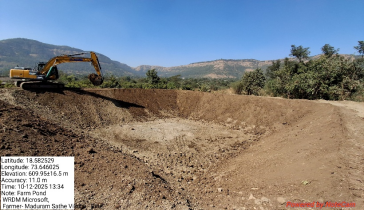
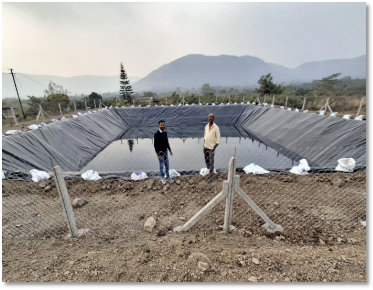
A total of 15 farm ponds were constructed to harvest and store rainwater for use during dry periods. Together, these farm ponds created a water storage capacity of 2.17 crore litres, providing a reliable source of water for irrigation and livestock needs. The stored water now supports supplementary irrigation across approximately 41.75 acres of farmland during critical dry spells.
As a result, farmers are able to provide timely irrigation to their crops, reducing the risk of crop damage due to water shortages. The availability of water has helped improve plant health, reduce moisture stress, and support better crop growth. For example, Madhuram Namdev Sathe, a farmer, is able to irrigate his mango and chikoo orchard using water stored in the farm pond, ensuring the survival and productivity of his crops during dry periods.
The intervention has strengthened agricultural productivity, protected long term orchard yields, and improved livelihood security for farming families. Around 15 farmers, including 2 women and 13 men, have directly benefited from the farm pond initiative.
Voice from Grounds
“Earlier, we depended on labour wages and often moved towards industrial work. Now, both have reduced as we can sustain ourselves through farming.”
“Breaks in rainfall affected our crops, but the farm ponds now allow us to save standing crops and plan agricultural activities more effectively”.
By converting rainwater into productive use, the farm pond intervention under the Enhancing Water Resource Management Project, Mulshi has strengthened water security, improved crop yields, and enhanced resilience to climate variability.