
By Rohit Salunkhe, CRC Coordinator, CYDA
Supported by: Atlas Copco
For many young students, mathematics is one of the most challenging subjects in school. Concepts such as measurement, calculations, and problem-solving often seem difficult when taught only through textbooks and classroom exercises. As a result, many students lose confidence and develop a fear of mathematics. Recognizing this challenge, CYDA organized an educational visit to the local vegetable market for 22 adolescents from the Dapodi Community Resource Center. The objective was to help adolescents understand mathematical concepts through practical experiences and demonstrate how mathematics is used in everyday life.
The adolescents selected for the visit were those who often struggled to understand mathematics through conventional teaching methods. The visit was designed to transform learning from memorization to experience by connecting classroom concepts with real-life situations.
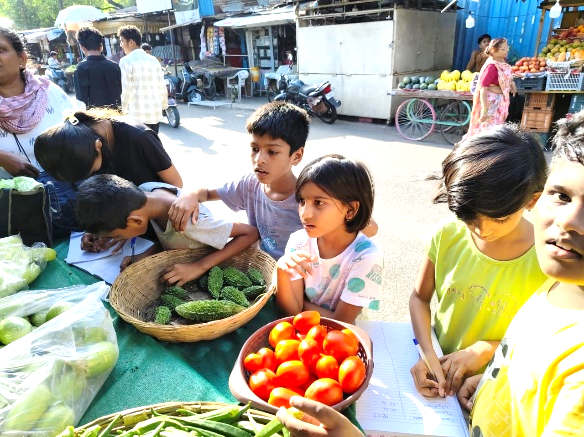
At the vegetable market, young learners observed actual buying and selling processes and learnt how vendors use mathematics in their daily work. They explored concepts such as weight, quantity, pricing and money transactions through direct interaction and observation. They calculated the cost of vegetables, estimated expenses, compared prices between vendors and checked the balance amount returned after purchases.
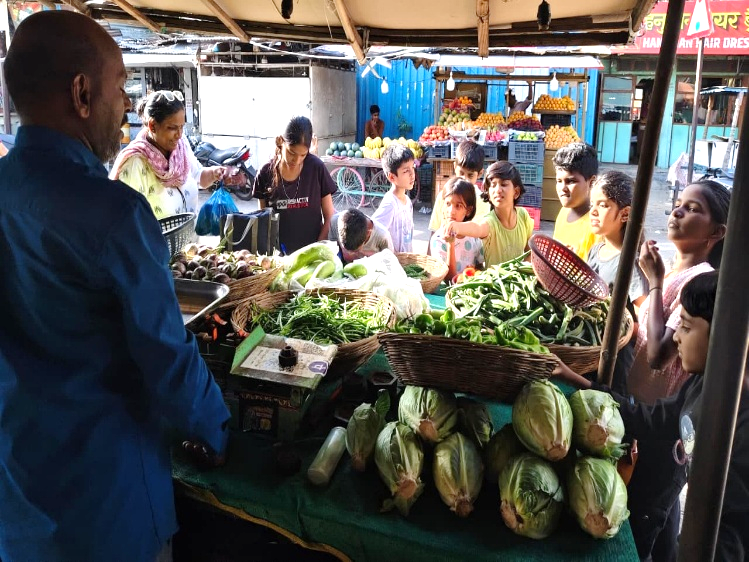
Through these activities, adolescents gained a practical understanding of measurement units such as a quarter kilogram (250 grams), a half kilogram (500 grams), one kilogram and a dozen. Mathematical operations like addition, subtraction, multiplication and division became easier to understand when applied to real-life situations. Many students who previously found calculations difficult have been able to solve practical problems with greater confidence.
The visit also helped adolescents develop important life skills. They learnt about budgeting, the value of money and informed purchasing decisions. Interactions with vendors improved their communication skills and encouraged them to ask questions confidently and engage with others.
One participant shared, “Earlier, I found mathematics difficult because I could not understand why we were learning it. After calculating prices and weights in the market, I understood how maths helps us in daily life. It became much easier and more interesting.”
Impact
- Adolescents applied addition, subtraction, multiplication, division, and cost estimation in real-life situations.
- Improved financial literacy, communication, decision-making, and confidence in handling money.
- Increased interest and engagement in mathematics through experiential learning.
All 22 adolescents gained knowledge about vegetables, market systems and current market prices. Through direct participation in market transactions, 20 adolescents developed a better understanding of measurement units and practical calculations. They strengthened their numerical abilities, improved their confidence in handling money and learnt to apply mathematical concepts in everyday situations.
Rohit Salunkhe said, “When adolescents experience mathematics in real-life situations, they learn faster, gain confidence and understand the practical value of education.”
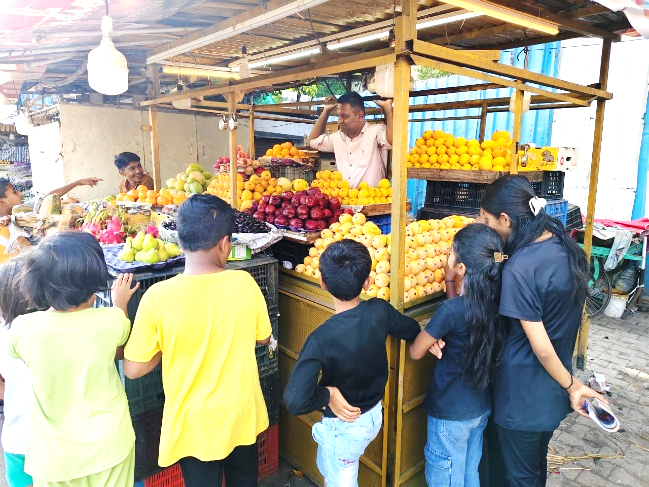
This educational visit successfully transformed mathematics from an abstract classroom subject into a practical life skill. By linking learning with real-world experiences, the activity increased adolescents’ interest in mathematics and demonstrated that learning becomes more meaningful, engaging and enjoyable when students can see its importance in their daily lives.
