
By Jinu Sam Jacob, Development Practitioner, Bengaluru
When critics sitting comfortably inside elite drawing rooms look out at the young people camped in the national capital and ask with a patronizing smirk, “Why can’t you use this time to study?”, they are revealing a deep, nervous panic. This question is not about genuine concern for education. It is a weapon meant to silence dissent, dismiss mass anger and sweep systemic failures under the rug. To brush off thousands of young dreamers marching through the biting winters and punishing summers of Delhi as mere truants or pawns is to turn a blind eye to a crumbling nation. These protests are not about a delayed calendar or an administrative glitch; they are the raw, beating heart of a generation watching its future get bartered away by creeping authoritarianism and empty promises.
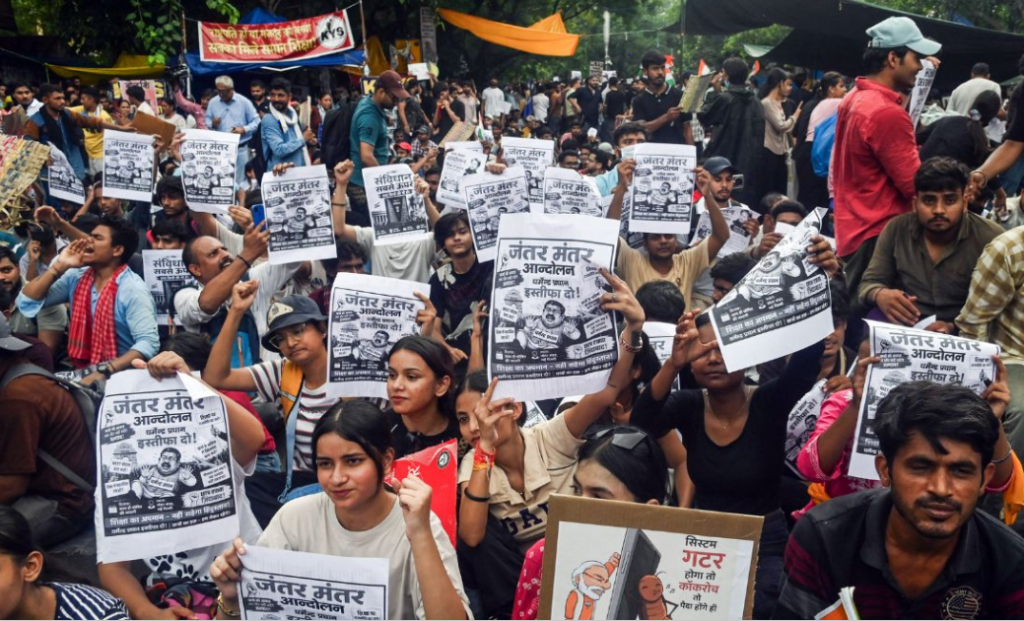
To understand why Delhi is burning with this energy, we have to look beyond our borders. Dismissing Gen Z as a generation addicted to phone screens is a lazy way to miss the whole architecture of modern resistance. What critics call idle screen time is actually a lightning-fast, decentralized network of survival and solidarity. Look across the world: from young people demanding total systemic change in Kenya and the Aragalaya in Sri Lanka, to student revolutions in Bangladesh and historic marches in Chile, a powerful truth is echoing everywhere. The states that were supposed to protect the aspirations of the young have instead turned into machines of economic exclusion and absolute control.
In India, this global crisis wears a very painful, localized face. The anger in the capital goes far beyond the immediate fury over leaked exams or cancelled schedules. It is a breaking point against a rotting recruitment machinery where years of sleepless, desperate nights spent studying by millions of graduates are thrown into the dustbin by paper leaks, political favours and institutional rot. When the promise of a decent job vanishes and when the few remaining ladders of upward mobility are sold to the highest bidder or rigged by cartels, the traditional spaces of learning, the university, the classroom, the library, stop being sanctuaries. They feel like traps. When merit is constantly sacrificed at the altar of corruption, simply sitting inside a classroom and studying quietly feels like an act of betrayal.
This is where the critics are fundamentally wrong. The students filling the streets are not abandoning their education; they are finally living it out. They are stepping into the most radical, real world lessons of civic duty. They know a simple truth that autocrats try desperately to erase: public spaces, democratic institutions and the state itself do not belong to whoever happens to hold power today, nor to their corporate backers. They belong to the people. The right to dissent, to occupy the public square and to fight for the nation are not gifts handed down by a benevolent ruler; they are the very oxygen of a republic. When the state tries to gatekeep patriotism, criminalize questioning and shrink our freedoms, stepping out onto the asphalt becomes the only way to keep the nation breathing.
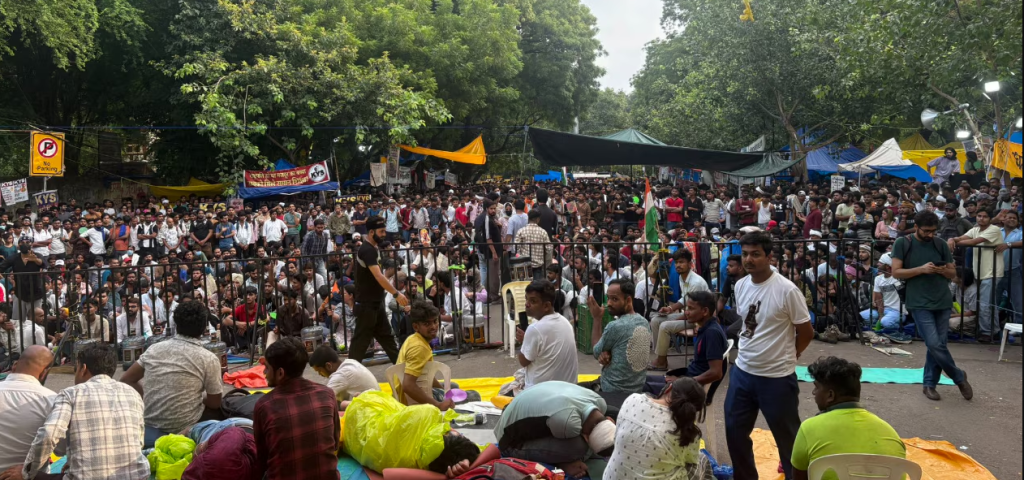
At the emotional and intellectual core of this struggle lies the timeless wisdom of Babasaheb Dr B R Ambedkar and his three simple, powerful words: Educate, Agitate, Organise. Those who use the sanctity of education to silence protesting youth show that they have completely missed the soul of Ambedkarite thought. Ambedkar never wanted education to build obedient, silent workers for an oppressive machine. In his vision, true education is meant to wake up a fierce, critical conscience, a clear lens that cuts through state propaganda, sees through structural injustice and refuses to bow down to oppression.
Today’s generation is living out that exact call in real time. They are reading the system with sharp clarity, seeing right through the hollow slogans of progress. They are organizing with breathtaking speed, breaking past old walls of region, language and caste through digital solidarity to find each other. And finally, they are standing tall on the streets of Delhi because they know that polite memorization cannot dismantle an autocracy. Their relentless presence on the asphalt is the living pulse of a democracy fighting for its life against the shadows of fascism.In the end, what is happening in Delhi is a desperate, beautiful battle to reclaim the republic. When the safety rails of democracy warp under the heavy weight of majoritarian power and when the core identity of the nation is threatened, the classroom has no choice but to spill out into the streets. The youth are showing us that the unyielding fire of collective resistance can pierce through even the deepest state apathy, ensuring that the Constitution remains a living, breathing shield rather than a dusty relic locked away in a museum.

This Post Has One Comment
Good perspective