
G Venkata Chaitanya, Project Officer, Kakinada, CYDA
The rapid development of technology has transformed modern life. Smartphones, computers, televisions, refrigerators, and other electronic devices have become essential parts of everyday life. However, technological progress has also created a growing environmental problem: electronic waste, commonly known as e-waste. E-waste refers to discarded electrical and electronic equipment, including devices that are broken, outdated, or simply no longer wanted. As consumers replace electronic products more frequently, the amount of e-waste continues to increase, making it one of the most serious environmental challenges of the modern era.
Causes of E-Waste
One major cause of e-waste is the rapid pace of technological innovation. New models of smartphones, laptops, and other devices are introduced regularly, encouraging consumers to replace older products. Planned obsolescence, limited repair options, and declining costs of electronic goods can further encourage disposal rather than repair.
Another important factor is inadequate recycling infrastructure. Many electronic devices contain valuable materials such as copper, aluminium, gold, and rare metals. However, when e-waste is improperly discarded, these resources are lost instead of being recovered and reused.
Environmental and Health Impacts
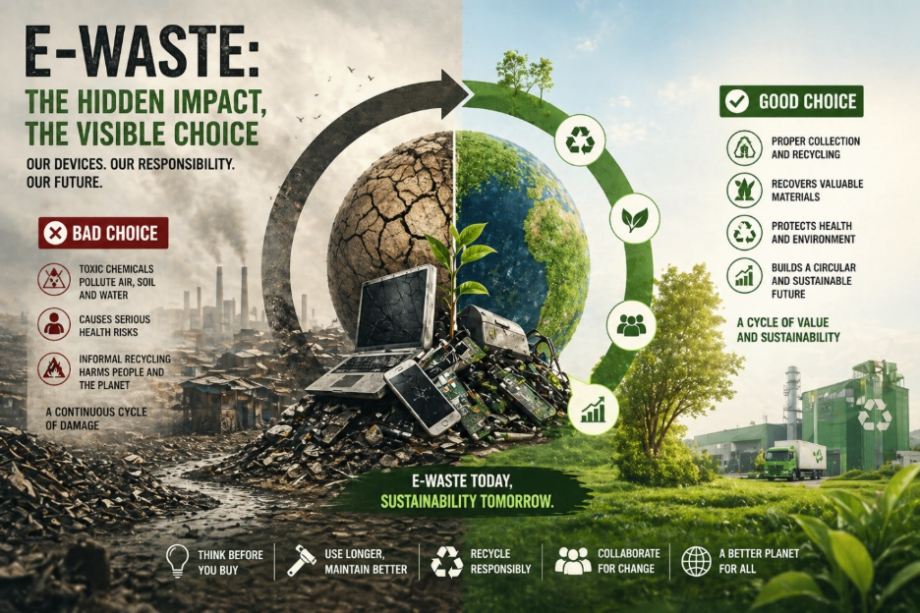
E-waste can contain hazardous substances such as lead, mercury, cadmium, and certain flame retardants. When electronic waste is dumped in landfills or burned improperly, these substances can contaminate soil, water, and air. This pollution can damage ecosystems and contribute to long-term environmental degradation.
Improper e-waste processing can also create health risks for people involved in informal recycling. Workers may dismantle or burn electronic components without adequate protective equipment, exposing themselves to toxic substances. Communities located near informal recycling and dumping sites may also face increased exposure to pollutants.
E-waste generation and management in India
India is one of the world’s largest generators of electronic waste (e-waste). According to the Global E-waste Monitor 2024, India generated approximately 4.1 million metric tonnes of e-waste in 2022, accounting for around 7% of the global total and ranking third worldwide, after China and the United States. The rapid growth of consumer electronics, smartphones, internet access and digital services has contributed to the increasing volume of discarded electrical and electronic equipment.
India has established a regulatory framework for e-waste management through the E-Waste (Management) Rules, 2022, which came into force on 1 April 2023. These rules strengthened the extended producer responsibility (EPR) system, requiring manufacturers, producers, refurbishers and recyclers to register through the Central Pollution Control Board’s portal. However, effective collection, environmentally sound recycling, regulatory enforcement and public awareness remain significant challenges.
A substantial proportion of India’s e-waste management continues to involve informal collection and recycling networks. A January 2026 report published by NITI Aayog estimates that the informal sector accounts for approximately 62% of e-waste processing, while also noting that some discarded electronics remain stored with consumers and bulk users. These informal networks recover valuable materials and support livelihoods, but unsafe dismantling and processing practices can create serious environmental and occupational health risks.
Solutions to the E-waste Problem
The growing volume of electronic waste (e-waste), including discarded mobile phones, computers, televisions, batteries, chargers and other electronic devices, poses serious environmental and health risks. Addressing this problem requires a combination of responsible consumer behaviour, improved recycling systems, sustainable product design and effective government policies. The following measures can help reduce e-waste and promote sustainable management.
- Reduce Consumption: Consumers should purchase electronic devices only when necessary and avoid frequent upgrades. Extending the lifespan of existing devices can reduce the amount of e-waste generated.
- Reuse and Repair: Damaged devices should be repaired, and components should be upgraded wherever possible. Functional electronics can also be donated or resold, allowing others to use them and reducing unnecessary disposal.
- Eco-friendly Product Design: Manufacturers should design durable, energy-efficient and repairable electronics using fewer hazardous materials and more recyclable components. This can make products easier to maintain and recycle at the end of their useful lives.
- Producer Responsibility: Manufacturers should establish take-back programmes and support the collection and recycling of discarded electronics. Extended producer responsibility (EPR) can encourage producers to take greater responsibility for the environmental impact of their products throughout their lifecycle.
- Proper Collection and Recycling: Unusable electronic devices should be sent to authorised e-waste collection centres and recycling facilities. Safe recycling allows valuable materials to be recovered while reducing pollution and the need for extracting new raw materials.
- Safe Disposal: Electronics that cannot be reused or repaired must be handled by authorised facilities using environmentally sound methods. Burning electronic waste or dumping it in landfills and open spaces should be avoided because these practices can release hazardous substances into the environment.
- Public Awareness: Schools, colleges, community organisations and government agencies should educate people about the environmental and health risks of improper e-waste disposal. Awareness campaigns can encourage responsible purchasing, repair, collection and recycling practices.
- Effective Government Regulation: Governments should strengthen e-waste collection systems, enforce recycling standards, monitor compliance with environmental regulations and take action against illegal dumping and unsafe processing. Support for authorised recyclers and the safer integration of informal-sector workers can further improve e-waste management.
Conclusion
E-waste is a growing environmental problem caused by the rapid use of modern technology and the increasing disposal of electronic devices. Although these devices make our lives easier, improper disposal can harm the environment and human health. Reducing unnecessary consumption, repairing and reusing devices, and recycling electronic waste safely can help reduce these harmful effects. Stronger government policies, better collection systems, public awareness, and safer working conditions for informal-sector workers are also essential. The goal is not to reject technology, but to use it responsibly and ensure that technological progress goes hand in hand with environmental protection and a sustainable future.
Sources
- United Nations / Global E-waste Monitor
- World Health Organization. E-waste and Child Health.
- World Health Organization. Children and Digital Dumpsites: E-waste Exposure and Child Health.
- Central Pollution Control Board, Government of India. E-Waste (Management) Rules, 2022.
- Basel Convention. Electronic and Electrical Waste
- ITU and UNITAR (2024). The Global E-waste Monitor 2024. Official report.
- Government of India, Ministry of Environment, Forest and Climate Change (2024). Recycling of e-waste. Press Information Bureau release.
- NITI Aayog (2026). Advancing Circular Economy of Waste Electronic and Electrical Equipment (E-waste) and Lithium-Ion Batteries in India. Official report page.
