
By Mathew Mattam
When I first heard about Driver’s Dignity Day, I felt that ImpactLens should highlight the meaning behind it. We frequently celebrate vehicles, highways, technology and faster delivery systems, but rarely acknowledge the human being behind the steering wheel. Driver’s Dignity Day, observed on 17 September, invites us to see and respect that person.
Every safe journey carries the invisible labour of a driver. While passengers sleep during a long-distance journey, the driver remains awake. While families wait for food, medicines and essential goods, truck drivers travel through the night to deliver them. Bus drivers carry hundreds of people every day. Taxi and auto-rickshaw drivers connect neighbourhoods and cities. Ambulance drivers race against time to save lives. Delivery riders navigate traffic and extreme weather so that goods reach our doorsteps.
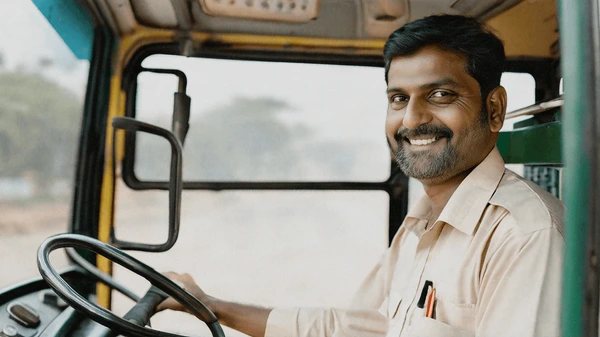
Our lives are in their hands, yet their lives and well-being seldom receive equal consideration.
Professional drivers work under difficult and uncertain conditions. They face long hours, irregular meals, inadequate rest, congested roads, pressure to meet deadlines and prolonged separation from their families. Truck drivers may spend several weeks away from home. Bus and taxi drivers often work extended shifts to earn enough to support their households. App-based drivers and delivery workers must respond to algorithms, customer ratings and unrealistic delivery expectations, frequently without adequate social protection.
Fatigue is one of the greatest dangers on the road. Yet drivers are sometimes encouraged—or compelled—to continue driving when their bodies require rest. A fatigued driver does not simply face a personal health risk; every passenger, pedestrian and road user is placed in danger. Allowing sufficient rest is therefore not a favour to the driver. It is an essential road-safety measure.
Driver’s dignity begins with recognising driving as skilled and responsible work. A professional driver must constantly assess speed, distance, road conditions, weather, vehicle performance and the unpredictable behaviour of other road users. Drivers carry people, livelihoods and valuable cargo. They make hundreds of safety decisions during every journey, often within seconds. Society must stop treating them merely as hired hands and recognise them as trained professionals who hold enormous public responsibility.
The day also reminds us that road safety cannot be placed entirely on the driver’s shoulders. Safe roads require shared responsibility. Governments must provide safer road engineering, visible signage, reliable emergency services and consistent enforcement. Transport companies must maintain vehicles, load cargo properly and establish realistic schedules. Employers must not reward dangerous speed or penalise drivers for taking necessary rest. Passengers must not pressure drivers to overspeed. Other road users must obey traffic rules and respect larger vehicles’ braking distances and blind spots.
Most importantly, drivers must have the right to refuse an unsafe journey. They should be able to say no when a vehicle is defective, cargo is overloaded, weather conditions are dangerous or adequate rest has not been provided—without fear of losing their job or income. Dignity includes the freedom to protect one’s own life and the lives of others.
Driver welfare must also extend beyond the road. Professional drivers need regular health examinations, accident and life insurance, clean resting facilities, safe parking spaces, toilets, nutritious food and access to mental-health support. Many drivers experience back pain, poor eyesight, hypertension, diabetes, stress and sleep disorders. Roadside facilities designed around their real needs would improve both their health and public safety.
Women drivers deserve particular encouragement. Driving continues to be seen largely as a male occupation, restricting women’s access to employment in public transport, logistics, taxis and delivery services. Safe workplaces, appropriate facilities, training opportunities and protection from harassment can enable many more women to enter the profession. Respecting drivers also means building a profession that is inclusive and free from discrimination.
There are different driver-related observances in India. National Drivers’ Day has also been marked on 24 January, while the Driver Dignity Day campaign led by the Bharat Association of Road Safety Volunteers is being observed on 17 September 2026. Rather than allowing the variation in dates to weaken the message, every such observance should deepen public recognition of drivers’ contributions. The official campaign describes Driver’s Dignity Day as a national movement for India’s professional drivers.
Celebrations should go beyond speeches and garlands. Transport organisations, companies, motor-driving schools, unions, civil-society groups and government agencies can organise health and eyesight check-ups, road-safety workshops, defensive-driving training, insurance-enrolment camps and family-support programmes. Companies can honour drivers with consistently safe records while also reviewing whether their own schedules, payment systems and fleet-maintenance practices encourage unsafe driving.
Every citizen can participate. Greet a driver respectfully. Do not address drivers with humiliating language. Offer water and access to a toilet. Do not demand excessive speed. Encourage a tired driver to stop and rest. Recognise that a person who delivers a package or drives a taxi deserves the same courtesy we expect in any other professional interaction.
Driver’s Dignity Day must not become another ceremonial occasion forgotten the following morning. Its real success will be measured by changes in behaviour, employment practices, transport policies and public attitudes.
Because every driver deserves respect, safe working conditions and the right to return home alive. Respect the Driver. Protect the Journey.
