By Pramodini Naik, Assistant Director, CYDA
Education is not just about learning to read and write; it is a powerful tool for dignity, struggle, and social change. In a society shaped by inequalities of caste, gender, class, and place, education decides who gets a voice and who is pushed to the margins. Nearly two hundred years ago, Savitribai Phule clearly understood this and at a time when educating women and marginalized communities was seen as wrong, she strongly claimed education as a basic right. Her fight was not only against illiteracy, but against an unfair social system that kept knowledge away from those who needed it the most.
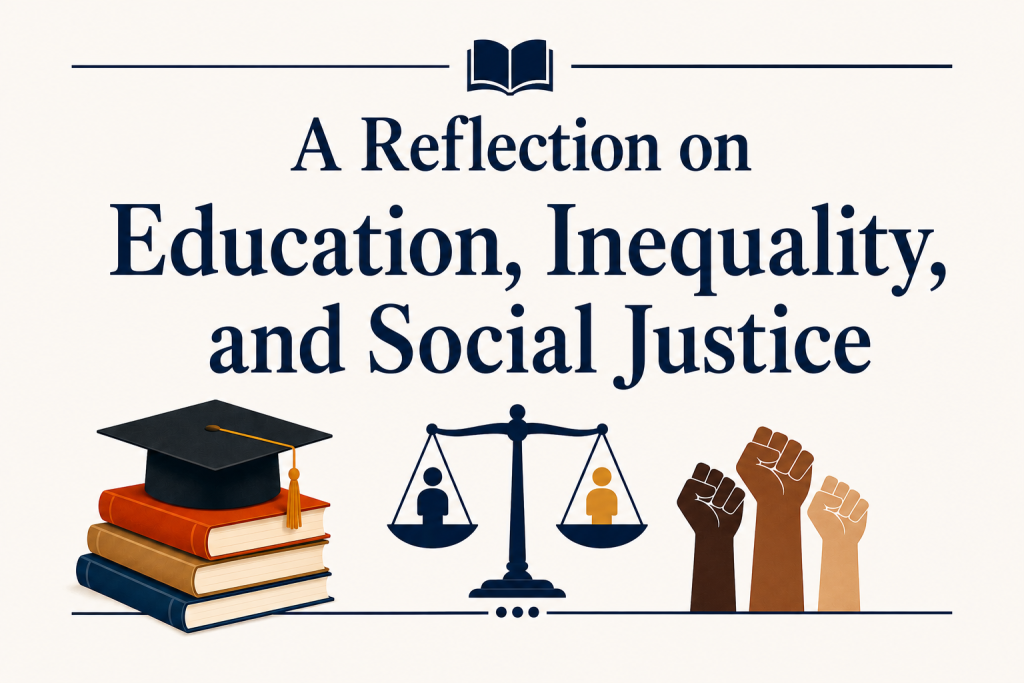
If Savitribai Phule were alive in today’s era, she would once again stand at the forefront of questioning the deep-rooted inequalities within the education system. While the form of discrimination has changed, its impact remains similar. Gender disparity, poor access to quality education and the rapid privatization of learning have created a system where education once envisioned as a public good, has increasingly become a privilege for those who can afford it. Despite progressive policy reforms such as the Right to Education (RTE) Act and multiple government welfare schemes, the rising cost of education continues to widen the gap between the rich and the poor. There is no longer a common education system for all; instead, parallel systems exist—one for the privileged and another for the marginalized.
In today’s knowledge-driven economy, access to quality education, digital platforms, skill-development programs, and exposure-based learning determines who gains livelihood opportunities and who is left behind. Those who can afford private schooling, coaching institutes, digital tools and skill-based platforms are better positioned to capture employment and business opportunities. Equally, students from poor, rural, and tribal communities remain excluded from these pathways. Even today, many tribal students in Grade 8 struggle to read fluently or perform basic numeracy operations. This is not only a learning gap—it is a systemic failure rooted in unequal access, social exclusion and under-resourced public education.
Savitribai Phule stands as one of the most transformative figures in Indian social reform, particularly in the field of women’s education and social justice. Born on 3 January 1831 in Naigaon, Maharashtra, she emerged as India’s first woman teacher and a pioneering educationist at a time when educating women and marginalized communities was socially unacceptable. Along with her husband, Jyotirao Phule, she challenged entrenched caste hierarchies, patriarchal norms, and regressive traditions that denied women dignity and knowledge. Despite facing social ostracism, verbal abuse, and physical attacks, Savitribai continued teaching with extraordinary courage and conviction.
In 1848, she played a pivotal role in establishing the first school for girls in Pune, laying the foundation for a revolutionary movement in women’s education. Savitribai believed that education is the most powerful tool for social transformation—not just to achieve literacy, but to develop critical consciousness. Her work extended beyond classrooms; she advocated widow remarriage, opposed child marriage, worked for widow welfare and established shelters for abandoned women. As a poet and thinker, she emphasized rationality, self-respect, and liberation through knowledge. Her vision aligns closely with modern theories of education such as Paulo Freire’s critical pedagogy, which views education as a practice of freedom, and Amartya Sen’s capability approach, which defines education as expanding people’s real freedoms and life choices.
At CYDA, our commitment to inclusive, equitable, and transformative education draws deeply from Savitribai Phule’s philosophy. She viewed education as a means to dismantle structural inequality and empower marginalized communities to claim their rights with dignity. Similarly, it focuses on bridging learning gaps, strengthening foundational literacy and numeracy, and creating equal learning opportunities for adolescents, especially girls and students from disadvantaged and tribal backgrounds. Through teacher capacity-building programs, remedial education, STEM initiatives, life-skills education, and community engagement, CYDA works to ensure that education becomes a tool for empowerment rather than exclusion.
From a theoretical perspective, its approach reflects the principle of equity rather than mere equality. While equality provides the same resources to all, equity recognizes that learners start from different positions and therefore require differentiated support. Today, our organization continues this legacy by addressing structural barriers such as poor school infrastructure, limited access to quality learning materials, gender bias, and lack of parental or community support for education.
CYDA’s emphasis on gender sensitivity, leadership development among girls, and community awareness aligns strongly with Savitribai Phule’s belief that education must lead to social transformation. By working closely with teachers, schools, parents, and communities, it fosters critical thinking, self-confidence, and social responsibility among young learners.
