
Why volunteering — for nature, for the hungry, for the sick — is not capitalism’s alibi but the slow architecture of the world after it
By Prof Ujjwal K Chowdhury, Political Analyst & Senior Academic
A recent critique argued that volunteering doesn’t save the world — it saves capitalism, laundering unpaid labour into résumé lines while the state quietly disappears. The charge is largely true. But the verdict is premature. In an age of total surveillance, monopolised violence and algorithmic war, the old grammar of revolution — barricades, arms, the seizure of the state in a single dramatic rupture — has been rendered nearly unusable. What remains is the slower, less cinematic work of building, person by person and meal by meal, the institutions of a different world inside the shell of this one. This essay accepts the critique in full and then asks the harder question it declines to ask: if not volunteering, what?
AT A GLANCE
Bhabani Shankar Nayak’s recent critique in Counterview.net — that institutionalised volunteering has become a subsidy to capital, laundering unpaid labour as “employability” — is correct as a diagnosis of the NGO-industrial complex and the résumé-internship economy.
▸ But the critique conflates two different things: volunteering-as-labour-arbitrage (CSR days, unpaid internships, service-learning credit) and volunteering-as-mutual-aid (feeding, teaching, healing, restoring land in solidarity, without a market intermediary).
▸ Classical revolutionary rupture — armed seizure of state power — is not a live option for most movements today. States hold overwhelming and increasingly automated coercive capacity: mass surveillance, predictive policing, drones, and information-warfare infrastructures that can pre-empt, infiltrate or discredit any organised threat before it matures.
▸ Under these conditions, a Gramscian “war of position” — the patient construction of counter-institutions, counter-culture and counter-common-sense — is not a consolation prize for the defeated Left. It is the only strategy structurally available.
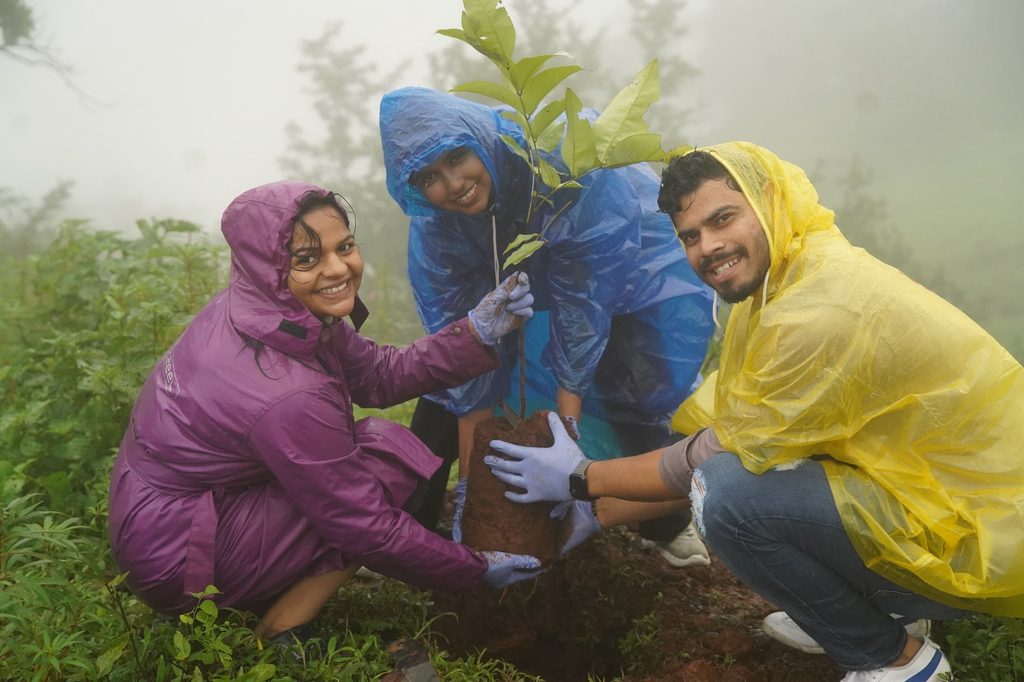
▸ Mutual-aid volunteering in nature restoration, food and education access, and care for the sick is precisely this kind of counter-institution-building — provided it is organised on solidarity rather than charity logic, is politically self-aware, and refuses NGO-isation and capture.▸ The article proposes four conditions that separate insurgent volunteering from the captured variety Nayak rightly condemns, and argues for a 10X scaling of solidarity infrastructure as the realistic evolutionary path to a post-capitalist order.
01 THE CHARGE SHEET, AND WHY IT STICKS
Start by conceding the case, because it deserves to be conceded. When a food bank is staffed by unpaid graduates instead of paid workers, when a university calls an internship a “learning opportunity” to avoid paying minimum wage, when a bank sends five hundred employees to paint a school for one afternoon and issues a press release about “giving back” while lobbying against the taxes that would have funded that school properly — this is not solidarity. It is what the critique names it: a hidden ledger, in which goodwill is logged as free labour and the state’s retreat from public provision is disguised as civic virtue.
The mechanism is not subtle once you see it. Governments cut welfare, education and health budgets under fiscal-discipline doctrines. The resulting gaps are real, visible, and morally urgent — hungry children, unlettered adolescents, the uninsured sick. Into that gap steps the third sector: NGOs, charities, university “service learning” offices, corporate CSR departments — each chronically underfunded, each therefore structurally dependent on a rotating supply of free or underpaid labour. The worker who might otherwise have organised for better wages instead donates evenings to patch the hole the state was supposed to fill. Capitalism gets a twofer: the crisis it produces is contained just enough to prevent political combustion, and the very people most likely to be angry about it are kept exhausted, credentialed, and grateful.
This is an old trick with a new interface. Empires have always known how to convert the instinct to help into a supply of foot soldiers — for war, for missions, for “development.” What is new is the scale and the software: LinkedIn endorsements, gamified volunteer-hour trackers, university dashboards that convert compassion into a line on a CV. The critique is right that this is, in the most literal economic sense, a subsidy — free labour transferred from citizens to institutions that could, in nearly every case, afford to pay for it.
None of what follows disputes any of this. What follows disputes the conclusion drawn from it.
02 THE CONFLATION AT THE HEART OF THE ARGUMENT
The critique’s fatal move is a quiet one: it treats “volunteering” as a single, uniform category, and then diagnoses the whole category by its worst instance. But a corporate CSR day and a community health worker walking eight kilometres to check on a diabetic neighbour are not the same act wearing different clothes. They are opposite acts that happen to share a word.
Call the first kind extractive volunteering: unpaid labour performed for an institution, under that institution’s control, producing value the institution captures — a cleaner riverbank the municipality didn’t have to pay to clean, a tutored child whose school didn’t have to hire a teacher, a “portfolio” the intern built for a company that never intended to hire them. Extractive volunteering has an employer, even when it pretends not to. It has a hierarchy, a beneficiary that is not the volunteer, and an exit that leaves the underlying system exactly as it was — indeed, reinforced, because the pressure that might have forced structural reform has been vented.
Call the second kind insurgent mutual aid: reciprocal, horizontally organised solidarity performed by people with each other, not for an institution — the tradition Kropotkin described a century before the term “volunteering” existed, the one that fed New Orleans after Katrina when the state failed to, that vaccinated Sundarbans hamlets when no ambulance would cross the river, that has, in Rojava and in the Zapatista caracoles, built entire education and health systems outside the state and the market simultaneously. Insurgent mutual aid has no employer. Its beneficiary and its performer are the same class of people, sometimes literally the same people on different days. It does not vent pressure for reform — it builds, in miniature, the alternative that the reform was supposed to deliver and never did.
These two things can look identical from a satellite photograph: people showing up to feed other people. They are not identical in political function. One reproduces the system it patches. The other rehearses the system that will replace it. The critique is entirely correct about the first. It has almost nothing to say about the second — and the second is where the real argument for volunteering has always lived.
03 WHY THE BARRICADES ARE CLOSED
It is worth stating plainly why this distinction matters more now than at any point in the last century. For most of modern history, the theory of change available to anyone serious about transforming an unjust order ran, in the end, through rupture — the strike that becomes an uprising, the uprising that seizes the arsenal, the arsenal that makes the old state ungovernable until it falls or negotiates. That theory was never comfortable, and it was rarely bloodless, but it was at least structurally available: the state’s monopoly on violence was real but not absolute, information moved slowly enough that organisation could outrun suppression, and a determined mass could, in the right conditions, out-manoeuvre the guns.
That structural availability has been quietly withdrawn. Contemporary states — and the corporations increasingly indistinguishable from them in surveillance capacity — hold instruments no nineteenth- or twentieth-century revolutionary faced. Predictive policing flags organisers before they finish organising. Facial recognition and telecom metadata make anonymous assembly nearly extinct. Drones and precision weapons have widened the asymmetry between state violence and any conceivable popular counter-force to a gap that cannot be closed by courage alone. And information warfare — troll farms, deepfakes, algorithmically amplified disinformation — can discredit, divide or simply drown out a movement before it reaches the size at which rupture becomes even theoretically conceivable.
This is not a counsel of despair; it is a description of terrain. A general who tells her army to charge a machine-gun nest because charging worked at Agincourt is not being brave, she is being obsolete. The insistence on rupture as the only serious politics, in 2026, in a world of biometric ID and networked drones, is that same obsolescence dressed as radicalism. It is precisely because the war of manoeuvre is closed that the war of position — Antonio Gramsci’s phrase for the slow contest over institutions, culture and common sense that precedes and enables any real transfer of power — stops being the fallback for the defeated and becomes the only strategy left standing.
The war of position is not merely propaganda or “awareness.” Gramsci meant something closer to what the Right, in fact, understood and executed with terrifying patience over the last forty years: build the schools, the media, the think-tanks, the churches and the community organisations that produce a population which finds your worldview simply obvious before a single vote is cast or a single law is changed. The Left’s equivalent has no reason to look like pamphlets and everything to do with clinics, food networks, seed banks, tutoring circles and cooperative workshops that produce, generation by generation, a population that has already experienced — not merely imagined — a different way of meeting human need.
04 FEEDING THE POOREST IS NOT CHARITY — IT IS PREFIGURATION
Consider what it actually means, politically, for a community kitchen to feed a hundred families a week using donated, gleaned or collectively grown food, distributed without means-testing, run by a rotating roster of neighbours rather than paid staff answerable to a donor. Nayak’s critique would ask: does this let the state off the hook for its failure to guarantee food security? In the short run, marginally, yes — exactly as it would for a corporate soup kitchen. But the resemblance ends at the ladle.
A corporate or NGO feeding programme is designed to be efficient, scalable and fundable — which means it is designed to be legible to donors and unthreatening to the order that produced the hunger. A mutual-aid kitchen, organised by and answerable to the people who eat there, is designed to be replicable by anyone with a stove and a network — which means it is a working demonstration that food security does not require a market, a means test, or a state that has to be lobbied into caring. Every family that eats there for a year has lived, concretely, one year inside a small post-scarcity economy. That is not a subsidy to capitalism. That is muscle memory for what comes after it.
The same logic runs through informal education. A free evening tuition circle for children whose government school has forty students to a teacher is, on Nayak’s terms, patching a hole the state cut. It is also, simultaneously, something the state audit will never capture: a demonstration, repeated thousands of times across thousands of neighbourhoods, that knowledge does not require a fee, a rank or a market credential to be transmitted — that teaching is a thing neighbours can simply do for each other. Kerala’s mass literacy campaigns of the 1980s were volunteer-run, politically organised, and explicitly framed by their organisers not as charity but as a rehearsal for a more democratic distribution of knowledge; they are widely credited with reshaping the state’s own subsequent commitments. The volunteering did not let the state off the hook. It changed what citizens believed the state — and themselves — were capable of, which is a precondition for the hook ever being applied.
05 NATURE, RESTORED IN COMMON, IS A REHEARSAL FOR PROPERTY UNDONE
Environmental volunteering draws a particularly sharp version of Nayak’s charge: the corporate “tree-plantation day,” timed for the annual sustainability report, is almost a parody of extractive volunteering — a fossil-fuel-adjacent company photographing its interns beside saplings that a monitoring report six months later will quietly note as mostly dead. This is worth naming with contempt, not softened language. It is greenwashing with a spade.
But set beside it a different practice: a Sundarbans village collectively restoring a mangrove belt that a shrimp-farming lease had stripped, using traditional knowledge of which species hold a riverbank against a cyclone, governing the replanted commons through a village council rather than a forest department, and defending it, later, against the next lease application. This is not volunteering in Nayak’s sense at all — there is no employer, no CSR budget, no résumé line. It is commoning: the direct, collective re-assertion that a resource belongs to the community that depends on it and not to whoever holds the paper title. Every hectare restored this way is simultaneously an ecological repair and a small, concrete defeat for the enclosure logic that produced the degradation in the first place — a logic that is, at bottom, the same logic Nayak is indicting.
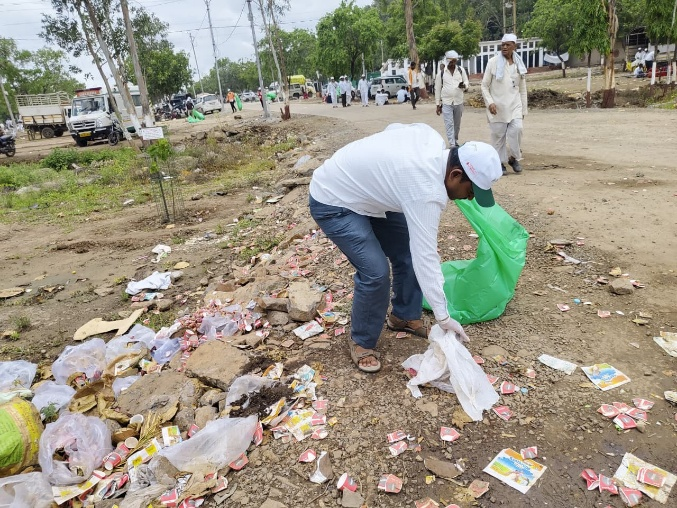
This is the pattern across the domain: river-cleaning volunteering organised by and for a fishing community that depends on the river is not the same act, dressed differently, as a bank’s staff photographed picking up plastic for an afternoon. The first builds a durable local capacity for self-governance of a shared resource — the precise capacity that a genuinely post-capitalist ecology would require everywhere, at scale. The second builds a slide for an annual report. Confusing them, in either direction, empties the word “volunteering” of the only meaning worth arguing about.
06 CARING FOR THE SICK: DECOMMODIFYING THE BODY
Nowhere is the market’s colonisation of human need more complete than in health, and nowhere, correspondingly, is solidarity-based volunteering more politically charged. A community health worker network — trained volunteers who monitor pregnant women, manage basic chronic-disease follow-up, and connect the acutely ill to formal care across the last mile that ambulances and clinics cannot reach — does not simply fill a staffing gap, though it does that too. It re-establishes, in practice, the proposition that a person’s survival should not depend on their capacity to pay: the single proposition the market in health care exists to deny.
Every hour spent this way is doubly subversive. It denies the insurance industry, the private hospital chain and the pharmaceutical distributor a transaction that would otherwise have occurred, or would otherwise have gone unmet and become a statistic. And it demonstrates — to the volunteer, to the patient, to everyone watching — that care is a thing human beings are simply able to give each other directly, without a bill. This is precisely the demonstration that a market order most needs suppressed, because markets survive on the manufactured belief that need can only be met through exchange. Every unpaid hour of nursing a neighbour is a small, stubborn refutation of that belief, repeated until it becomes, again, common sense.
This is not to romanticise the exhaustion of volunteer caregivers, disproportionately women, who are too often expected to absorb infinite unpaid emotional and physical labour precisely because it is naturalised as “what women do.” That exploitation is real, and any serious politics of care volunteering must name and resist it as sharply as it resists corporate CSR — through rotation, through collective rather than individual burden, through refusing the guilt-trip that keeps any one person’s labour infinite. Insurgent mutual aid that reproduces gendered exploitation is not insurgent. It is merely extraction with a different manager.
07 FOUR CONDITIONS THAT SEPARATE INSURGENCY FROM CAPTURE
If the same physical act — feeding, teaching, healing, restoring — can be either a subsidy to capital or a rehearsal for its supersession, the difference cannot be found in the act itself. It has to be found in how the act is organised. Four conditions, drawn from the movements that have actually managed to hold this line — the Zapatista health promoters, Cooperation Jackson’s solidarity economy in Mississippi, the Rojava communes, Kerala’s literacy volunteers, India’s own community-forest movements — mark the border.
First, horizontal governance. The people served must also govern the effort — deciding what is needed, how it is run, who is accountable — rather than receiving a service designed elsewhere by a donor, a board or a corporate CSR committee. The moment a funder’s priorities override a community’s own, the effort has re-entered extractive territory regardless of anyone’s intentions.
Second, refusal of NGO-isation. This is the hardest and most counter-intuitive condition, because NGO status brings real resources. But registered-charity dependence on donor cycles reliably re-imposes donor priorities, donor timelines and donor-legible metrics — the precise machinery Nayak’s critique is describing — onto what began as autonomous solidarity. Movements that have held their edge longest are the ones that diversified funding away from any single institutional donor, kept a base of dues-paying or barter-contributing members, or simply stayed small and federated rather than scaling into a single fundable organisation.
Third, explicit politicisation. A feeding programme that never discusses why people are hungry will, almost by default, drift into the charity logic the critique condemns — because charity, unlike solidarity, does not require an analysis of causes, only of symptoms. The mutual-aid tradition that has actually built power has always paired the material act with political education: the Black Panther Party’s free breakfast programme was never separable from the political meetings that surrounded it; Kerala’s literacy volunteers were, to a person, also cadre of a mass political movement. Depoliticised service is charity in solidarity’s clothing.
Fourth, federation over scale. Extractive volunteering wants to scale — bigger NGOs, bigger CSR budgets, more standardised metrics — because scale is what makes it fundable and fundability is what makes it controllable from above. Insurgent mutual aid should not try to become one large organisation; it should try to become ten thousand small, similar, loosely federated ones, sharing method and solidarity but retaining local governance. A single large structure can be captured, regulated, or defunded in one stroke. Ten thousand small ones, linked by shared practice rather than shared hierarchy, cannot.
08 THE HONEST OBJECTIONS, ANSWERED RATHER THAN BURIED
Three objections deserve to be met head-on rather than waved away. The first: doesn’t even insurgent mutual aid still let the state avoid its obligations, whatever its internal politics? Partially, yes — any unmet need that gets met by anyone, anywhere, marginally reduces the immediate political pressure for state provision. But the alternative is not a choice between mutual aid and state provision; in the world as it actually exists, for the hundreds of millions the state has already abandoned, the choice is between mutual aid and nothing. Refusing to feed a hungry child today because feeding her might theoretically delay a parliamentary reform is not solidarity. It is a wager placed with someone else’s hunger.
The second: is “war of position” simply a comforting story that lets the Left avoid ever confronting power directly? It can become that, and often has — this is a real risk, not a straw man. The safeguard is not to abandon institution-building but to insist, as a matter of discipline, on the fourth condition above: politicisation. Mutual aid that never names the system it is compensating for, never links its members into wider movements, and never uses its accumulated trust and organisation to support strikes, land defence, or electoral and legal fights when those openings appear, has indeed gone soft. The war of position is not pacifism; it is patience with a purpose — the purpose being to arrive, eventually, at moments of genuine confrontation with a base that is organised, fed, educated and healthy enough to hold the line, rather than exhausted, isolated and dependent.
The third, and the sharpest: can this really add up to “all-out social change,” or is it destined to remain a thousand admirable local projects that never dent the aggregate structure of capital? Here the honest answer is that scale and time are doing real work in the argument, and the case would be dishonest to pretend otherwise. No single feeding programme or river-restoration project transforms a national economy. But counter-hegemony has never worked by single projects; it works by density and duration — enough parallel institutions, sustained over enough decades, that they begin to constitute a genuine alternative infrastructure that people can step into, exactly as neoliberalism itself did not win in a single election but through fifty years of capturing universities, courts, media and common sense before it ever captured a parliament. There is no guarantee this works faster, or works at all. There is only the observation that it is, at present, the only lever within reach that is not already broken in our hands.
09 THE 10X ASK: FROM SCATTERED KINDNESS TO PARALLEL INFRASTRUCTURE
What would it mean to take this seriously at ten times the current scale, rather than as a scattering of admirable local exceptions? It would mean treating solidarity infrastructure — food networks, tutoring circles, community health worker corps, commons-restoration collectives — not as a supplement to political organising but as its foundation and its training ground: the place where a movement’s actual base is built, tested and trusted, long before any ballot, strike or negotiation.
It would mean federating these efforts deliberately across regions and issues, so that a mangrove-restoration collective in the Sundarbans and a free-tutoring circle in a northern industrial town and a community health-worker network in a drought belt understand themselves as nodes of a single, if loosely joined, project — sharing method, mutual reinforcement and, when the moment calls for it, coordinated action — rather than as unconnected acts of individual virtue.
It would mean measuring success not by the donor-legible metrics that extractive volunteering optimises for — beneficiaries served, hours logged, photographs taken — but by the metrics that matter to the war of position: how many people have directly experienced provisioning without a market, how many local leaders have been trained who owe nothing to any funder, how resilient the network proves the next time a state or corporate actor tries to co-opt, license or shut it down.
And it would mean an unsentimental honesty about the difference this essay has tried to hold onto throughout: that showing up is not, by itself, virtuous, that the same gesture can subsidise the machine or undermine it depending entirely on who governs it and why, and that the volunteer who wants to matter has to ask not only “am I helping?” but the harder question Nayak’s critique forces into the open — “helping whom, on whose terms, and toward what world?front”
Capitalism, as the original critique rightly says, is extremely good at monetising even our best impulses. But it is good at that only when those impulses remain individual, depoliticised and institutionally captured. Organised differently — horizontally, politically, federally, at scale, over time — the same impulse to feed a stranger, teach a child, nurse the sick and restore a river becomes something capitalism has never yet learned to buy back: a population that has already, in practice, unlearned its dependence on capitalism to meet the most basic facts of a human life. That unlearning, repeated across enough kitchens, classrooms, clinics and riverbanks for long enough, is not a substitute for revolution. In an age when the old revolution’s tools have been taken out of our hands, it may be the only version of one still standing.
KEYWORDS
volunteering and capitalism, mutual aid vs charity, NGO-isation ,Gramsci war of position, dual power, prefigurative politics ,community mutual aid, surveillance state and revolution, solidarity economy, commons restoration, community health workers, food sovereignty, informal education movements, counter-hegemony, post-capitalist infrastructure
Ujjwal K. Chowdhury is a senior academic, institution-builder, and political analyst based in Kolkata, India. This essay is written in direct response to, and in substantial agreement with, Bhabani Shankar Nayak’s critique “Why volunteering won’t save the world, it will save capitalism” (Counterview, September 2026), which is quoted and characterised, not reproduced, throughout.
