By Pramodini Naik, CYDA
Taking Education Beyond the Classroom
Community outreach and participation are essential components of meaningful and sustainable education, particularly in rural and tribal contexts where the development of children and adolescents is closely connected with their social, cultural, and economic environment. Education cannot achieve its full potential when it remains confined to the four walls of a classroom. It becomes more meaningful when learners have opportunities to connect their knowledge, experiences, aspirations, and voices with the wider community. This approach is strongly aligned with the vision of the National Education Policy (NEP) 2020, which emphasizes holistic, experiential, participatory, creative, and competency-based learning. NEP recognizes the importance of arts, culture, community engagement, and experiential learning in developing responsible, confident, and socially aware individuals. Community outreach therefore creates an important bridge between education and society. It enables adolescents to understand real-life issues, communicate with different stakeholders, work collaboratively, and develop leadership and life skills beyond academic learning.
These initiatives are also closely connected with the Sustainable Development Goals (SDGs), particularly SDG 4: Quality Education and SDG 5: Gender Equality. SDG 4 calls for inclusive and equitable quality education and lifelong learning opportunities for all, while SDG 5 focuses on eliminating discrimination against women and girls and ensuring their full and effective participation and equal opportunities for leadership. In this context, providing adolescent girls with a public platform to express themselves is not simply an extracurricular activity; it is an important step towards building confidence, agency, participation, and gender equality.
Community participation strengthens this process by involving parents, teachers, local leaders, elected representatives, and community members as partners in creating an enabling environment for girls. When communities witness girls taking leadership roles, speaking publicly, performing, and communicating social messages, perceptions about their capabilities can gradually change. Outreach activities also create opportunities to discuss girls’ education, school dropout, early marriage, safety, dignity, equal opportunities, and aspirations. These conversations are particularly important in rural and tribal areas, where educational participation is influenced not only by schools but also by family expectations, social norms, local opportunities, and community support. Community outreach should therefore be understood as an extension of the educational process that strengthens the relationship between school, learner, family, and community and contributes to inclusive and equitable development.
Adivasi Divas: Learning Through Culture and Creativity
The Adivasi Divas Community Outreach Program, organized by CYDA in support of ACG Cares Foundation on 9 August 2026 at Savata Hat, Dahanu, demonstrated how education, culture, adolescent empowerment, and community participation can come together through a creative public platform. Dahanu, a predominantly rural and tribal region of Palghar district, provides an important context for interventions focused on education and adolescent development.
Girls Take the Stage
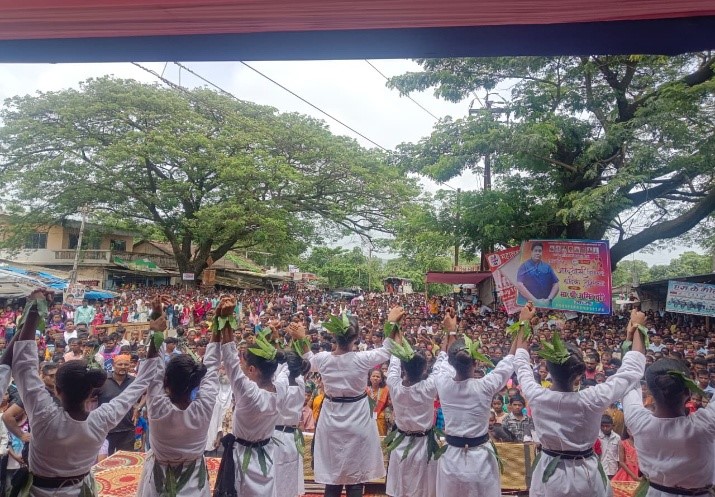
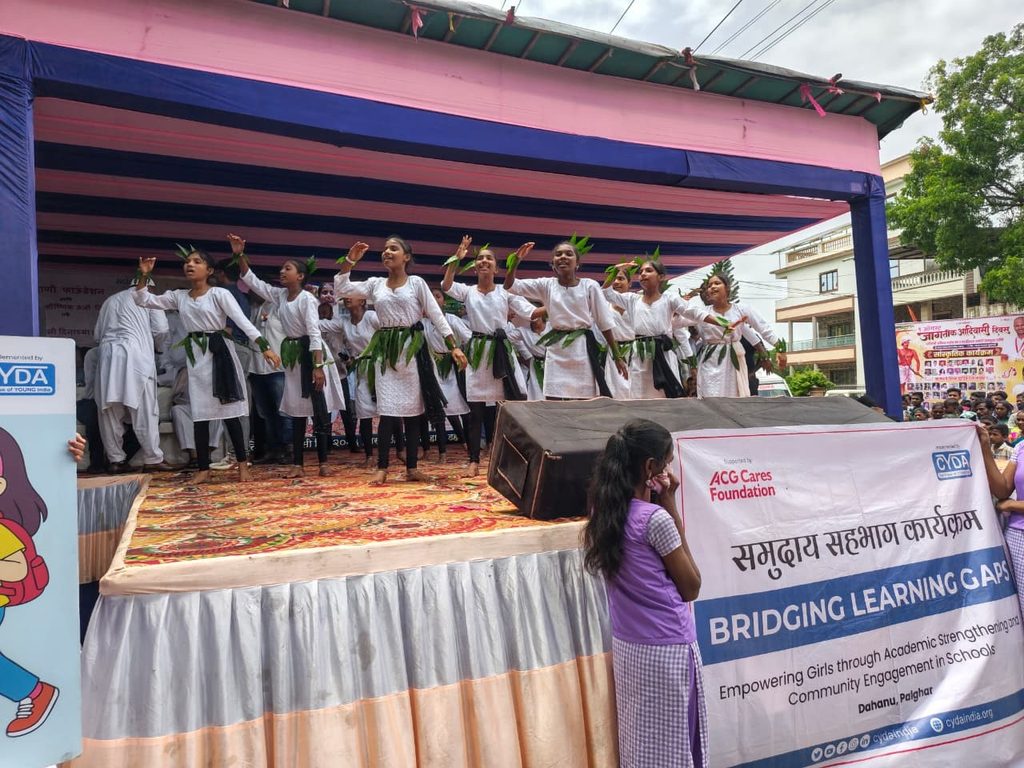
Under CYDA’s Better Learning Program (BLP), efforts are being made to strengthen girls’ learning, confidence, participation, and future aspirations through school- and community-based interventions. The Adivasi Divas event provided an opportunity to take these efforts beyond the school environment and engage directly with the wider community. The program used Nukkad Natak, or street theatre, as its primary outreach method, enabling adolescent girls to communicate messages related to girls’ education, equal opportunities, gender equality, adolescent rights, and community support. The choice of Adivasi Divas added cultural and social relevance to the initiative. Adivasi identity, culture, traditions, community concerns, and the importance of preserving cultural heritage were integrated into an event that also emphasized education and adolescent empowerment. The initiative directly involved girls from Kasturba Gandhi Balika Vidyalaya, Dahanu. Initially, 30 girls from Grades 6–9 expressed interest in participating, and following an audition and selection process, 16 girls were selected for the final performance. Their involvement extended beyond the final performance and included dialogue practice, group rehearsals, voice and expression exercises, understanding the theme and message, costume and prop preparation, and full-play rehearsals. This process reflected the principles of experiential and arts-integrated learning promoted by NEP 2020, encouraging learners to learn through doing, creativity, collaboration, exploration, and meaningful experiences.
The program also demonstrated that community participation is most effective when designed as a collaborative process. Teachers and school staff supported student selection, accompanied the girls, ensured their safety, and coordinated with the CYDA team. Theatre resource persons supported the girls in voice projection, expression, dialogue delivery, movement, coordination, and confidence building. The participation of the Sarpanch and Gram Panchayat members created an important link between adolescents, the school, civil society, and local governance. Conducting the program at a public venue such as Savata Hat enabled CYDA to reach people beyond the immediate school community and created a wider platform for dialogue and awareness.
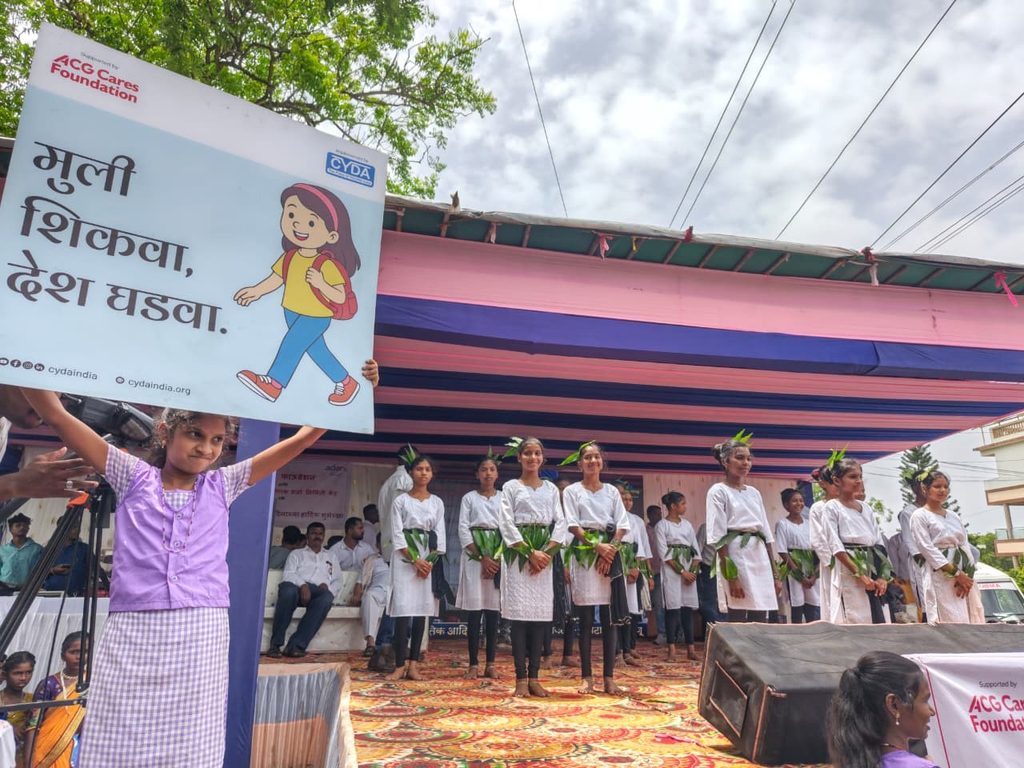
The impact of the program can be understood at both the individual and community levels. For the 16 girls who participated in the street play, the experience created an opportunity to move from being learners within a structured school environment to becoming visible contributors in a public space. The preparation and performance process helped strengthen their confidence, communication, public speaking, voice projection, expression, teamwork, coordination, discipline, and leadership skills. The girls demonstrated greater confidence and reduced hesitation while performing before a large audience, and their public communication and performance abilities improved through repeated practice and guidance from theatre trainers. This is particularly significant because confidence and participation are important foundations for girls’ continued education and future aspirations. The program also increased the visibility of girls as capable communicators and community contributors, challenging the idea that adolescent girls should remain passive recipients of educational opportunities.
Reaching the Community
At the community level, the program reached approximately 900 people, providing a significant platform for communicating messages on girls’ education, prevention of school dropout, adolescent rights and protection, gender equality, Adivasi identity, and community support for girls. The positive response from community members and appreciation for the girls’ confidence and performance demonstrated the potential of creative and participatory approaches for community awareness. The participation of the Sarpanch and Gram Panchayat members further strengthened the connection between the school, CYDA, adolescents, and local governance, contributing to greater stakeholder ownership of adolescent development.
Creating Space for Girls to Lead
The program demonstrated that meaningful impact does not always require highly formal interventions; culturally relevant, accessible, and participatory approaches can create powerful spaces for dialogue. Street theatre enabled complex social issues to be communicated in a simple and engaging manner, while the public performance allowed community members to see adolescent girls taking leadership in a shared social space. In this sense, the Adivasi Divas outreach reflects the broader vision of CYDA’s Better Learning Program—to strengthen not only academic learning but also confidence, participation, aspirations, and meaningful engagement among adolescent girls. Most importantly, the event demonstrated that when schools, civil society organizations, local governance, families, and communities come together, adolescents can become active participants in their own development and in the development of their communities. The Adivasi Divas program at Savata Hat is therefore a meaningful example of how education can move beyond classrooms, how culture can become a medium for learning, and how community participation can transform girls from beneficiaries into confident voices for education, equality, and positive social change.
Keywords: Community Outreach, Girls’ Education, Gender Equality, Nukkad Natak, Adolescent Empowerment, Experiential Learning, Street Theatre, Adivasi Culture, Community Participation, Youth Leadership, Rural Education, Adivasi Divas, SDGs
