
By Jinu Sam Jacob, Development Practitioner, Bengaluru
Barely an hour and a half drive from the glass facaded technological hub of Bengaluru lie the taluks of Chikkaballapur and Bagepalli. Here, in the shadow of India’s celebrated Silicon Valley, exists a jarring socioeconomic contradiction. In these border villages, where hypermodernity meets deeply entrenched rural feudalism, the sinister specters of caste based oppression, unfree labor, and structural marginalization continue to persist (Breman, 2007). During a recent field research assignment involving close interactions with released bonded laborers, I was confronted by a harsh reality: beneath the veneer of national growth narratives lies an ongoing history of intergenerational oppression that remains largely unaddressed by the state and civil society alike.
To fully understand the lived experience of these communities, one must examine the socio spatial structure of rural feudalism that defined their lives for generations, specifically under the regional manifestation of agricultural debt bondage historically known as the Jeetha system (Kulkarni, 1979). Local landlords brought Dalit families onto their agrarian estates to serve as an unfree, hereditary workforce. To house them, landlords permitted these families to erect crude, temporary structures leaning against the outer boundary walls of their principal residences or estate sheds, structures known in local parlance and in Malayalam as chaayppu. Attempting to translate chaayppu into English instantly exposes the limits of language when confronted with extreme structural violence. English terms like “lean-to shelter” or “shack” capture merely a physical, architectural structure, a sloped roof resting against a solid wall. They fail completely to convey the lived reality of the term. The chaayppu is not merely a shelter; it is an instrument of spatial segregation, a physical manifestation of extreme caste discrimination, and an embodiment of absolute structural dependence. Borrowing from spatial theory, the chaayppu is a spatialization of caste power, a design intended to produce spatial proximity for labor extraction while preserving rigid social distance (Lefebvre, 1991). To live in a chaayppu meant living without land, without permanent shelter, and under the constant, suffocating fear of immediate eviction should one dare to assert dignity or demand fair wages.
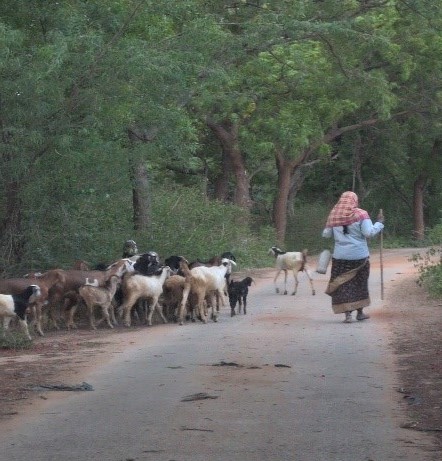
The politics of the chaayppu is deeply tied to the dehumanization of marginalized bodies. In these settlements, children grew up sharing the cramped, damp space of the chaayppu with the landlord’s cattle and goats, visually and spatially conflating human life with livestock. This spatial subjugation was reinforced by severe socioeconomic boycotts and institutionalized untouchability (Thorat and Newman, 2007). Even today, these families face enforced water apartheid; they are strictly prohibited from drawing drinking water from the borewells located within the landlord’s residential compound or farm property. The concept of chaayppu, therefore, represents an “oppression language”, a vocabulary born out of a specific feudal caste matrix that standard Western or liberal frameworks fail to adequately capture or translate.
The path toward dismantling this system has been long, agonizing, and riddled with institutional inertia. Though Article 23 of the Constitution of India prohibits forced labor, the formal criminalization of debt bondage via the Bonded Labour System (Abolition) Act of 1976 was not a gift of state benevolence. It was the hard won outcome of decades of relentless agitation by human rights activists, non governmental organizations such as Jeevika Jeetha Vimukti Karnataka, and trade union movements (Srivastava, 2005). Yet, as critical legal scholars continuously observe, legislative enactments rarely translate into immediate emancipation (Upadhyaya, 2004). It took the state machinery decades to even acknowledge the existence of these practices, let alone enforce the law. In recent years, administrative shifts, such as state Standard Operating Procedures making mandatory First Information Reports a prerequisite for full rehabilitation payouts, have tied up hundreds of rescued workers in protracted legal trials, leaving them without timely financial support (International Labour Organization, 2018). It was against this backdrop that my field study focused on a specific cohort of families in Chikkaballapur who received official release certificates in 2016 following a landmark judicial intervention.
The 2016 resolution stood out as a significant departure from standard administrative procedures. Typically, when bonded laborers are released, the state process terminates with a modest, often delayed government rehabilitation package. In this instance, however, the judiciary intervened directly to penalize the perpetrators. The court ordered the feudal landlords to pay a sum of 54,000 rupees directly to the victimized families in two installments. This recovery was calculated based on back wages, minimum wage deficits, and unauthorized deductions withheld by the landlords over years of forced labor under the Minimum Wages Act of 1948. It marked a rare moment in the regional history of agrarian struggles, a judicial declaration that the feudal authority of local elites was not immune to constitutional oversight and legal accountability.
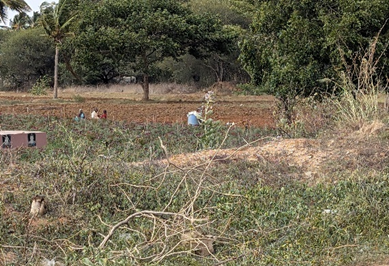
However, formal legal release and court ordered compensation do not automatically dissolve deeply ingrained social hierarchies. Following the 2016 judgment, the released laborers faced severe retaliations. Outraged that their former laborers had taken them to court and extracted financial restitution, local landed elites instituted informal economic and social boycotts (Rawat and Satyanarayana, 2016). The released laborers were systematically denied employment across local farms and village enterprises. Stripped of traditional, albeit exploitative, avenues of work, these families were forced to forge alternative modes of survival. Today, they subsist on small, marginal patches of land assigned to them by the government following protracted land rights struggles, or by raising small herds of goats. Their economic existence remains precarious, caught between formal legal freedom and structural economic disenfranchisement in an era of expanding caste capitalism (Mosse, 2018).
Amidst these structural constraints and retaliatory pressures, a profound intergenerational transformation is quietly unfolding through education. During the 1990s, when the first generation of children from these bonded families entered formal schooling, their educational journeys were abruptly cut short. Severe poverty, combined with explicit intimidation from landlords who viewed educated Dalit children as a threat to their labor supply, forced most of these first generation learners to drop out by the fifth grade (Nambissan, 1996).
Yet, the educational landscape is gradually shifting. Today, the very parents whose formal schooling ended in the primary grades are fighting against all odds to put their children through higher education. The current generation of youth from these former bonded labor households is pursuing pre university courses, undergraduate degrees, postgraduate studies, and professional qualifications such as Bachelor of Education and Master of Education degrees. For these parents, sending their children through higher education is the ultimate act of resistance against the feudal order that sought to keep them perpetually illiterate and dependent (Jeffrey et al., 2008).
This push for higher education is driven by a very specific, politically charged aspiration: securing a government job. In the sociological imagination of these marginalized families, the state is not an abstract political entity. Rather, their understanding of state power has been shaped by the concrete administrative figures they have encountered throughout their lives, figures who held the power to either oppress or protect them (Gupta, 2012). To these parents, the state is embodied in the Tehsildar, the Village Officer, the Police Officer, the Advocate, and the School Teacher. These are the faces of authority that governed their mobility, recorded their land rights, enforced or neglected their legal protections, and determined their access to justice. Consequently, seeing their children occupy these specific public offices represents the ultimate subversion of feudal authority, a transition from being the subjects of state power to becoming its agents.
This emerging generation of educated youth, equipped with critical consciousness and institutional literacy, is beginning to challenge local caste structures and everyday forms of discrimination. However, viewing this transition solely through a celebratory lens risks obscuring the systemic failures that continue to plague their lives. A critical human rights perspective demands that civil society look beyond the superficial metrics of social mobility and economic growth.
As India celebrates its technological advancement and rapid economic expansion, the realities of Chikkaballapur and Bagepalli serve as a stark reminder of the unfulfilled constitutional promises of the nation. Emancipation cannot be reduced to a piece of paper, a release certificate, or a one time financial disbursement. True rehabilitation requires comprehensive structural redress: guaranteed land redistribution, secure and dignified housing that replaces the legacy of the chaayppu, access to public resources free from caste based discrimination, and sustainable, dignified employment opportunities (Teltumbde, 2018).
The extraordinary resilience of these families, who have navigated generations of unfree labor, spatial segregation, and social boycotts to send their children to universities, is a testament to the enduring human quest for dignity. Yet, the burden of liberation should not rest solely on the shoulders of the oppressed. Civil society, trade unions, and state apparatuses must be held accountable for bridging the gap between legal pronouncements and substantive social justice. Only when these young men and women step into spaces of institutional authority and equal citizenship will the historical debt owed to these communities begin to be repaid, finally dismantling the physical and ideological walls of the chaayppu.
References
- Breman, J. (2007). Labor Bondage in West India: From Past to Present. Oxford University Press.
- Gupta, A. (2012). Red Tape: Bureaucracy, Structural Violence, and Poverty in India. Duke University Press.
- International Labour Organization. (2018). Global Estimates of Modern Slavery: Forced Labour and Forced Marriage. ILO Publications.
- Jeffrey, C., Patricia, R., & Jeffrey, R. (2008). Degrees Without Freedom? Education, Youth, and Unemployment in North India. Stanford University Press.
- Kulkarni, M. N. (1979). Bonded Labour and the Law in Karnataka. Economic and Political Weekly, 14(42/43), 1751–1753.
- Lefebvre, H. (1991). The Production of Space. Blackwell.
- Mosse, D. (2018). Caste and Development: Contemporary Perspectives on Inequality. The Journal of Development Studies, 54(4), 544–563.
- Nambissan, G. B. (1996). Equity in Education? Schooling of Dalit Children in India. Economic and Political Weekly, 31(16/17), 1011–1024.
- Rawat, R. S., & Satyanarayana, K. (Eds.). (2016). Dalit Studies. Duke University Press.
- Srivastava, R. (2005). Bonded Labor in India: Its Nature and Dimensions. International Labour Organization.
- Teltumbde, A. (2018). Republic of Caste: Thinking Equality in the Time of Neoliberal Hindutva. Navayana.
- Thorat, S., & Newman, K. S. (2007). Caste and Economic Discrimination: Causes, Consequences, and Remedies. Economic and Political Weekly, 42(41), 4121–4124.
- Upadhyaya, S. (2004). Law and Unfree Labour in India: Mechanics of Enforcement and Impact. Indian Journal of Human Rights, 8(1), 89–108.
