
Soumyashree Mohanty, ImpactLens Correspondent
India is witnessing a new wave of public protest. It is a movement driven by dissatisfaction and a demand for systemic change. Now, India is entering an era of new generation of students who are no longer afraid to question the system. They are demanding accountability and asking for the basic rights they deserve. They are questioning institutions and demanding action. Recently, the country witnessed the CJP protests, where Gen Z openly expressed its frustration with systemic failures. Now, it is Gen Alpha’s turn.
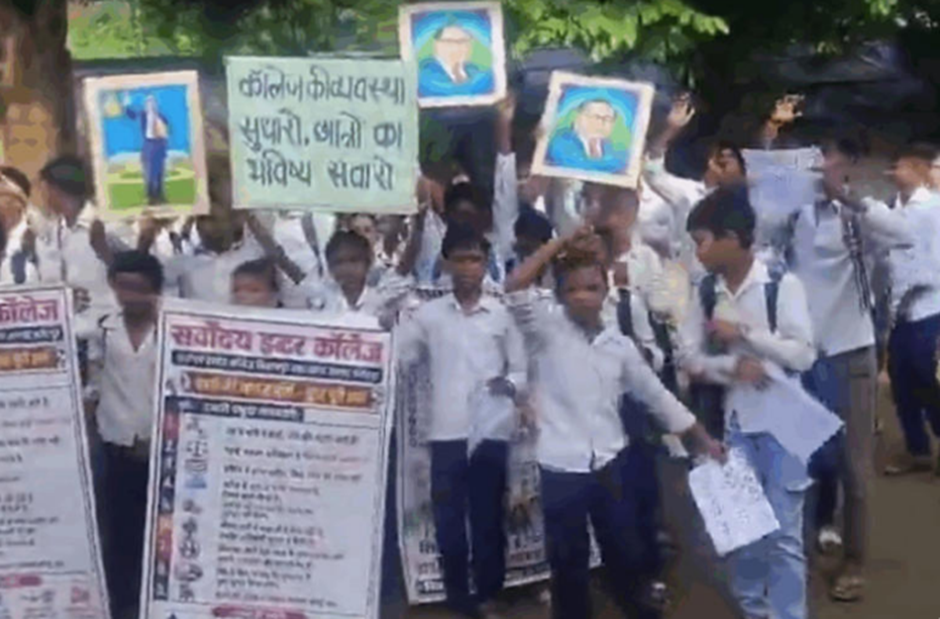
According to reports published by Deccan Herald and Times Now, students of Sarvodaya Inter College in Kishanpur, Uttar Pradesh, staged a protest demanding basic facilities in their school. Hundreds of students from Classes 6 to 12 gathered with posters and banners. They protested for nearly five hours. The students alleged that the school lacked several basic amenities. These included safe drinking water, clean toilets, reliable electricity, functional fans, adequate furniture, a computer laboratory, a library, and sports facilities. They said they had raised these concerns several times, but no action had been taken. Apart from this, the students alleged that they were being charged unnecessary fees for mark sheets and other official documents. They also claimed that the Mid-Day Meal served in the school did not follow the prescribed menu. Left with no other option, they decided to protest.
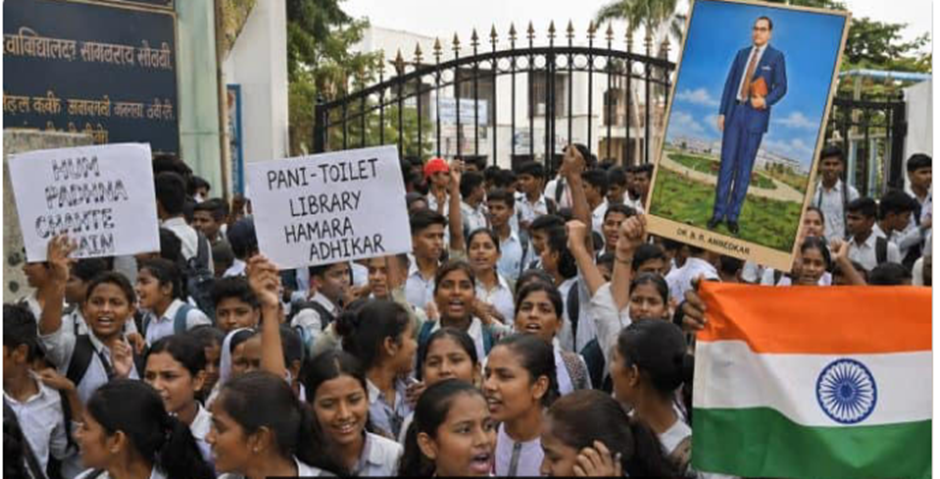
The protest ended only after District Inspector of Schools (DIOS) Mr Rakesh Kumar visited the campus. He spoke with the students and gave a written assurance that work on the pending issues would begin within 24 hours. He also promised that arrangements for drinking water, seating, clean toilets, sanitation, a computer laboratory, a library, and sports facilities would be made without delay.
But this raises a grave question. Why should students have to protest for facilities that every school is expected to provide? Why did these students have to spend their time and energy demanding facilities they were already entitled to?
India has made significant progress in expanding access to education. However, many schools still lack basic infrastructure. According to the Ministry of Education’s UDISE+ Report 2025–26, 5% of schools do not have electricity, 18.1% do not have a playground, 9.5% do not have a library, 32.6% do not have internet access, and only 58.2% have ramps with handrails for children with disabilities. These gaps show that improving enrolment alone is not enough. Schools must also provide a safe and supportive learning environment.
The situation in Uttar Pradesh is equally concerning. The UDISE+ Report 2025–26states that 29,751 schools in the state still lack functional electricity. Around 3,600 schools have electricity connections, but the supply has been disconnected due to unpaid bills, damaged wiring, or prolonged technical faults. These are not minor issues. They directly affect teaching, learning, and students’ well-being.
The problem is not limited to Uttar Pradesh. UDISE+ data also shows that more than 9,900 schools in Maharashtra do not have functional toilets. The report further highlights gaps in infrastructure for children with disabilities. These findings show that many schools still struggle to provide basic facilities.
Another concern is the gap between records and reality. On paper, many schools may report that facilities exist. But are these facilities functional? Are they accessible? Are they maintained regularly? These are the questions that deserve greater attention.
The protest by the students of Uttar Pradesh should not be seen as an act of indiscipline. It should be seen as a demand for dignity and quality education. If education is a fundamental right, then students also have the right to learn in schools that are safe, clean, and well-equipped.
The government is promoting digital learning across the country. But digital education cannot succeed without electricity, internet connectivity, computers, and functional classrooms. Basic infrastructure is something they deserve. It is the foundation of quality education. One thing is clear. Young people today are more aware of their rights than ever before. They are willing to speak up when those rights are ignored. The protest in Uttar Pradesh is a reminder that students are no longer asking for privileges. They are asking for the basic facilities that every school should already provide.
This protest sends a powerful message. People in India are becoming more aware, more informed, and more willing to stand up for their rights.
