
By Megha Ramdas, Program Executive
Schools are meant to be places of safety, learning, and opportunity. Parents send their children to classrooms with the expectation that they will return home educated, inspired, and most importantly, unharmed. Yet in June 2026, two separate roof collapse incidents in Karnataka’s Kalaburagi district shattered this fundamental assumption and exposed a critical challenge confronting educational infrastructure across India.
Within days of each other, a classroom roof collapsed at the Government Girls’ Pre-University College in Kalaburagi city, injuring students during instructional hours, while another roof collapse occurred at the Government Higher Primary School in Sangolagi village of Aland taluk. Although both incidents fortunately avoided fatalities, they served as stark reminders that aging educational infrastructure can become a serious threat to student safety when warning signs are ignored and maintenance is delayed.
The incidents triggered public outrage, protests by parents and student organizations, and urgent demands for accountability. However, beyond the immediate concern lies a larger question: How many school buildings across India are silently deteriorating while children continue to study beneath compromised roofs and weakened structures?
The Kalaburagi incidents are not merely local accidents. They are warning signals that highlight systemic issues in infrastructure governance, preventive maintenance, risk management, and institutional accountability. They also present an opportunity to examine global best practices and learn from countries that have successfully strengthened school safety frameworks. Among these, the United Kingdom’s enhanced school safety audit mechanisms between 2023 and 2025 offer valuable lessons on how proactive inspections and preventive action can save lives.
The Kalaburagi Incidents: A Wake-Up Call

Government Girls’ PU College Roof Collapse
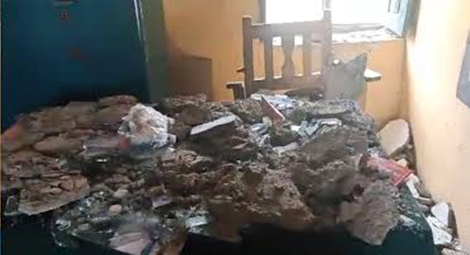
In early June 2026, students attending classes at the Government Girls’ Pre-University College in Kalaburagi city experienced a terrifying moment when a portion of a classroom roof suddenly collapsed. Concrete debris and ceiling material fell into the classroom while teaching was in progress, injuring several students and causing panic among classmates and staff.
The injured students were rushed for medical treatment, while parents and community members gathered at the institution demanding explanations. Preliminary reports indicated that the building was old and had shown visible signs of deterioration. Questions immediately emerged regarding whether structural vulnerabilities had been previously identified and whether adequate preventive measures had been undertaken.
The incident quickly gained public attention because it occurred during active classroom hours. Had the collapse been more extensive, the consequences could have been catastrophic.
Government School Roof Collapse
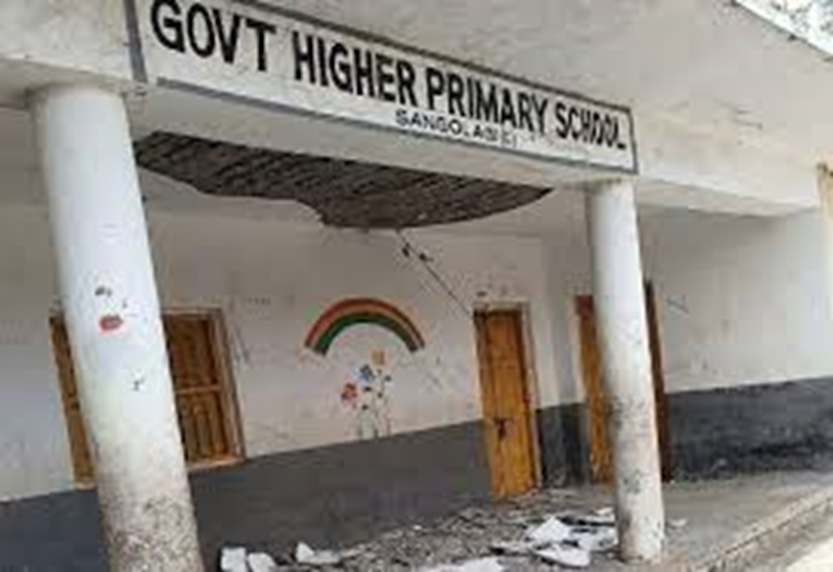
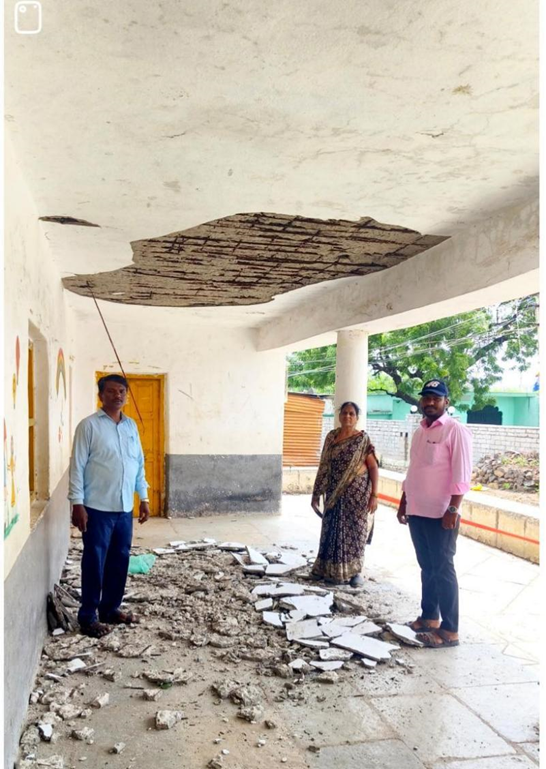
Only days later, another incident occurred at a Government Higher Primary School in Sangolagi village of Aland taluk. A section of the school building’s roof collapsed, exposing the deteriorated condition of the structure.
In this instance, the incident occurred during a holiday, preventing injuries or loss of life. Yet the timing should not distract from the seriousness of the event. The collapse demonstrated that structural failures can occur without warning and that the absence of casualties was largely a matter of chance.
Local residents had reportedly expressed concerns about the condition of the building in the past. The incident reinforced long-standing fears regarding aging educational infrastructure in rural areas where maintenance and renovation efforts often face resource constraints.
Together, these two incidents transformed a local infrastructure issue into a broader public conversation about school safety and government accountability.
Why the Incidents Matter Beyond Kalaburagi
The Kalaburagi roof collapses reflect challenges that extend far beyond one district or one state.
India has made significant progress in expanding educational access over the past several decades. Thousands of schools have been established, enrolment rates have improved, and educational reforms continue to strengthen learning outcomes. However, infrastructure maintenance has not always kept pace with this expansion.
Many government school buildings currently in operation were constructed decades ago. Over time, these structures face:
- Continuous exposure to monsoon rains.
- Water seepage and dampness.
- Corrosion of reinforcement materials.
- Foundation weakening.
- Roof deterioration.
- Thermal wear and tear.
- Inadequate maintenance budgets.
- Delayed repair approvals.
The result is a growing stock of aging educational infrastructure that requires regular assessment and intervention.
When infrastructure deteriorates, the consequences extend beyond physical safety. Unsafe school environments affect student attendance, teacher morale, parental confidence, and community trust. Educational quality cannot be separated from the condition of the spaces where learning takes place.
The Hidden Danger of Normalized Neglect
One of the most important lessons from Kalaburagi is that building failures rarely occur without warning.
Structural collapses are often preceded by visible indicators such as:
- Cracks in walls and ceilings.
- Water leakage.
- Sagging roof sections.
- Exposed reinforcement bars.
- Peeling concrete.
- Persistent dampness.
- Structural vibrations.
The challenge is that these warning signs frequently become normalized.
Teachers continue conducting classes beneath damaged ceilings. Students adapt to unsafe environments. Administrators postpone repairs because of limited budgets or competing priorities. Communities become accustomed to visible deterioration and gradually stop perceiving it as a risk.
In many infrastructure failures worldwide, investigations reveal a common pattern: warning signs existed long before the incident occurred. The tragedy was not the absence of evidence but the failure to act upon it.
The Kalaburagi incidents reinforce an important reality structural failures are often not sudden events. They are the final stage of a prolonged process of neglect.
Understanding the Root Causes
The roof collapses point to deeper systemic challenges that require policy-level attention.
Reactive Rather Than Preventive Maintenance: Many educational institutions operate under maintenance systems that prioritize repairs only after visible damage becomes severe. Preventive maintenance receives limited attention despite being significantly more cost-effective than emergency reconstruction.
Fragmented Accountability: Responsibility for school infrastructure is often divided among education departments, public works agencies, local governments, contractors, and school management committees. When accountability is dispersed, ownership of risk becomes unclear.
Limited Structural Audits: Routine engineering assessments remain uncommon in many educational institutions. Without periodic inspections by qualified structural engineers, hidden vulnerabilities may remain undetected for years.
Resource Constraints: Infrastructure maintenance frequently competes with other educational priorities such as staffing, technology investments, and learning materials. As a result, maintenance budgets are often inadequate to address long-term structural risks
Lessons from the United Kingdom’s School Safety Audits (2023–2025)
The United Kingdom’s experience offers important lessons in proactive infrastructure management.
Between 2023 and 2025, the UK significantly strengthened its approach to school building safety following concerns regarding Reinforced Autoclaved Aerated Concrete (RAAC), a construction material found in several aging public buildings, including schools.
Rather than waiting for widespread failures, authorities implemented a systematic approach to risk identification and mitigation.
Risk-Based Inspections:
- Schools were prioritized based on age, construction materials, condition assessments, and historical maintenance records.
- Buildings considered high-risk received immediate inspections and intervention.
Centralized Infrastructure Databases: Authorities developed comprehensive asset management systems documenting:
- Construction year.
- Structural condition.
- Inspection history.
- Maintenance requirements.
- Risk ratings.
This allowed decision-makers to allocate resources strategically and monitor infrastructure deterioration over time.
Preventive Maintenance Culture
- A defining characteristic of the UK’s approach was its emphasis on prevention.
- Defects were addressed during early stages rather than after they escalated into emergencies. This reduced both costs and safety risks.
Independent Engineering Assessments: Qualified engineers and structural specialists conducted technical evaluations, ensuring that assessments were evidence-based and objective.
Clear Accountability Mechanisms: The UK established clear responsibilities for identifying, reporting, funding, and resolving infrastructure risks. Timelines for corrective action were monitored and enforced.
The key lesson is straightforward: proactive inspections save lives.
What the World has in its pot for such incidents
Japan: Following repeated earthquake experiences, Japan transformed schools into some of the safest public buildings in the world through rigorous structural standards, regular inspections, and continuous retrofitting programs.
New Zealand: After major seismic events, New Zealand implemented comprehensive structural assessment programs to ensure educational facilities met modern resilience standards.
Indonesia: Recognizing widespread infrastructure vulnerabilities, Indonesia invested in large-scale school rehabilitation programs focused on replacing unsafe buildings and strengthening maintenance systems.
Across these diverse contexts, one principle remains consistent: prevention is less costly than disaster response.
The CSR Perspective: Why Safe Infrastructure Must Become a Priority
Corporate Social Responsibility initiatives frequently support education through scholarships, digital learning tools, libraries, laboratories, and technology-enabled classrooms. While these investments are valuable, they cannot achieve their intended impact if students are learning in unsafe environments. Safe infrastructure should be recognized as a foundational educational outcome. CSR investments can play a transformative role through:
- Funding independent structural safety audits.
- Supporting classroom rehabilitation projects.
- Renovating sanitation and water facilities.
- Establishing digital infrastructure monitoring systems.
- Building community awareness on school safety.
- Strengthening School Management Committees’ capacity to identify risks.
In an era where Environmental, Social, and Governance (ESG) frameworks increasingly emphasize stakeholder well-being, ensuring safe learning environments aligns directly with corporate commitments to social responsibility and child welfare.
Conclusion
The roof collapse in Kalaburagi was more than isolated infrastructure failures. They were warning signs highlighting vulnerabilities that exist in many educational institutions across the country. The fortunate absence of fatalities should not diminish the seriousness of these incidents. Instead, it should serve as a reminder that future tragedies remain preventable if lessons are acted upon today.
The experiences of the United Kingdom, Japan, New Zealand, and other nations demonstrate that proactive inspections, preventive maintenance, independent audits, and clear accountability frameworks can significantly reduce infrastructure-related risks. For policymakers, educators, local communities, and CSR leaders, the message is clear: educational excellence begins with safety.
Before children can dream, learn, innovate, and build their futures, they must first be protected. The true measure of a school is not only the quality of education delivered within its classrooms, but also the assurance that those classrooms are safe, resilient, and capable of supporting every child’s right to learn without fear.
Kalaburagi has delivered a warning. The responsibility now lies with all stakeholders to ensure that it becomes a catalyst for action rather than a precursor to a larger tragedy.
