
By Mathew Mattam
When actor and Member of Parliament Kangana Ranaut recently commented on nurses’ uniforms and described nursing as one of the most sexualized professions, the discussion quickly moved away from what truly matters. The issue is not the dress nurses wear. The issue is the conditions under which they work, the salaries they receive, and the respect they deserve.
India does not suffer from a nursing uniform crisis. India suffers from a healthcare workforce crisis.
Every day, millions of nurses wake up before dawn, leave their families behind, and enter hospital wards where life and death unfold every minute. They care for premature babies struggling to survive, comfort cancer patients through unbearable pain, support mothers during childbirth, monitor critically ill patients through the night, and often become the last human touch a dying person experiences.
These are not glamorous duties. They are not performed under the spotlight of cameras. They are acts of service carried out quietly, patiently, and repeatedly.
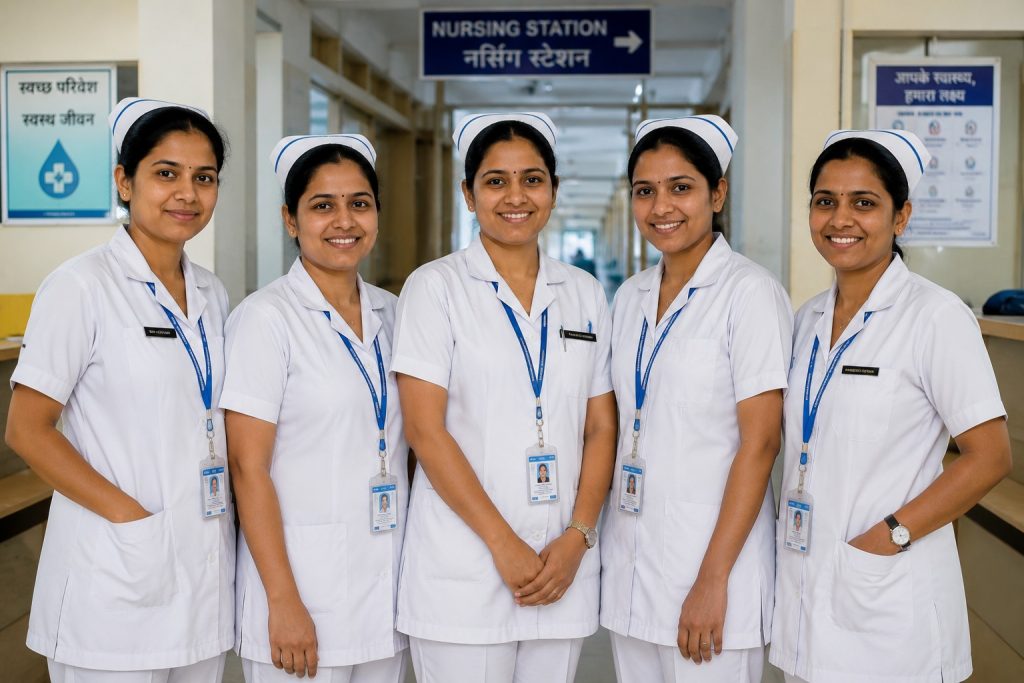
During the COVID-19 pandemic, when fear gripped the world, nurses stood at the frontlines. Many worked double shifts. Many isolated themselves from their own families to protect loved ones. Some lost their lives while caring for strangers. Yet once the crisis faded, so did much of society’s appreciation.
Today, thousands of nurses continue to work 12 to 16-hour shifts. Many face staff shortages, inadequate infrastructure, emotional stress, and salaries that do not reflect the importance of their work. In several parts of India, nurses earn wages that are far below what professionals with similar responsibilities deserve.
If reform is truly required, then let us talk about equal pay for equal work.
Let us discuss why many highly trained Indian nurses seek opportunities abroad because they receive better salaries, better working conditions, and greater professional respect in countries such as the United Kingdom, Australia, Canada, and the Gulf nations.
Let us discuss why government hospitals remain understaffed. Let us discuss why nurses frequently face workplace violence, harassment, and burnout.
These are the conversations that can strengthen India’s healthcare system.
The suggestion that nursing is among the most sexualized professions raises another important question. Who is responsible for sexualizing professions? Is it the nurse who spends her night monitoring a patient’s oxygen levels? Is it the nurse who cleans wounds, administers injections, and comforts frightened families?
Or is it popular culture that has often portrayed nurses through stereotypes rather than through the dignity of their profession?
The answer is obvious. The nursing profession itself is not sexualized. Society’s portrayal of it sometimes is.
Ironically, the entertainment industry has historically contributed far more to such stereotypes than healthcare institutions. Films, advertisements, and media portrayals have often reduced professional women to objects of fantasy rather than recognizing their expertise and contributions.
A nurse’s identity is defined by competence, compassion, and commitment—not by a uniform.
The white uniform has never been about fashion. It symbolizes trust, cleanliness, care, and service. Whether that uniform evolves over time is a matter for nurses and healthcare institutions to decide. Uniforms can change. Styles can change. Fabrics can change. But changing a uniform will not solve understaffing. Changing a uniform will not improve hospital infrastructure. Changing a uniform will not increase salaries. Changing a uniform will not reduce burnout. Changing a uniform will not improve patient outcomes.
What India needs is not a debate about appearance. It needs a debate about dignity. Every politician who speaks about nurses should first ask whether they support fair wages for healthcare workers.
Every celebrity who discusses nursing should first acknowledge the sacrifices nurses make every day.
Every citizen who enters a hospital should remember that while doctors diagnose and prescribe treatment, it is often nurses who remain by the patient’s side twenty-four hours a day.
Imagine for a moment that Kangana Ranaut herself was admitted to a hospital after an accident or serious illness. Who would monitor her vital signs through the night? Who would administer medication on time? Who would respond first in an emergency? Who would comfort her family?
Not a costume designer. Not a film promoter. But a nurse. The same nurse whose profession is now being debated.
The true measure of a society is not how it treats celebrities. It is how it treats those who serve others quietly and selflessly.
India’s nurses deserve more than applause on International Nurses Day. They deserve decent salaries, safe workplaces, professional recognition, opportunities for growth, and respect from society.
The conversation should move beyond uniforms and stereotypes. Let us talk about equal pay for equal work.
Above all, let us thank the millions of nurses who perform some of the most difficult, demanding, and compassionate work in our society—work that many of us would never have the courage, patience, or dedication to do ourselves.

This Post Has 3 Comments
Very true…just comment on uniform of nurse is just a diversion of the critical issues of their pay, entitlements and exploitation faced by nurses. Thanks for writing and sharing!
Many times, our system ignores the very people who contribute most to society. Their service should be recognized. They deserve dignity, respect, and recognition.
I completely agree with the views expressed by Mathew. Nurses are the backbone of our healthcare system and deserve the highest respect for their dedication, compassion, and service.
While I understand that Kangana Ranaut’s intention may have been to draw attention to the stereotypes and lack of recognition often faced by nurses, I believe that as a Member of Parliament, her choice of words should have been more measured and sensitive. Describing nursing as one of the “most sexualized professions” has unfortunately shifted the focus away from the real challenges confronting nurses.
As Mathew rightly pointed out, the discussion should be centered on issues that truly matter—fair compensation, better working conditions, professional growth opportunities, dignity at the workplace, and the recognition that nurses rightfully deserve. These are the concerns that require urgent attention if we are serious about strengthening our healthcare system.
Nursing is a noble profession that has served society with unwavering commitment, and public discourse should elevate its stature rather than create controversy around it.