
Peace Series 14
Impactlens correspondent delves deep into her life and work.
Peace is not merely the absence of war. It is the presence of justice, dignity, equality and accountability. Few individuals have devoted their lives to this principle as consistently as Navanethem “Navi” Pillay, the South African jurist of Indian origin named as the recipient of the 2026 Nobel Peace Prize.
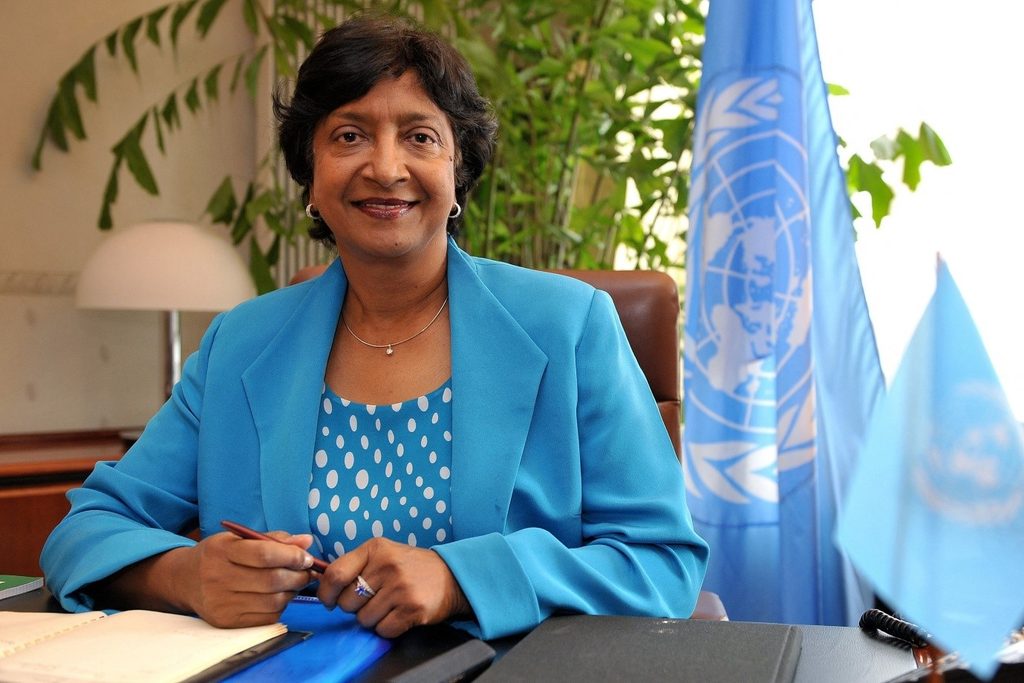
Announced on 9 October 2026, the award recognises her lifelong efforts to strengthen international law, defend human rights and establish accountability for some of humanity’s gravest crimes. At a time when wars continue, civilians suffer, international institutions face political pressure and powerful nations frequently challenge international legal authority, Pillay’s recognition carries a message: justice cannot be sacrificed in the name of peace.
Her journey from the racially segregated streets of Durban, South Africa, to the highest institutions of international justice is more than an individual achievement. It is a story of resistance against discrimination, the pursuit of human dignity and the belief that law must protect the powerless as well as restrain the powerful.
From Apartheid to the Pursuit of Justice
Born in 1941 into a Tamil family of Indian origin in Durban, Navi Pillay grew up under apartheid, a system that institutionalised racial discrimination and denied basic rights to the majority of South Africans.
For a young Indian-origin woman, opportunities were restricted not only by race but also by gender and social circumstances. Yet Pillay chose law as her instrument of resistance. Her decision to become a lawyer was itself a challenge to the discriminatory structures of apartheid South Africa. She entered a profession dominated by men and shaped by institutions that systematically disadvantaged non-white citizens.
She went on to earn advanced legal qualifications from Harvard University, demonstrating that intellectual determination could overcome barriers designed to exclude entire communities.
Pillay’s early legal work included defending anti-apartheid activists and challenging discriminatory practices. Her career developed alongside the wider struggle against apartheid, a movement associated with Nelson Mandela and countless ordinary South Africans who demanded equal citizenship.
What distinguishes Pillay’s journey is that she did not stop at the liberation of her own country. She carried the principles of equality and justice into international institutions, where victims of violence and oppression from different continents sought accountability.
Making Sexual Violence an International Crime
One of Pillay’s most significant contributions came through her work at the International Criminal Tribunal for Rwanda, established following the 1994 genocide. The tribunal confronted unimaginable atrocities, including mass killings, systematic sexual violence and the destruction of communities.
Pillay played an important role in advancing the recognition that rape and sexual violence could constitute acts of genocide when committed with the required intent to destroy a protected group.
This was a historic development in international criminal law. For centuries, sexual violence during conflict was frequently treated as an inevitable consequence of war rather than a grave crime demanding accountability. The Rwanda tribunal helped challenge that thinking.
Pillay’s contribution demonstrated that violence against women was not a secondary concern but central to understanding the brutality of conflict. Her work helped strengthen international legal protections for survivors and established precedents that continue to influence international justice.
Taking Human Rights to the Global Stage
Pillay subsequently served as a judge at the International Criminal Court and, from 2008 to 2014, as the United Nations High Commissioner for Human Rights. In these positions, she consistently argued that human rights are universal and cannot depend on nationality, religion, ethnicity, gender or political power. Her responsibilities brought her into confrontation with governments and institutions accused of violating fundamental rights.
The challenge of international human rights leadership is considerable. Governments frequently invoke national sovereignty, security or political necessity to justify restrictions on freedoms. Yet the central principle of human rights remains unchanged: every individual possesses dignity that governments are obliged to respect. Pillay’s career reminds us that institutions must be capable of questioning power, even when doing so is politically uncomfortable.
Palestine, Myanmar and the Challenge of Accountability
More recently, Pillay chaired the United Nations Independent International Commission of Inquiry on the Occupied Palestinian Territory, including East Jerusalem, and Israel, from 2021 to 2025.
The commission investigated allegations of serious violations of international law. Its findings concerning Israeli actions in Gaza, including its conclusion that genocide had occurred, generated intense international debate. Israel rejected the allegations and criticised the commission’s conclusions and impartiality.
These disagreements illustrate both the importance and the difficulties of international accountability. Investigations must be independent, evidence-based and subject to scrutiny, while allegations of grave crimes must not be dismissed merely because they concern powerful states.
Pillay also serves as a judge ad hoc at the International Court of Justice in proceedings concerning allegations of genocide against Myanmar’s Rohingya population.
These responsibilities underline the continuing relevance of her life’s work: legal institutions must provide avenues for accountability where political processes have failed.
What Her Nobel Prize Means for India
For India, Navi Pillay’s recognition carries special significance. She was born in South Africa, but her family roots lie in the Indian Tamil community. Her life represents the remarkable contribution of the Indian diaspora to struggles for equality and justice across the world. Her journey also connects two great historical experiences: India’s anti-colonial struggle and South Africa’s resistance to apartheid.
Mahatma Gandhi developed important elements of his philosophy of nonviolent resistance while living in South Africa. Decades later, Nelson Mandela and countless others challenged racial segregation through political mobilisation, resistance and legal struggle.
Pillay represents another dimension of this tradition: the use of law and international institutions to defend human dignity. For contemporary India, her recognition invites reflection on the importance of constitutional values, judicial independence, minority rights, gender equality and access to justice.
A society cannot claim lasting peace merely because violence is absent from its streets. Peace also requires that citizens can live without discrimination, exercise their freedoms and seek remedies when their rights are violated.
Peace Requires More Than Political Agreements
The Norwegian Nobel Committee’s decision highlights a fundamental weakness in today’s international order. The world has developed elaborate systems of international law, human rights conventions and judicial institutions. Yet their effectiveness often depends on whether governments are willing to respect their authority.
When powerful nations disregard international legal obligations, the consequences extend beyond individual conflicts. They weaken trust in the institutions designed to prevent future atrocities.
The committee’s central message was unequivocal: “Peace requires justice.” This principle is particularly relevant when international courts, judges and investigators face political pressure, sanctions and threats.
Justice cannot become meaningful only when it serves the interests of powerful governments. International law must apply consistently, and legal institutions must retain their independence and credibility.
Pillay’s Nobel Prize therefore recognises not only an individual but also the importance of institutions that enable conflicts to be addressed through law rather than violence.
A Message for the Next Generation
Perhaps the most inspiring dimension of Navi Pillay’s life is what it communicates to young people, particularly young women from disadvantaged communities.
Born into a society that restricted her opportunities, she refused to accept discrimination as her destiny. She pursued education, entered the legal profession, challenged injustice and eventually influenced international legal principles.
Her journey demonstrates that leadership does not always emerge from political office, economic wealth or military power. It can emerge from professional excellence, ethical conviction and the determination to defend others.
For young social workers, lawyers, activists and development professionals, Pillay offers an important lesson: meaningful social change requires courage, competence, institutional commitment and perseverance.
Justice Is the Foundation of Lasting Peace
The 2026 Nobel Peace Prize honours a woman whose life has been dedicated to making justice accessible beyond national boundaries.
Navi Pillay’s achievements remind us that peacebuilding is not confined to negotiations between governments or agreements signed by political leaders. It also happens in courtrooms, human rights institutions, communities resisting discrimination and the everyday struggle to uphold dignity.
Her legacy challenges us to reconsider how we define peace. Is peace merely the absence of conflict? Or is it a society in which every person enjoys dignity, equality, freedom and protection under the law? Pillay’s life points firmly towards the second understanding.
At 85, her recognition is a reminder that a lifetime devoted to justice can influence generations. The enduring message of Navi Pillay’s Nobel Peace Prize is that peace without justice remains fragile, justice without accountability remains incomplete, and human dignity must never become negotiable.
