
Peace Series: 13
From anger and prejudice to empathy and dialogue, peace begins with personal transformation. Priya Kadka, Coordinator of the Peace4Youth Movement, reflects on her engaging experience with students at Christ College, Pune, exploring how youth can become ambassadors of nonviolence.
Are We Educating Young People for Peace or Just for Employment?
India is a young nation with enormous aspirations. Millions of young people enter colleges and universities every year, hoping to acquire knowledge, develop skills, build careers and secure their futures. Our educational institutions increasingly focus on employability, entrepreneurship, technology, innovation and economic growth. These are undoubtedly important. But amid this pursuit of academic excellence and professional success, we are overlooking a fundamental question: Are we preparing our young people to live peacefully with themselves and others?
We teach students how to compete, but rarely how to cooperate. We prepare them to debate, but not necessarily to listen. We encourage ambition, but pay insufficient attention to empathy, tolerance and emotional maturity.
A society cannot become truly developed merely by producing engineers, doctors, managers and entrepreneurs. It must also nurture responsible citizens who respect differences, resolve conflicts without violence and uphold human dignity.
Peace education, therefore, is not an optional extracurricular activity. It is an essential component of education for life.
Where Does Violence Begin?
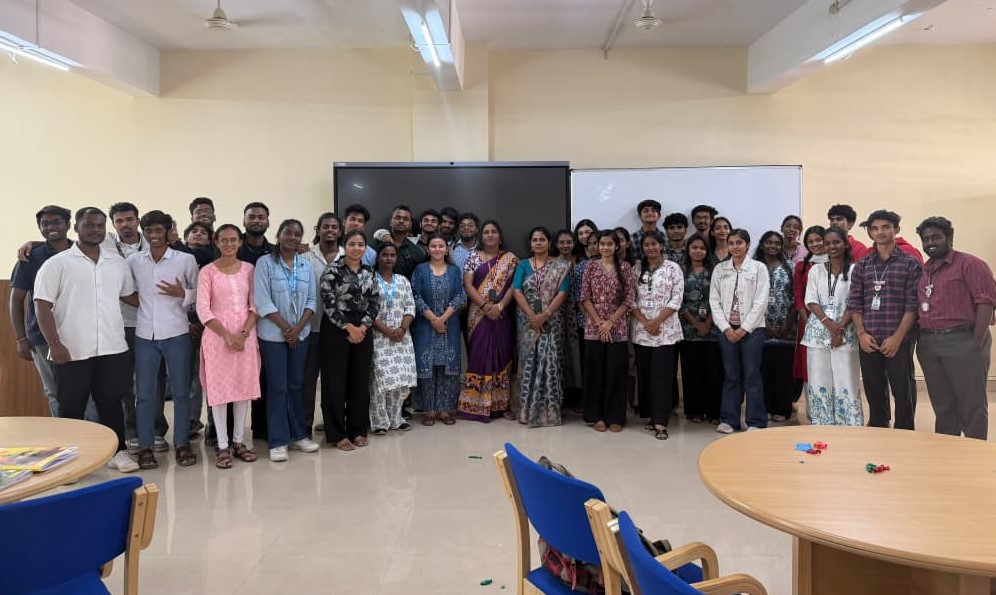
A recent Peace, Nonviolence and Dialogue Awareness Session at Christ College, Pune offered an opportunity to explore these questions with college students. The session began with a simple balloon activity. What appeared to be an ordinary interactive exercise gradually opened a deeper conversation about the nature of violence.
When we hear the word violence, we often imagine physical assault, riots, wars, destruction or bloodshed. But violence does not always begin with physical aggression. It can emerge through anger, humiliation, prejudice, hatred, intolerance, ego, jealousy and the inability to accept another person’s perspective.
A hurtful comment, a discriminatory joke, deliberate exclusion or a rumour circulated among classmates may appear insignificant. Yet such actions can damage relationships, undermine dignity and create environments of fear and hostility.
The balloon activity encouraged students to examine an uncomfortable but important question: Can we build a peaceful society without first recognising the violence that may exist within our own thoughts, attitudes and behaviour?
This question does not suggest that individuals alone are responsible for violence. Poverty, inequality, discrimination, injustice and the misuse of power also contribute to conflict. But personal behaviour remains an important dimension of peacebuilding. Nonviolence begins when we recognise our emotions, question our prejudices and learn to respond thoughtfully rather than react impulsively.
Peace Begins Within Us, but Cannot End There
One of the central messages emerging from the Christ College session was that peacebuilding involves both personal transformation and social responsibility. A student who learns to manage anger may avoid an unnecessary confrontation. A young person who challenges their own prejudices may develop friendships across religious, caste, linguistic or cultural boundaries. Someone who listens patiently to an opposing viewpoint may prevent a disagreement from becoming a conflict.
These are not minor achievements. They form the foundation of peaceful relationships. However, peace cannot be reduced to individual calmness or personal happiness.
A person may feel peaceful while remaining indifferent to injustice around them. A community may appear peaceful because marginalised people are afraid to speak. A classroom may seem harmonious because students with unpopular opinions remain silent.
The absence of visible conflict does not necessarily mean the presence of peace. Genuine peace requires dignity, justice, equality, freedom, inclusion and opportunities for everyone to participate without fear.
Peace education must therefore help young people understand not only interpersonal violence but also structural violence arising from discrimination, exclusion and unequal access to opportunities.
The College Campus: A Laboratory for Peace
Educational institutions bring together young people from different families, communities, economic backgrounds, religions, languages and social experiences. This diversity is one of the greatest strengths of higher education. Yet it can also generate disagreements, misunderstandings and competing perspectives.
A college campus is therefore an ideal space to practise democratic dialogue, mutual respect and nonviolent conflict resolution. During the Christ College session, students reflected on familiar experiences: mocking a classmate, excluding someone from a group, spreading rumours, making assumptions about another person’s identity or refusing to listen during disagreements.
These behaviours are sometimes dismissed as ordinary aspects of student life. But their cumulative impact can be serious. Bullying, discrimination, social isolation and humiliation can undermine a student’s sense of safety and belonging.
Peace education helps students recognise these everyday forms of harm and understand that each individual contributes to the social environment of an institution.
Imagine a college where disagreements are resolved through conversation rather than intimidation, where diversity is celebrated rather than feared, and where students learn to challenge ideas without attacking individuals. Such a campus would not be free from disagreements. It would be better equipped to handle them constructively.
Dialogue Is Not Weakness; It Is Courage
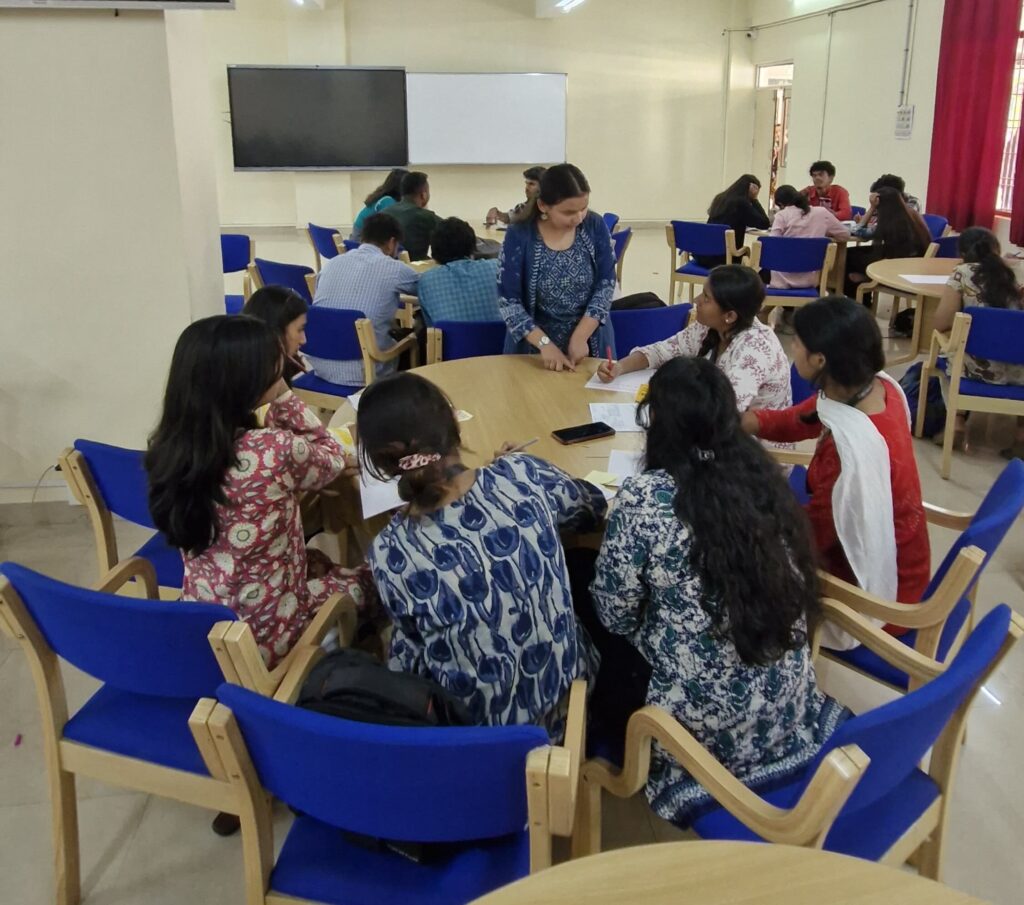
One of the most important discussions during the session concerned dialogue as an alternative to aggression. We live in a time when disagreement can quickly turn into hostility. Social media often rewards instant reactions, sharp accusations and emotionally charged responses. People may form opinions about others without understanding their circumstances or listening to their experiences.
Young people are growing up within this communication environment. Peace education must help them develop the ability to disagree without disrespecting, question without humiliating and defend their convictions without denying others their dignity.
Dialogue does not mean surrendering one’s beliefs. Nor does it mean accepting injustice or remaining silent in the face of discrimination. It means creating space where differences can be expressed, examined and addressed through reason, empathy and mutual respect.
Active listening is particularly important. Many people listen only to prepare their next argument. Genuine listening requires an effort to understand what another person is communicating, including their fears, experiences and concerns. The ability to listen to someone with whom we strongly disagree is one of the most valuable democratic skills a young person can develop.
This capacity is essential not only for friendships and family relationships but also for workplaces, communities and public life.
What Does Peace Feel Like?
Another meaningful activity at Christ College involved a simple sticky note. Students were invited to write what came to their minds when they heard the word peace.
The exercise encouraged participants to move beyond textbook definitions and connect peace with their lived experiences. Peace could mean safety to one person, freedom to another, acceptance to someone else, or the ability to express an opinion without fear.
For others, it could mean equality, understanding, belonging or respect. This diversity of meanings reveals an important truth: peace is not merely a political or international concern. It is also a deeply human experience.
For a young woman, peace may include freedom from harassment. For a student facing discrimination, it may mean being treated with dignity. For a young person experiencing family conflict, it may mean being heard without judgment.
When educational institutions recognise these different dimensions, peace education becomes relevant to students’ everyday realities rather than remaining an abstract moral lesson.
From Gandhi’s Nonviolence to Today’s Youth Leadership
India has a profound intellectual and moral tradition of nonviolence, most prominently associated with Mahatma Gandhi.
Gandhi’s understanding of ahimsa extended beyond the rejection of physical violence. It involved truth, self-discipline, respect for human dignity and the courage to confront injustice through nonviolent action.
His approach reminds us that nonviolence is not passivity. It is an active commitment to transforming unjust relationships and institutions without reproducing hatred.
For today’s youth, this tradition must be interpreted in contemporary contexts.
Nonviolence is relevant when students confront bullying, challenge caste discrimination, respond to communal prejudice, address gender inequality or engage in disagreements on social media.
It is equally relevant when young people organise collective action for social justice, environmental protection and community development.
Peace education should not produce passive citizens who avoid difficult questions. It should nurture courageous, compassionate and critically thinking young people capable of addressing conflict constructively.
Why Peace Education Must Become Part of Mainstream Education
Peace education is often confined to occasional workshops, commemorative events or awareness campaigns. These initiatives are valuable, but they are insufficient on their own. India needs a more systematic approach that integrates peacebuilding into the everyday learning environment.
Schools and colleges should create opportunities for students to develop emotional awareness, critical thinking, conflict resolution, communication skills, respect for diversity and constitutional values.
Experiential learning can play a powerful role. Activities such as role-playing, community dialogue, reflective exercises, peer mediation, storytelling and collaborative problem-solving can help students practise what they learn.
Teachers also need support to facilitate difficult conversations without reinforcing prejudice or silencing disagreement. Student leadership groups, peace clubs and campus dialogue forums can extend this learning beyond the classroom.
Importantly, peace education should connect personal transformation with wider social realities. Students should be encouraged to examine how inequality, discrimination, misinformation, environmental stress and exclusion contribute to conflict.
Its success should not be measured merely by the number of workshops conducted or students attending them. The more meaningful indicators are changes in attitudes, relationships, behaviour and the ability to resolve disagreements constructively.
From Peace Awareness to Peace Action
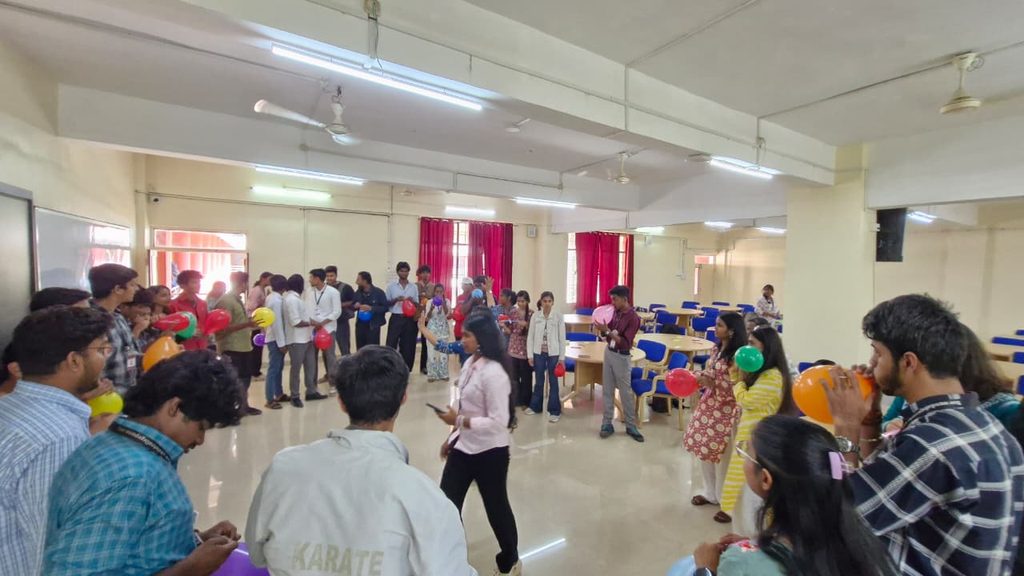
The Christ College session demonstrated how simple participatory activities can create opportunities for meaningful reflection. A balloon can become a starting point for examining anger and prejudice. A sticky note can reveal the different meanings of peace. A classroom discussion can encourage students to question assumptions and listen to unfamiliar perspectives.
But awareness is only the beginning. The real test comes when students return to their classrooms, hostels, homes, friendship circles and digital spaces.
Will they challenge a discriminatory joke? Will they refuse to circulate a harmful rumour? Will they listen before judging? Will they intervene safely when someone is being bullied? Will they choose dialogue when disagreements become uncomfortable?
These everyday decisions determine whether peace education moves from discussion to action.
We must also recognise that young people are not merely beneficiaries of peace education. They can become peacebuilders, mediators, community leaders and advocates for inclusive societies.
Their energy, creativity and willingness to question established practices can become powerful resources for social transformation.
Peace Must Become a Way of Life
India’s future will not be determined by economic growth, technological progress or infrastructure development alone. It will also depend on the quality of relationships among its people and the ability of communities to live together despite their differences.
A society that produces highly educated individuals but fails to nurture empathy, tolerance and respect risks creating progress without social harmony.
The Peace, Nonviolence and Dialogue Awareness Session at Christ College offers a small but meaningful example of how educational institutions can begin addressing this challenge.
Peace education need not start with expensive infrastructure or elaborate curricula. It can begin with a question, a conversation, an interactive exercise or an honest reflection on our own behaviour. But it must grow into a sustained educational commitment.
We need young people who are not afraid of differences, who understand that disagreement need not become hostility, and who recognise that dignity and justice are inseparable from peace.
Peace is not simply something we demand from governments, institutions or society. It is also something we practise in our words, choices, relationships and actions.
If we want a generation capable of building a peaceful India, we must move beyond teaching young people how to succeed in life and begin teaching them how to live together.
Because the greatest achievement of education is not merely producing successful individuals, but nurturing human beings who make society more just, compassionate and peaceful.
Peace education must move from the margins of our educational system to its very heart.
