
By ImpcatLens Correspondent
At Creaticity Mall in Yerwada, Pune, Kala Krishi Bazaar brings craft, agriculture and social enterprise into a shared marketplace. Running from 1 to 5th October, the 19th Yellow Ribbon NGO Fair offers visitors an opportunity to discover products whose value extends beyond their price tags. Open from 11:00 AM to 9:00 PM, the exhibition invites people to meet makers, understand their work and support enterprises built around livelihoods, resourcefulness and community participation.
With approximately 200 stalls, according to the event information provided, the bazaar features handmade products, traditional crafts, handwoven textiles, home décor, organic wellness items, farm produce and regional food. This variety gives visitors many reasons to explore. Behind the displays, however, lies a common challenge: helping skilled producers reach customers who appreciate their work and return for future purchases. For grassroots enterprises, such access can be as valuable as the immediate sales.
Among the initiatives bringing this purpose to life is 10Stitch, a green entrepreneurship initiative of YouthAid Entrepreneurs Federation of India. Led by women from Yerwada, it connects local livelihoods with the possibilities of circular fashion. Its presence at the bazaar places women from the surrounding community before a wider audience, giving visitors an opportunity to engage with an enterprise rooted close to the exhibition itself. It also gives local craftsmanship a wider public presence.
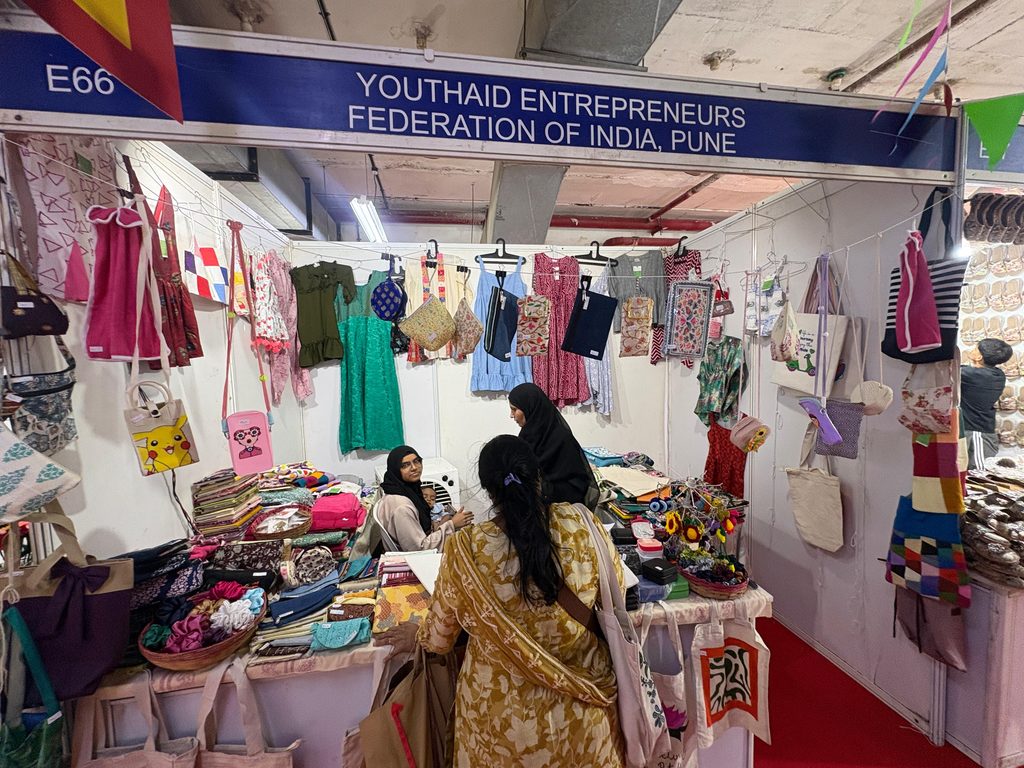
10Stitch works with discarded garments, factory surplus and textile waste left after consumer use. Through upcycling and recycling, these materials gain another useful life as bags, pouches, home linen, accessories and apparel. The approach encourages people to reconsider what they discard. Fabric that has outlived its original purpose may still have the strength, texture or colour needed for a different product. Design and stitching skills help turn that remaining potential into something marketable.
This work gives practical meaning to the circular economy: keeping materials in use and recovering value instead of allowing usable resources to become waste. For 10Stitch, environmental responsibility is connected with earning opportunities. Its training in design, stitching and upcycling equips grassroots youth and women to participate in production. The intended result is dignified work while helping keep useful textiles out of landfills through the practical application of skills within the community.
At the stall, the products offer a starting point for conversations about consumption. A visitor considering a bag or pouch can also consider the material behind it and the labour involved in giving it another purpose. Such conversations can help customers recognise the skill required to work with recovered textiles. They can also help makers understand preferences concerning usefulness, appearance and finish, knowledge that matters when developing products for a competitive market.
The initiative also makes reusable sanitary napkins, extending its emphasis on reuse to another everyday product. These reflect its interest in reducing disposable waste and encouraging responsible consumption. Alongside its textile products, they widen the conversation about how repeated use can influence purchasing habits. For customers, the range offers an opportunity to discuss product materials, care requirements and durability directly with the women whose enterprise they are helping to support.
The importance of linking skills with markets also emerges in the attached account of Handmade With Love. Led by Prabha Tai, the initiative brings together 25 women producing handmade soaps, attar, incense sticks and other items. According to a visitor, Dinesh Nawale, their journey began around four years ago. Learning production techniques was an essential beginning, followed by the gradual development of confidence and experience in selling.
According to the account, participation in an exhibition at Ishanya Mall became an important milestone in their market journey. Today, women contribute according to their availability and receive payment linked to the work undertaken. Some earn approximately ₹2,000 to ₹3,000 monthly, depending on participation. These are modest supplementary earnings, and the group continues to seek more customers and steadier opportunities. Their experience illustrates why exhibitions matter beyond a single successful day: they can help an emerging enterprise learn, build recognition and pursue repeat business.
According to one of the visitors, Mithun R, the Periferry stall adds a perspective on inclusion. It introduces Riza, a trans woman from Hyderabad who works in Kodai and mosaic art. Her account describes Crafting Wings as a source of workspace, income, freedom and the possibility of an independent life. Periferry supports trans, nonbinary and intersex communities through education, skills and employment opportunities. Riza’s experience reinforces a theme relevant to the bazaar: talent needs access to meaningful opportunities if it is to become a livelihood.
Read together, these stories show why buying directly from social enterprises can carry lasting significance. Training develops ability, while customers help create demand for that ability. A fair provides a meeting place between the two, but sustained livelihoods depend on continued orders, reliable quality and relationships that survive after the stalls close. Visitors can contribute by learning about the makers, purchasing thoughtfully and keeping their details for future needs.
For Pune, Kala Krishi Bazaar offers a chance to connect everyday shopping with local enterprise and wider social participation. The 10Stitch stall makes that connection especially tangible through Yerwada women transforming textile waste into useful products. Their work brings environmental care into the practical world of stitching, designing and earning. As the exhibition continues through October 5, visitors have an opportunity to support that effort and consider the possibilities held within materials too readily thrown away. Each thoughtful purchase can help strengthen the link between creative skill, responsible consumption and dignified livelihoods.
