
By Suryakant Chavan, Watershed Expert
For farming families in Bhusnar Vasti of Diksal Village, water has always been the key to every successful cropping season. Agriculture is the primary source of livelihood, and farmers depend on rainfall and groundwater for irrigation. However, over the years, the village nala gradually filled with silt, reducing its ability to capture and store rainwater. Instead of recharging the groundwater, rainwater flowed away quickly, while heavy rainfall often caused waterlogging and soil erosion. As groundwater levels declined, wells and borewells began yielding less water, making farming increasingly uncertain.
The shortage of water affected both crop production and household incomes. Farmers struggled to cultivate their fields during the Rabi and summer seasons due to inadequate irrigation. Productive land began losing its fertility because of soil erosion, while nearby unfertile land remained uncultivated. The community recognized that restoring the natural drainage system was essential for improving water availability and strengthening agriculture.
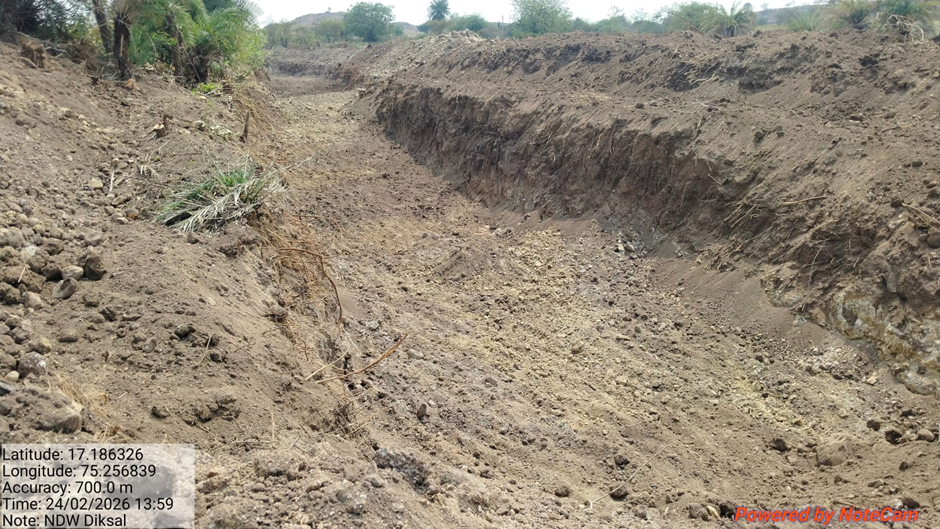
To address these challenges, a Nala Deepening and Widening intervention was undertaken under the Comprehensive Village Development Programme implemented by CYDA with support from SBI Mutual Fund. The initiative focused on restoring the village nala so that it could once again function as an effective water conservation structure. The accumulated silt was carefully removed, increasing the nala’s capacity to store rainwater and allowing more water to percolate into the ground. Instead of being discarded, the fertile excavated soil was used to improve nearby barren land, making it more suitable for cultivation.
The intervention covered 1,716 metres of the village nala, with 19,249 cubic metres of accumulated silt removed. This significantly enhanced the village’s water conservation capacity and strengthened groundwater recharge. By restoring the nala’s natural flow, rainwater could now be retained for longer periods, reducing runoff, minimizing soil erosion, and protecting agricultural land from waterlogging during heavy rainfall.
The results have already begun transforming farming in Bhusnar Vasti.
- Around 26 farmers are directly benefiting from improved water availability.
- Groundwater recharge is expected to increase water levels by approximately 1 metre in 18 open wells, while 5 borewells have also shown improved groundwater availability.
- Farmers now have more reliable access to irrigation water, enabling them to cultivate crops with greater confidence throughout the year.
- Improved soil moisture has also increased the productivity of previously less productive land, creating new opportunities for agricultural growth.
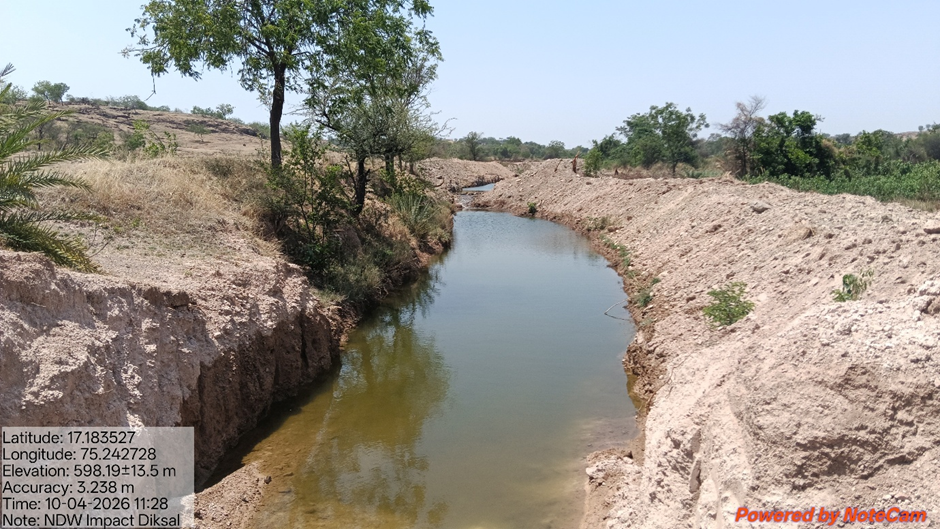
Farmer Aappa Bhusnar shares – The nala deepening work significantly improved groundwater recharge, ensuring that nearby wells and borewells have sufficient water for irrigation. With reliable water now available, farmers are successfully cultivating fodder crops, sorghum and groundnut not only during the monsoon but also in the Rabi and summer seasons. This has strengthened farming activities, improved crop planning and contributed to more stable livelihoods.
Beyond increasing water availability, the intervention helped the village better cope with changing weather conditions. The restored nala now acts as a long-term water conservation asset, helping the community better manage rainfall variability while protecting valuable natural resources. Reduced soil erosion, improved groundwater recharge, and enhanced agricultural productivity together contribute to a more sustainable farming system.
