Building Environmental Resilience, Social Well-Being, and Stronger Community Governance in Tribal Nandurbar
By Deepika Dhumal, Research Associate, YouthAid Global Pvt Ltd
In the tribal villages of Shahada block, Nandurbar, sustainability is reflected in everyday life. Farmers are adopting practices that improve soil and conserve water, children are learning in healthier school environments, women are creating new livelihood opportunities, and village institutions are becoming more active in local decision-making. These changes demonstrate that environmental protection, social development, and community governance are deeply interconnected.
Environmental, Social and Governance (ESG) is often associated with corporate reporting, but its true value is best understood on the ground. In Shahada, ESG is visible in resilient farming systems, improved health and education, stronger livelihoods, and empowered communities working together for long-term development.
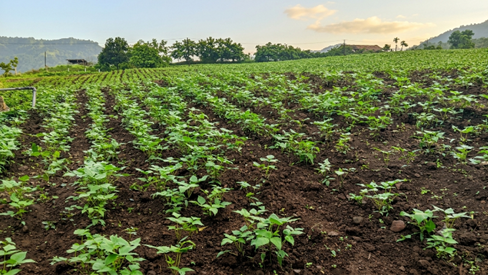
Shahada block, Nandurbar – where sustainability takes root in everyday life
Recognising these interconnected challenges, the ASK Foundation, through its implementation partner Centre for Youth Development and Activities (CYDA), implemented the Samruddh Kisan Prakalp (SKP). Over three years, the initiative adopted an integrated approach to strengthen livelihoods, education, health, natural resource management, and community institutions, demonstrating how sustainable development can be achieved when people and communities are placed at the centre of change.
Environmental: Caring for the Land That Sustains Life
In Shahada, environmental sustainability begins with the land. Farmers who once struggled with declining soil fertility and uncertain rainfall are gradually adopting residue-free farming, vermicomposting, and water-efficient practices. Nearly 100 farmers have shifted towards organic farming, while drip irrigation has improved cotton yields from 8–9 quintals per acre to 10–12 quintals, demonstrating that better resource management can improve both productivity and resilience.
Water security has improved alongside soil health. Loose Boulder Structures (LBS) and gabions now slow rainwater runoff reduce soil erosion & help retain moisture in vulnerable landscapes. While soak pits now manage household wastewater more effectively, cutting down on stagnant water around homes. Perhaps most significantly, 177 Matikalp water filters have improved access to safe drinking water in remote hamlets and illness that once affected an estimated 56 out of every 100 families in these areas has dropped to around 9 out of every 100.

Farmers adopting sustainable, water-efficient agricultural practices
Together, these interventions show that protecting natural resources is not just an environmental goal – it is the foundation of sustainable rural development.
Social: Empowering People, Strengthening Communities
Sustainable development is ultimately about improving people’s lives. Across Shahada’s villages, investments in education, health, and livelihoods have created opportunities that extend beyond individual beneficiaries. Schools have transformed the learning environment through improved WASH facilities and hygiene awareness helped children develop healthier daily habits, while making schools safer and a more supportive environment for children. Attendance, once affected by poor sanitation & irregular participation, has risen from 65–70% to 88–92%, a jump of roughly 26–38%. At the same time, health camps, nutrition awareness sessions, and trained Arogya Sakhis have brought preventive healthcare closer to communities, particularly women and children.
Livelihood interventions have strengthened household resilience by creating more reliable and diversified sources of income. For many landless and marginal families, goat rearing has evolved from a supplementary activity into a dependable livelihood, with veterinary care, livestock insurance, and regular training contributing to a 44% reduction in goat mortality and greater financial security. Alongside this, entrepreneurship development and skill-based training have enabled women and youth to establish small enterprises and build self-reliance. The journey of Aarti Choudhary, who transitioned from daily wage labour to running her own tailoring enterprise while also serving as an Arogya Sakhi, reflects how improved livelihood opportunities can empower individuals to become leaders within their communities.
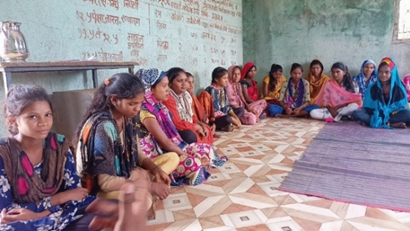
Women participating in a community health and awareness session
These stories illustrate that social development is not simply about delivering services. It is about creating the conditions for people to lead healthier, more secure & more dignified lives. When individuals gain knowledge, skills & confidence, the benefits extend far beyond one household they strengthen the entire community.
Governance: When Communities Lead the Change
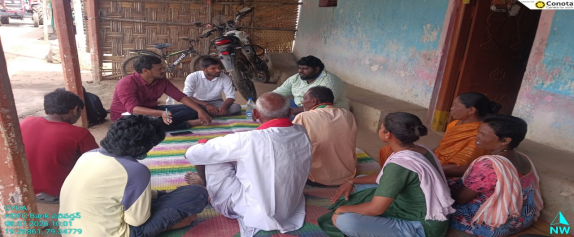
Perhaps the strongest indicator of sustainable development is not the number of activities completed, but the extent to which communities continue them independently. Across Shahada’s villages, community institutions that once existed largely on paper are now playing a more active role in shaping local development. Village institutions have increasingly begun making collective decisions around education, agriculture & health, reducing dependence on external facilitation. That ownership is now visible in village institutions.
Community Resource Centres (CRCs) have become active space for learning and digital exposure, drawing more than 30 children each day through local participation. School Management Committees (SMCs) are taking a more active role in improving attendance and supporting school functioning, while Village Health, Nutrition and Sanitation Committees (VHNSCs) are taking greater responsibility for school and Anganwadi functioning, health monitoring, and local planning.
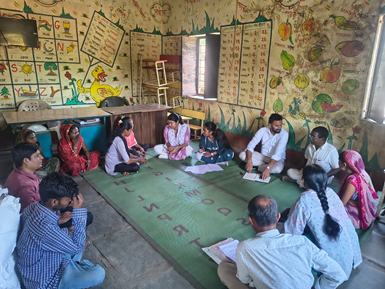
Community institutions coming together for local decision-making
Local leadership has also grown around agriculture and natural resource management. Young Farmers Associations have encouraged peer learning, promoted sustainable farming practices and strengthened agricultural leadership among rural youth. Similarly, Community Forest Rights Management Committees (CFRMCs) have taken a more active role in protecting and managing local resources, contributing to stronger conservation efforts and greater community management.
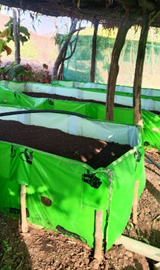
Village leadership driving agriculture and natural resource management
Government convergence has helped these local efforts grow beyond the scale of a single project. Linkages with ATMA, MAVIM, Krishi Vigyan Kendra and SBI-RSETI have connected communities to training, technical guidance and public resources that continue even after project activities conclude. This has strengthened both the reach and the long-term sustainability of village institutions.
Perhaps the clearest evidence of community ownership is the Shetkari Gat, a farmer collective that has continued functioning independently beyond the project period and now negotiates its input prices, plan crop purchases and make decisions collectively about seed and produce. It may seem like a small change, but it represents something far more significant – the shift from dependence to self – reliance.
Where the Three Pillars Come Together
The story of Shahada demonstrates that environmental sustainability, social development, and good governance cannot be separated.
Healthier soils increase agricultural productivity. Improved livelihoods enable families to invest in education and healthcare. Strong village institutions ensure that these improvements continue through collective action and local leadership. Each pillar reinforces the others, creating a cycle of resilience that extends well beyond individual interventions.
This integrated approach reflects the true essence of ESG – not as three independent pillars, but as interconnected pathways towards sustainable development rooted in community ownership.
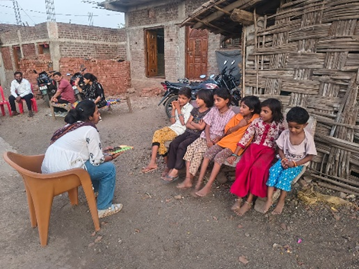
The Samruddh Kisan Prakalp journey – sustainability as a way of life
“The story of Shahada reminds us that sustainability is most meaningful when environmental stewardship, social progress, and community governance come together to create change that lasts.”