ImpactLens Correspondent
For over six centuries, the Koli fisherwomen of Mumbai have risen before dawn, read the tides, brought fresh catch to the city’s markets, and quietly sustained one of India’s oldest coastal economies. They never lacked resilience. They never lacked enterprise. What they lacked was recognition.
On 26 June 2026, that story stepped onto a different stage.
At the Pune International Centre, Seagull Advertising launched Women Who Build—a new platform dedicated to conversations on women-led enterprise in India. But instead of beginning with startup valuations, venture capital, or business plans, the inaugural edition began with something far more fundamental: identity.
The evening posed a powerful question: When identity precedes enterprise, does the market follow?
The answer unfolded not through theory, but through the lived experience of the Koli fisherwomen.
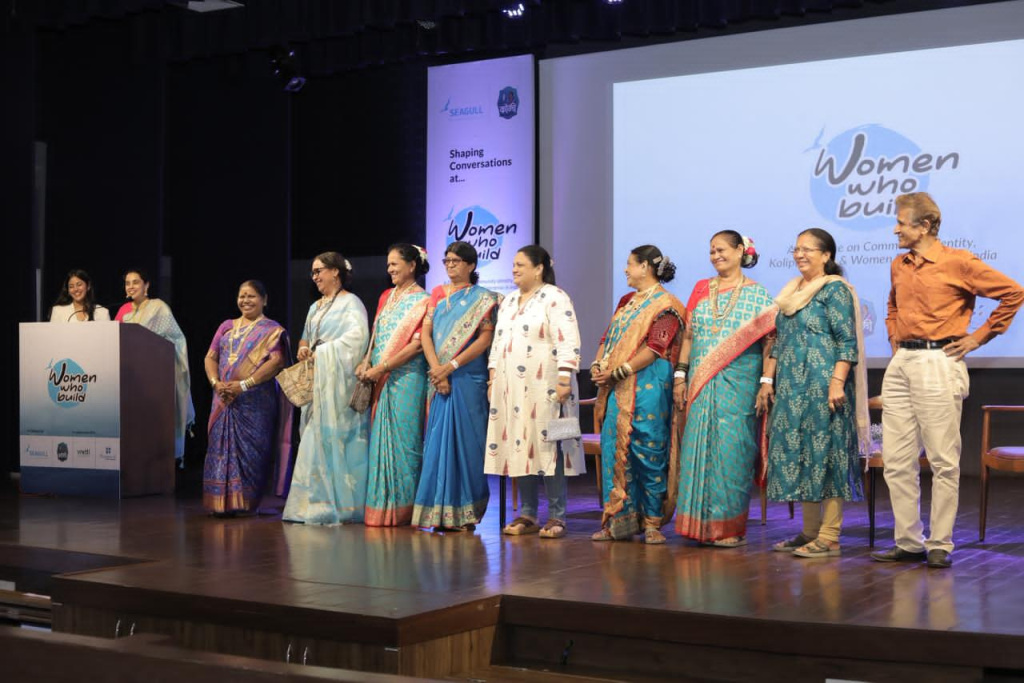
In a symbolic opening, the women Directors of Daryavardi Producer Company Limited (DPCL) were given the Seat of Honour. It was a quiet but profound reversal of convention. Women who have spent generations on the margins of economic conversations were now seated at the centre of one.
Their journey forms the heart of the Koli Community Brand Book, authored by Sameer Desai, Founder and Managing Director of Seagull Advertising. The book documents how Mumbai’s Koli fisherwomen transformed generations of inherited knowledge into a modern, community-owned enterprise—proving that entrepreneurship did not begin when the company was formed. It began centuries earlier, when identity itself became expertise.
“We did not invent something,” said Sameer Desai. “We organised something that was already real. The Koli fisherwomen always had what it takes. What they needed was a system around that identity strong enough to let it travel.”
That idea resonated throughout the evening.
Veteran fisheries institution-builder V. Vivekanandan, Director of FishMARC at Vrutti, reflected on four decades of strengthening community-owned institutions across India’s fishing sector. His keynote reinforced a simple truth: lasting enterprise grows strongest when communities own both their identity and their future.
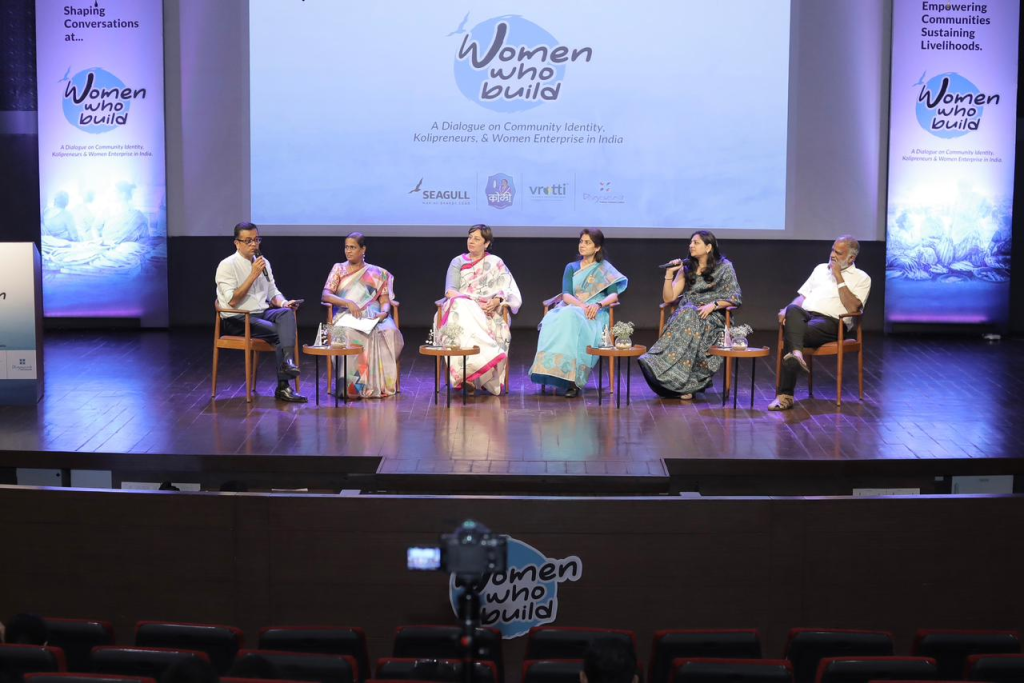
The panel discussion that followed brought together leaders from philanthropy, finance, entrepreneurship, social innovation and livelihoods to examine how identity can become an engine of economic opportunity rather than a barrier. The conversation explored difficult realities—bias in funding, unequal access to markets, and the invisible hurdles faced by women and marginalised entrepreneurs—but also highlighted an emerging shift. Increasingly, enterprises rooted in lived experience are creating entirely new markets that traditional businesses failed to recognise.
Identity, the discussion suggested, is not merely a social label. It is market intelligence.
Women understand unmet needs. Indigenous communities preserve knowledge others overlook. Persons with disabilities identify accessibility gaps. LGBTQIA+ entrepreneurs create safer, more inclusive products and services. Their identities are not limitations; they are sources of innovation.
Yet every panellist agreed on one crucial point. Identity may open the first door. Excellence keeps it open.
The evening’s most moving moments came not from the stage but from the community itself. In the “Voices from the Community” session, Ujjwala Patil, founder of Daryavardi Mahila Sangh, and members of DPCL shared how self-help groups evolved into a producer company now owned by more than 1,000 women shareholders.
Their journey was not simply about selling seafood. It was about reclaiming dignity. It was about moving from informal work to organised enterprise. It was about transforming inherited identity into collective ownership.
The celebration reached its emotional peak when the women sang Mi Haay Koli—a declaration of pride in their heritage that echoed far beyond the auditorium. It was a reminder that culture need not disappear for commerce to flourish. Sometimes, culture becomes the business itself.
The evening concluded with a Koli Seafood Experience, where the fisherwomen served fresh seafood prepared by their own community alongside traditional pickles, dry fish and signature coastal spice blends. It was more than a meal. It was proof that authenticity, when combined with organisation, branding and quality, becomes market-ready.
Women Who Build was never intended to celebrate entrepreneurship alone. It challenged a deeper assumption—that successful businesses must first leave identity behind to become commercially viable.
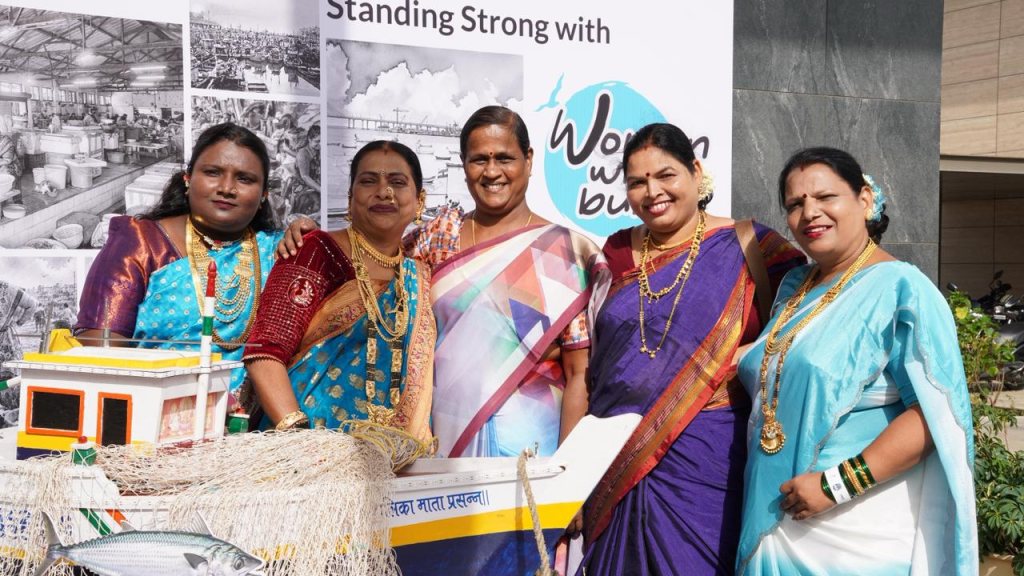
The story of Mumbai’s Koli fisherwomen suggests the opposite. When identity creates insight, insight creates innovation. Innovation creates value. And value earns the market’s trust.
The future of entrepreneurship will not belong solely to those who identify opportunities. It will belong equally to those who transform their lived experiences into enterprises that create economic, cultural and social value.
Because markets do not fail because people are different. Markets fail when they fail to recognise the power of difference. The Koli fisherwomen did not change who they were to build an enterprise. They built an enterprise because they finally embraced who they had always been.