Five days that challenged assumptions, opened conversations, and deepened our understanding of gender, relationships, and social change.
Manabendra Nath Sanyal, Chief Executive Officer, YouthAid Foundation
The Beginning
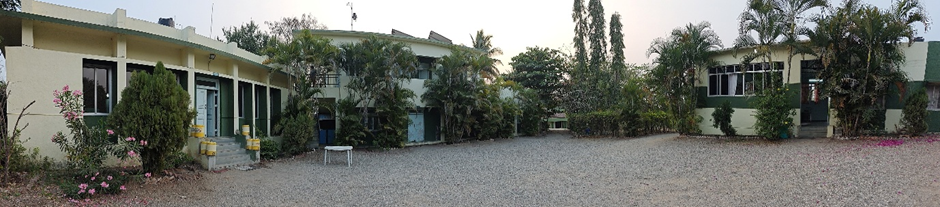
The training centre was unusually quiet when we arrived.
Nestled amid open fields and far from the constant rush of urban life, the setting itself seemed to encourage reflection. Mobile phones slowly fell silent, conversations softened, and the rhythm of everyday responsibilities began to fade into the background.
Nearly seventy participants had gathered there—professionals working in the development sector, community leaders, and individuals deeply engaged in social change. Many of us had heard about the Stepping Stones programme before. Some colleagues described it as transformative; others simply said, “You have to experience it to truly understand it.”
At that moment, however, most of us believed we were attending another training workshop.
Within a few hours, we realised this was something very different. The facilitators explained that Stepping Stones was not designed as a conventional training programme. It was a participatory process developed to help people reflect on relationships, gender roles, power dynamics, health, and communication. Originally created in Africa to address the spread of HIV, the methodology had gradually evolved into a powerful approach for addressing deeper social issues — inequality, stigma, and the silent norms that shape everyday behaviour.
The facilitator made it clear not to take any notes rather we should all focus on the interactions that are happening and be fully focussed, involved and have full participation during the processes. He further explained that the workshop would not rely on lectures or presentations. Instead, learning would unfold through participatory activities—games, role plays, storytelling, and reflection. Inviting participants to question their assumptions and understand the world through different perspectives.
What followed over the next several days was not simply learning. It was a process of unlearning, questioning, and rediscovering.
Soon after the introductions, the participants were divided into smaller groups. What followed looked like a simple game, but it would become the first powerful learning moment of the journey.
Crossing the River
Participants were asked to imagine a river filled with crocodiles. A few stones (in form of plastic bottles) placed across the river were the only safe points. The challenge was simple: cross the river using these stones while ensuring that every member of the group reached safely.
At first, the activity felt like a playful exercise. Groups gathered around the imaginary river, discussing strategies and carefully stepping onto the stones.
One group moved slowly but steadily. Members supported one another, ensuring that everyone maintained balance. Eventually, they reached the other side together.
Another group began confidently after observing the first. But midway through their attempt, the facilitators introduced an unexpected twist—a strict time limit. Under pressure, the group hurried forward. In their rush, they overlooked two members who were still struggling behind them. They had crossed the river but not together leaving the two members behind.
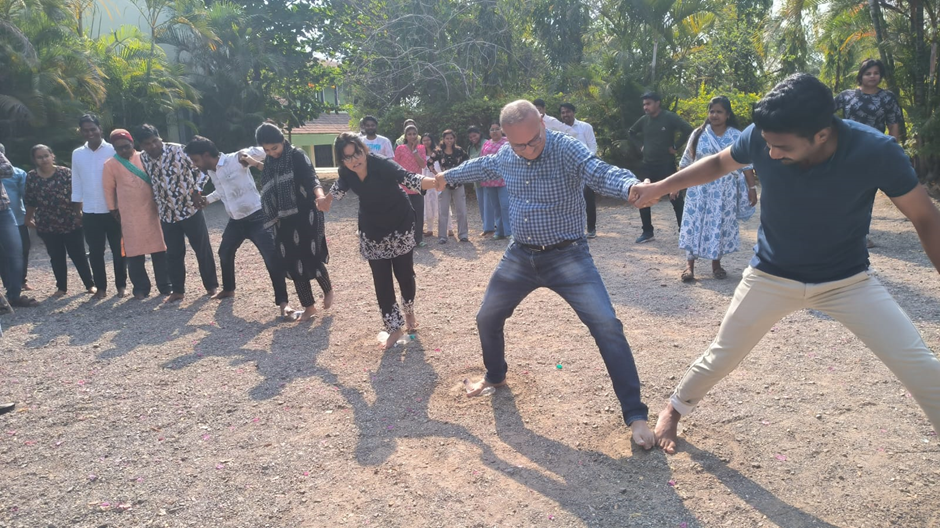
Other groups experimented with creative approaches. One group adopted a particularly innovative strategy — participants crossed over one another strategically, ensuring continuous support from both ends. Their method was both efficient and inclusive.
The reflection that followed was powerful and far deeper than the activity itself
- Leadership, is not about reaching the destination first; it is about ensuring that everyone reaches together.
- Often the members who appear weakest require the greatest support. Ignoring them not only weakens the group but undermines the collective goal.
- Pressure can expose our blind spots. Under stress, we tend to focus on outcomes rather than people.
Understanding Gender and Social Conditioning
As the sessions progressed, the conversations gradually moved into more complex and sensitive areas — gender roles, social expectations, and the invisible rules that shape our behaviour.
Participants reflected on how society begins teaching boys and girls to behave differently from a very young age. Boys are often encouraged to be strong, decisive, and dominant, while girls are expected to be patient, nurturing, and accommodating.
These expectations, repeated across generations, slowly become social norms that influence how people think, speak, and lead.
Through discussions, role plays, and group reflections, participants began examining how these gender stereotypes shape relationships, workplaces, and communities. Many realised that behaviours often perceived as “natural” are, in reality, deeply shaped by social conditioning.
The conversations were not always easy. For some participants, these discussions challenged beliefs they had carried for years. Yet the respectful and open environment created by the facilitators allowed people to speak honestly and listen without judgement.
Gradually, hesitation gave way to curiosity and reflection. At one point, the facilitator posed a thought-provoking question to the group:
“Who is an Ideal Man? Who is an Ideal Woman — as defined by our social structure? And what is the ground reality? Who are the Real Man and the Real Woman in our society?”
At first, the discussion seemed straightforward. But as participants reflected more deeply, interesting patterns began to emerge.
When asked to describe the “Ideal Man,” participants across different groups arrived at remarkably similar answers:
- A man who earns for the family.
- A man who carries forward the family lineage.
- A man who takes responsibility for the household.
- A man who is strong, decisive, and respected.
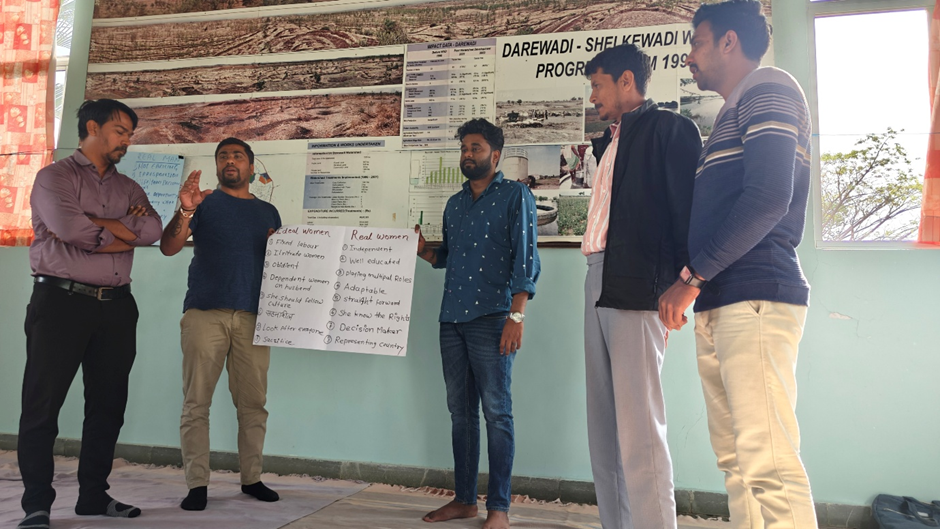
These expectations reflected the image that society often projects.
However, when the discussion shifted to the idea of the “Real Man,” the atmosphere in the room grew noticeably quieter.
Many participants acknowledged that reality often looks very different. Some men struggle to take responsibility. Some fall into addictions. Others withdraw from family roles altogether. The ideal image that society promotes does not always match lived experiences.
The conversation then turned to women. According to societal expectations, the “Ideal Woman” is patient, tolerant, self-sacrificing, and devoted to the household. She cooks, cleans, serves the family, and often eats only after everyone else has finished. Education, independence, or professional aspirations rarely form part of this traditional picture.
But when participants began describing the “Real Woman” in today’s world, a very different narrative emerged.
- Women today are educated.
- They work and contribute financially.
- They lead organisations and businesses.
- They excel in sports, science, and professions once considered male domains.
In a striking reflection, many participants observed that while the societal image of the ideal man appears strong but often falters in practice, the real lives of women are steadily moving toward empowerment and growth.
This contrast triggered deeper introspection. The facilitators then invited participants, on a voluntary basis, to reflect on a more personal question:
“Have you ever experienced pressure from society that forced you to act against your own choice?”
What followed transformed the discussion. One by one, participants began sharing personal stories — stories shaped by religion, culture, caste, gender identity, and family expectations.
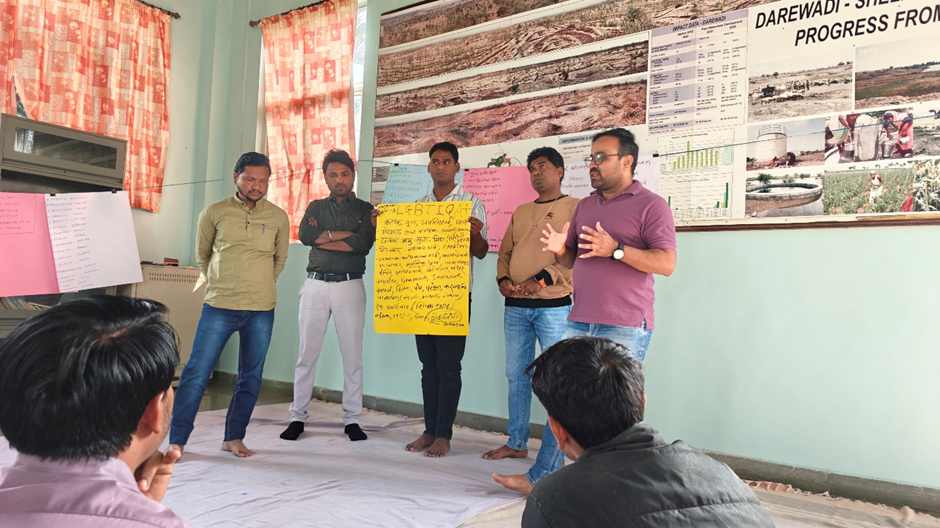
The group itself represented diverse social backgrounds. Participants came from Muslim families, tribal communities, urban middle-class households, and included members of the LGBTQIA+ community. Their experiences revealed how deeply social norms influence individual choices.
One participant spoke about an inter-religious marriage. Both families initially rejected the couple and refused to speak to them for more than two years. Only after the birth of their child did the families begin to soften. Yet even then, the woman was expected to adopt a name aligned with her husband’s religion — something neither she nor her husband truly desired.
Another story revealed how marriage hierarchies operate within families. In one case, the elder brother was pressured to marry first simply because tradition demanded it, even though he was not emotionally ready. His marriage became a formality so that the younger brother could marry the woman he loved.
Another reflection touched on a painful reality: families sometimes hide past incidents involving girls out of fear that such information might affect their marriage prospects. Ironically, these hidden truths often surface later, creating deeper emotional wounds.
Yet amid these stories of pressure and conformity, there were also examples of courage. One participant shared an experience from a family where the youngest son wished to marry first, while his elder brothers had no intention of marrying yet. Instead of forcing tradition, the family chose to support the younger son’s decision. In time, the elder brothers also married when they felt ready.
The lesson that emerged was simple yet powerful: When families choose understanding over rigid tradition, change becomes possible.
Rethinking the Meaning of Marriage
The conversation gradually shifted toward the institution of marriage itself. Participants were asked a seemingly simple question:
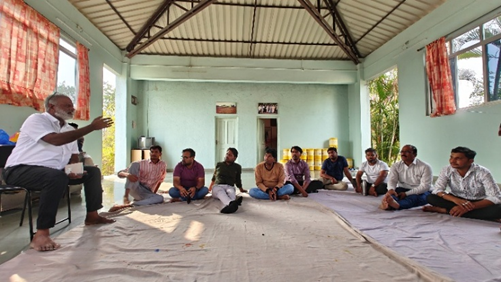
“Why is marriage important?”
At first, familiar answers emerged — family stability, continuation of lineage, social acceptance. But as the discussion deepened, participants began to articulate more nuanced perspectives.
Marriage, they reflected, is not merely a social obligation. It is about emotional companionship, shared responsibilities, and mutual care. Reducing it to duty or biological necessity overlooks its deeper human dimensions.
Lessons from Tribal Communities
An unexpected yet fascinating insight emerged when participants began sharing experiences from tribal communities.
Participants observed that many tribal societies demonstrate remarkable flexibility in matters of relationships and marriage. In some communities, there is no rigid expectation that elder siblings must marry before younger ones. Individuals are free to marry when they choose.
In cases where couples elope, community councils often mediate discussions between families and encourage reconciliation rather than punishment. In some instances, such acts are even interpreted as expressions of courage and commitment.
Another surprising insight concerned gender identity. In certain tribal traditions, when a person is identified as transgender, they may receive property rights within the family at an early stage. These practices challenge the assumption that modern urban societies are always more progressive.
Sometimes, communities that remain closely connected to traditional ways of life demonstrate greater openness and acceptance.
Challenging Gender Roles
As the conversation evolved, participants began questioning everyday assumptions.
- Why should men always be the breadwinners?
- Why should women be confined to household roles?
- What if both partners choose to work?
- What if one partner chooses to stay home?
Participants observed that in some tribal families, if the woman earns, the man may take responsibility for household work without stigma. Such arrangements are viewed simply as practical decisions rather than challenges to masculinity.
This led to a profound question for everyone in the room: Are we bound by social expectations, or do we have the freedom to redefine roles through mutual choice and understanding?
Understanding the Human Body & Gender Beyond the Binary
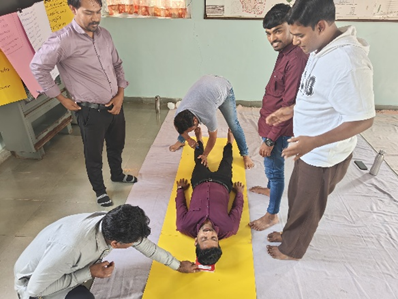
One of the most memorable exercises involved drawing human figures. Our group had 15 Participants + 2 Facilitators. We were further divided into 4 groups and given chart papers and markers. Two of the groups were asked to draw male bodies, while two other drew female bodies, focusing only on external body parts and to name them.
Initially there was visible hesitation. Many participants felt uncomfortable naming or drawing certain body parts, particularly private parts. Cultural conditioning had taught many of us to avoid such conversations.
But as the discussion continued, the hesitation began to fade.
Participants also explored how different communities use different words — including colloquial and community-specific language — to refer to various parts of the body. These conversations opened up discussions about how language reflects identity, culture, and belonging.
Later, participants were asked to place green stars on the body parts they liked most and red stars on the parts they disliked.
Interestingly, most participants expressed appreciation for many aspects of their bodies. In our group, it reflected that for women body there are almost nothing that males disliked – a reflection that sparked thoughtful conversations about body image, self-acceptance, and societal expectations. The discussion highlighted that despite the discomfort society attaches to certain parts of the body, most individuals generally feel a sense of acceptance toward their own physical selves
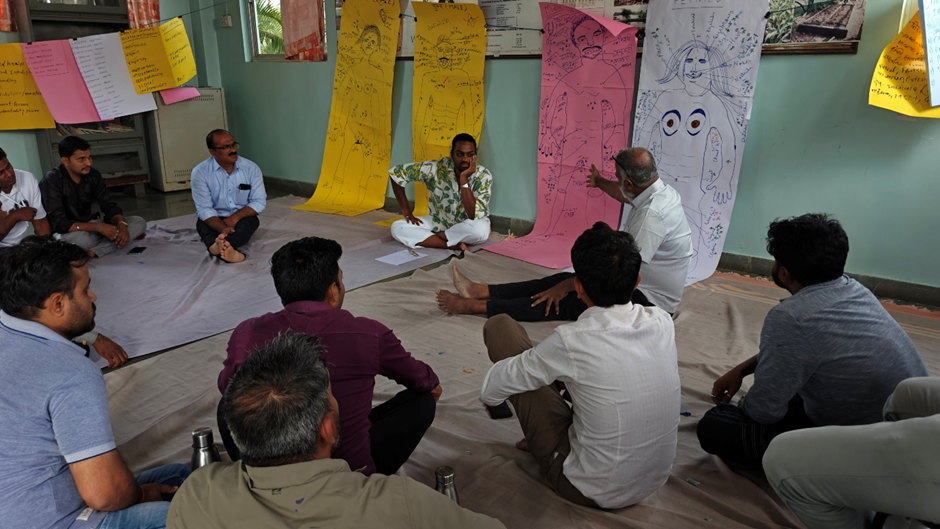
The body-mapping exercise then expanded into a broader discussion about gender identity. Participants discussed not only male and female bodies but also the identities of transgender and LGBTQIA+ individuals.
Many admitted that before this session, their understanding of gender identity had been limited. Society often simplifies gender into two categories — male and female — without acknowledging the experiences of people whose identities exist beyond this binary.
Members from LGBTQIA+ communities shared insights into the challenges they face — from social rejection to lack of acceptance in workplaces and families.
Participants also learned basic information about gender-affirming processes, helping them understand that gender identity is deeply personal and not merely a matter of physical appearance. Instead of viewing transgender identities through the lens of stereotypes, they began to see them as human experiences deserving dignity and respect.
The exercise ultimately helped participants realise how deeply personal and social perceptions of the body can be.
Leadership, Power, and Behaviour
Another set of activities explored how gender stereotypes influence leadership.
Participants performed role plays depicting everyday situations where leadership decisions were shaped by gender expectations. Some scenes showed male leaders being assertive and commanding, while female leaders were expected to be gentle or accommodating.
These portrayals sparked important discussions. Why are the same behaviours perceived differently depending on whether they come from a man or a woman?
Why are women leaders sometimes judged more harshly for displaying authority?
Participants recognised that leadership is often filtered through social expectations about gender. Challenging these biases is essential for creating more inclusive environments.
Seeing the World Differently – Testing the Water
In one reflective session, participants were asked to close their eyes and imagine walking through a quiet forest. As they moved deeper into the forest, they heard birds chirping and felt the cool breeze around them. However, due to the long walk they were feeling tired and thirsty.
After walking for some time, they came across a beautiful pond.
The facilitator then asked a simple question: what would you do next?
Some participants said they would jump into the water immediately. Others said they would first check whether it was safe. Some said they would sit at the edge and dip their feet in the water. A few admitted they would avoid the pond altogether because they did not know how to swim.
The exercise illustrated how people approach the same situation in different ways depending on their experiences, confidence levels, and perceptions of risk.
Understanding these differences, participants realised, is crucial when working with communities. People make decisions based on their own realities, and respecting those perspectives is essential for meaningful engagement.
Communication and Conflict
Another important learning emerged from exercises focused on communication.
Participants were given sentences that sounded confrontational or accusatory and were asked to convert them into assertive yet respectful statements.
At first, the task appeared simple. But as participants began working on the sentences, they realised how easily everyday language can escalate conflicts.
By slightly changing the tone or wording, the same message could be communicated in a way that encouraged dialogue instead of confrontation.
The exercise demonstrated that many conflicts arise not because of the issue itself but because of how it is expressed. Thoughtful and assertive communication can resolve a large proportion of misunderstandings before they escalate.
Reflecting on Personal Journeys
As the workshop progressed, the activities began to move inward — encouraging participants to reflect on their own lives. One deeply emotional exercise invited participants to draw the “River of Life.”
Each person illustrated their life journey as a flowing river — beginning from birth, through Childhood, adolescence and through adulthood, moving through moments of joy and achievement, and passing through phases of struggle or difficulty, through all these phases of life.
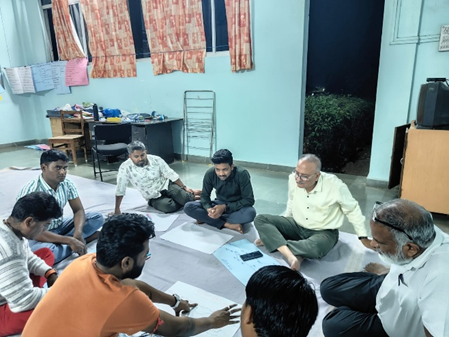
The rivers looked different for each participant, though all had some ups and downs in their respective River of Life. Somewhere there were sharp ups while in some situations there were sharp downs.
When participants shared their drawings, the room filled with empathy and connection. Behind every confident professional was a story of challenges, resilience, and personal growth.
The activity reminded everyone that people carry invisible histories that shape who they are.
The Web of Appreciation
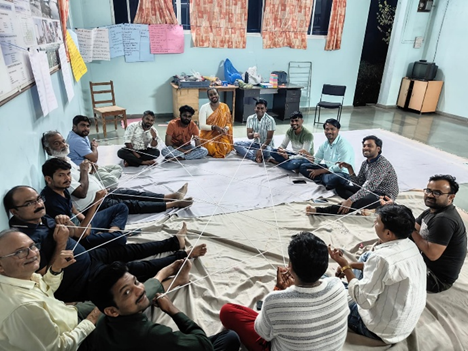
In the final moments of the journey, participants gathered in a circle for a symbolic activity.
A ball of thread was passed from one person to another. Before passing it, each participant spoke about someone in the group whom they admired and shared a few words of appreciation.
As the thread moved across the circle, a web began to form — connecting each person to another. By the time everyone had participated, the thread had created a beautiful network resembling a spider’s web.
The symbolism was powerful. Each individual was connected to others through respect, recognition, and shared experiences. The web represented the relationships that had formed during the journey.
Reflections and Moving Forward
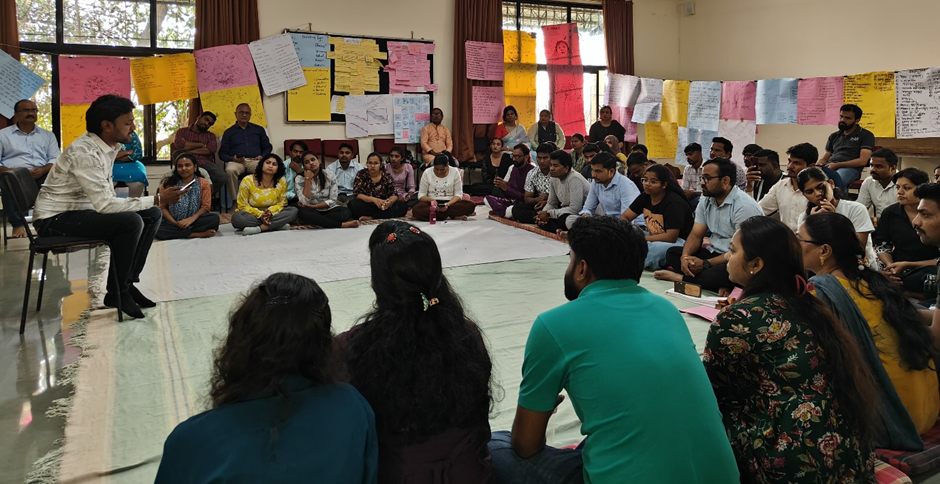
As the programme drew to a close, participants gathered to share their reflections.
Some spoke about how the sessions had helped them understand gender issues more deeply. Others said the workshop had challenged many assumptions they had carried for years.
One participant on behalf of his group expressed his learning in a poetic form that beautifully captured the emotional journey of the group.
Another participant shared that it was the first time she had learned about the experiences of transgender persons and the LGBTQIA+ community, and that the discussions had helped her see these realities with greater empathy.
Couples who attended the workshop together spoke about how the sessions had encouraged them to reflect on communication, equality, and respect within their own relationships.
Many participants felt that the programme had given them the confidence to address sensitive issues while working with communities. They felt better prepared to listen, communicate, and engage with people whose experiences may be very different from their own.
A Journey That Continues
Through conversations, activities, and reflections, participants had explored questions about gender, leadership, relationships, identity, and personal values. They had learned not only from facilitators but also from one another.
Most importantly, they had learned to listen — with openness and empathy. The programme planted seeds of reflection that would continue to grow long after the participants returned to their communities, workplaces, and families.
In that sense, the journey did not end with the closing session. It simply marked the beginning of a deeper path — one in which each participant would continue building stepping stones toward a more understanding, inclusive, and humane society.
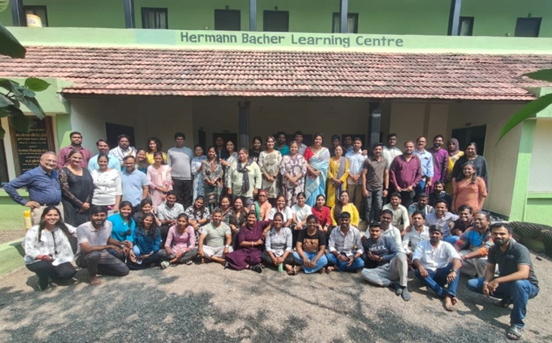
By the time it was time to say goodbye, it had become clear that the Stepping Stones workshop was far more than a training programme.
Through conversations, activities, and honest reflections, participants had explored questions about gender, leadership, relationships, power, identity, and communication. Many assumptions were challenged, many perspectives widened, and many silent questions found space to be voiced.
More importantly, we learned something that is often forgotten in professional spaces —we learned to listen – to listen without judgement, to listen with empathy. And to recognise that every individual carries a story shaped by experiences, struggles, and hopes.
As participants returned to their communities, workplaces, and families, they carried with them not just the memories of the workshop but also a renewed sense of awareness and responsibility.
In that sense, the journey did not truly end when the workshop concluded. It simply marked the beginning of many new stepping stones—towards a more understanding, inclusive, and humane society.
Acknowledgement
I would like to begin by expressing my sincere gratitude to Mathew Mattam, Founder of the Centre for Youth Development and Activities (CYDA), for giving me the opportunity to be part of the five-day immersive Stepping Stones workshop. His vision and commitment to creating spaces where individuals can openly reflect on gender, relationships, and social realities made this experience deeply meaningful.
I am especially grateful to Mathew for not only conceptualising and organising the workshop but also for facilitating the sessions with remarkable patience, sensitivity, and insight. His ability to guide conversations on complex and sensitive social issues while ensuring that every participant felt heard and respected was truly inspiring
I would also like to acknowledge Pritesh, who co-facilitated our group and brought invaluable perspectives from the LGBTQIA+ community. His openness, lived experiences, and thoughtful facilitation helped deepen our understanding of gender, identity, and inclusion in ways that books or lectures alone cannot achieve.
Finally, I extend my appreciation to all the facilitators in other groups, and the participants who shared their thoughts, stories, and reflections with honesty and courage. Their honesty and openness transformed the learning process into a collective journey of understanding and growth.

This Post Has One Comment
Thanks a lot Sanyal ji for your insightful article. I enjoyed reading your article by visualizing the games and activities conducted in the workshop. Thanks!