By Mathew Mattam, Chairperson, YEFi
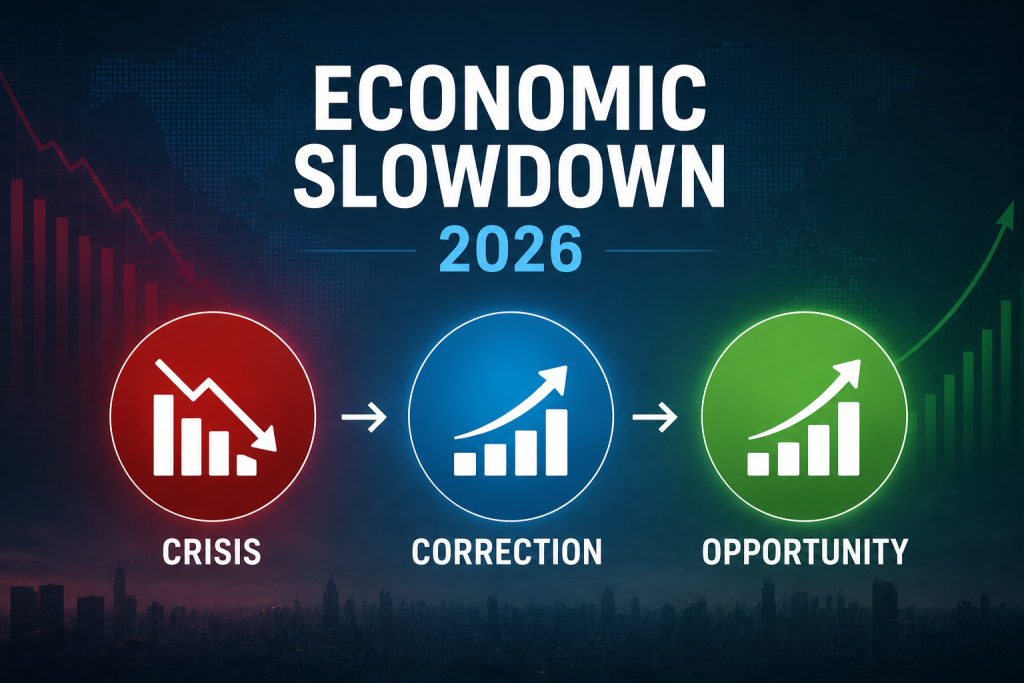
The year 2026 is witnessing growing discussions around a possible global economic slowdown. Across the world, governments, businesses, financial institutions, and ordinary citizens are experiencing increasing uncertainty due to rising inflation, geopolitical tensions, energy price fluctuations, and climate-related disruptions. While the current situation does not yet resemble the devastating financial crisis of 2008, there are clear signs that the global economy is entering a period of slower growth and cautious economic behavior.
According to major institutions such as the International Monetary Fund (IMF) and the World Bank, global economic growth projections for 2026 have been reduced. The IMF estimates global growth at around 3.1%, lower than the average growth rates seen in previous years. Several interconnected global factors are contributing to this slowdown.
One of the most significant concerns is the ongoing conflict in the Middle East, which has created instability in global oil markets. Rising crude oil prices directly affect transportation, manufacturing, food production, and energy costs across countries. In addition, global trade disruptions and increased shipping costs are affecting supply chains worldwide. Many nations are also carrying historically high levels of debt, limiting their ability to stimulate economic growth through public spending.
Economic growth in several major economies such as Europe, Japan, and parts of China has also weakened considerably. Protectionist policies, geopolitical rivalries, and uncertainty in global trade agreements are further impacting investor confidence and business expansion.
India, however, continues to perform relatively better than many large economies despite signs of moderation. Most forecasts suggest that India’s GDP growth may remain between 6.4% and 6.6% during FY 2026–27, making it one of the fastest-growing major economies globally. India’s strong domestic consumption, growing digital economy, and expanding services sector continue to provide resilience.
Nevertheless, India is not immune to global economic pressures. Rising oil import bills are increasing inflationary pressures in the transportation and manufacturing sectors. The Indian rupee is facing pressure due to global currency fluctuations, while export-oriented industries are experiencing reduced demand from international markets. Climate-related challenges such as irregular monsoons, extreme heatwaves, and environmental degradation are also affecting agriculture and livelihoods.
The current global condition is better described as “slow growth with inflation pressure” rather than a complete economic collapse. Economists often refer to this situation as “stagflation risk,” where inflation remains high while economic growth slows down. Although this creates stress on businesses and households, the world economy today is stronger and more prepared than during the 2008 financial crisis.
Banks are now more regulated and financially stronger. Digital economies and technology-driven sectors have expanded significantly, creating new opportunities even during economic downturns. Governments and central banks also possess better policy tools and experience in managing economic instability.
However, risks remain serious if geopolitical conflicts expand further, oil prices remain above $110–120 per barrel, China experiences a sharper slowdown, or climate disasters intensify globally. These developments could significantly worsen the economic situation.
Certain sectors are expected to face difficulties during this slowdown. Construction, real estate, automobile demand, luxury consumption, export-oriented manufacturing, and startups dependent on external investments may experience slower growth. Small businesses dependent on imported raw materials may also face challenges due to rising costs and currency fluctuations.
At the same time, several sectors may continue to grow strongly despite the slowdown. The green economy, climate action initiatives, renewable energy, waste management, circular economy models, digital services, artificial intelligence, repair and maintenance services, agriculture value chains, and local manufacturing are likely to expand rapidly. These sectors are increasingly becoming important sources of employment and entrepreneurship opportunities, especially for youth.
Organizations such as YouthAid Foundation and TrashTech Pvt Ltd are already promoting grassroots entrepreneurship, circular economy models, waste management enterprises, and climate-linked livelihoods that align with future economic realities.
For youth and entrepreneurs, 2026 may not necessarily be a year of fear, but rather a year demanding discipline, innovation, and resilience. Avoiding unnecessary debt, strengthening savings, investing in skills, building local businesses, and developing collective entrepreneurship models may become essential strategies for long-term sustainability.
The coming decade may reward societies and economies that prioritize sustainability, collaboration, climate resilience, and inclusive development over excessive consumption and speculative growth. While economic slowdown presents challenges, it also offers an opportunity to rethink development models and build a more balanced, responsible, and future-ready economy.

This Post Has 3 Comments
Excellent and insightful piece, Thanks !
Very Insightful
Very Insightful Article Information on Opportunities to Grow is Very Useful