
Sujata Kodag, Managing Trustee, Eco Logic Foundation, Pune
India is witnessing an alarming rise in heatwaves year after year. What was once considered a seasonal discomfort has now become a serious public health and environmental crisis. Across cities, towns, and villages, temperatures are crossing dangerous levels, affecting millions of people, especially women, children, elderly people, outdoor workers, and economically vulnerable communities. Heatwaves are no longer isolated weather events; they are becoming a regular and deadly reality linked to climate change, urbanization, environmental degradation, and poor preparedness.
In recent years, many parts of India have recorded temperatures above 45°C. States like Rajasthan, Maharashtra, Delhi, Telangana, Andhra Pradesh, Uttar Pradesh, and Odisha have experienced prolonged periods of extreme heat. Heat stress is affecting health, productivity, agriculture, water availability, and livelihoods. Construction workers, domestic workers, street vendors, sanitation workers, farmers, and daily wage earners are among the most affected because they are exposed to the sun for long hours. Women working in homes and informal sectors also face severe heat-related risks while continuing their household and economic responsibilities.
For decades, Pune was known for its moderate and pleasant climate, shaped by its elevation, surrounding hills, and rich green cover. The city once benefited from relatively cooler temperatures compared to many other urban centers in India. However, over the last two decades, rapid urbanization, large-scale infrastructure development, road widening, and unchecked construction activities have significantly reduced Pune’s tree cover and natural landscapes. The transformation of open land into concrete surfaces has altered the city’s microclimate, contributing to rising temperatures and increasing heat stress.
The loss of trees has reduced natural shading and weakened the city’s ability to regulate heat through evapotranspiration. At the same time, dense construction, vehicular emissions, and growing energy consumption have intensified the urban heat island effect, making several parts of Pune noticeably hotter than before. As a result, the city is now experiencing longer summers, unusually high day temperatures, warmer nights, and more frequent heatwave-like conditions.
This changing climate is no longer only an environmental concern; it is becoming a serious public health and urban living challenge. Outdoor workers, women engaged in domestic and informal labour, senior citizens, children, and low-income communities living in poorly ventilated houses are among the most vulnerable groups. Pune must now shift from merely reacting to heatwaves toward actively adapting to them. Strengthening urban green cover, protecting existing trees, promoting climate-sensitive architecture, improving ventilation in buildings, creating shaded public spaces, and increasing public awareness about heat safety are essential steps toward building a more climate-resilient and liveable city.
Heatwaves cause dehydration, dizziness, weakness, nausea, headaches, heat exhaustion, and even life-threatening heatstroke. Excessive sweating leads to loss of body fluids and salts, resulting in a rapid heartbeat and severe fatigue. In many cases, people ignore early warning signs and continue working, which increases health risks. Poor communities living in tin-roof houses, congested settlements, or areas with limited water supply suffer the most because their homes trap heat and provide little ventilation.
The increasing intensity of heatwaves clearly shows that climate resilience and community preparedness are no longer optional but essential. Small actions at the individual, household, and community levels can significantly reduce heat-related risks and save lives.
At the individual level, people must prioritize hydration and self-care. Drinking plenty of water regularly, even before feeling thirsty, is one of the simplest yet most effective protections against heat stress. Carrying water bottles while traveling or working outdoors is extremely important. People should wear light-colored, loose cotton clothes that allow the body to remain cool. Covering the head, neck, and face with scarves, caps, or dupattas while stepping out in the sun can reduce direct exposure to heat.
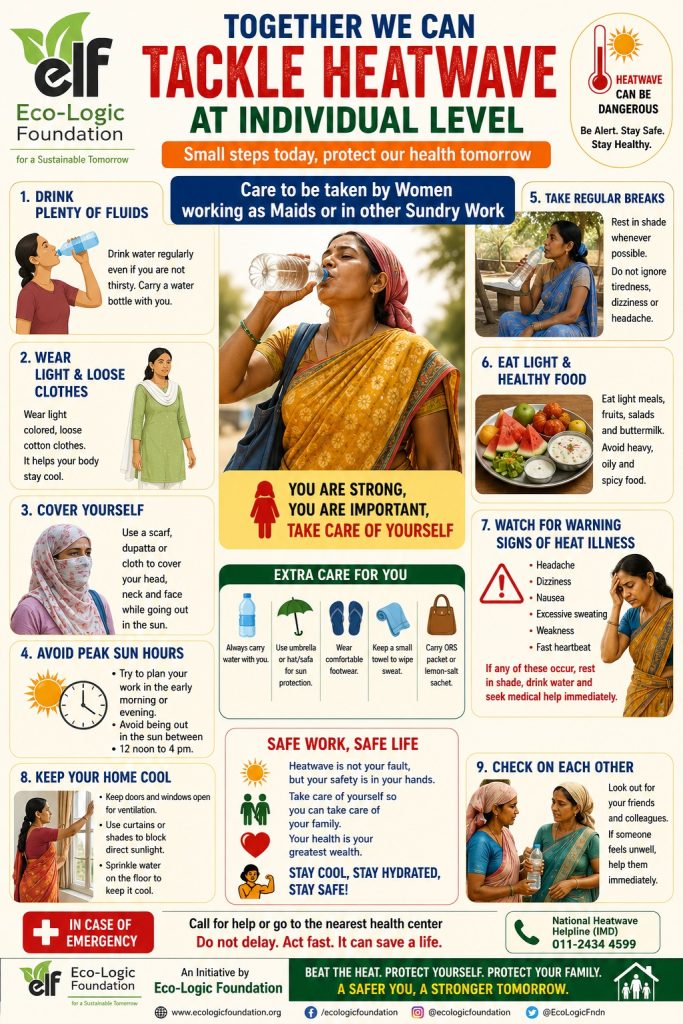
It is also important to avoid outdoor activities during peak heat hours, especially between 12 noon and 4 pm. Wherever possible, work schedules should shift to early mornings or evenings. Outdoor workers must take regular breaks in shaded areas and should never ignore symptoms such as dizziness, headache, or weakness. Eating light and healthy food such as fruits, curd, buttermilk, salads, lemon water, and traditional cooling drinks can help maintain body temperature and hydration.
At the household level, families can adopt several practical measures to reduce indoor heat. Homes should remain ventilated by opening windows during cooler hours while keeping curtains or shades closed during the daytime to block direct sunlight. Sprinkling water on terraces and floors can temporarily cool the surroundings. Families should reduce the use of heat-generating appliances during the afternoons and use fans or coolers efficiently.
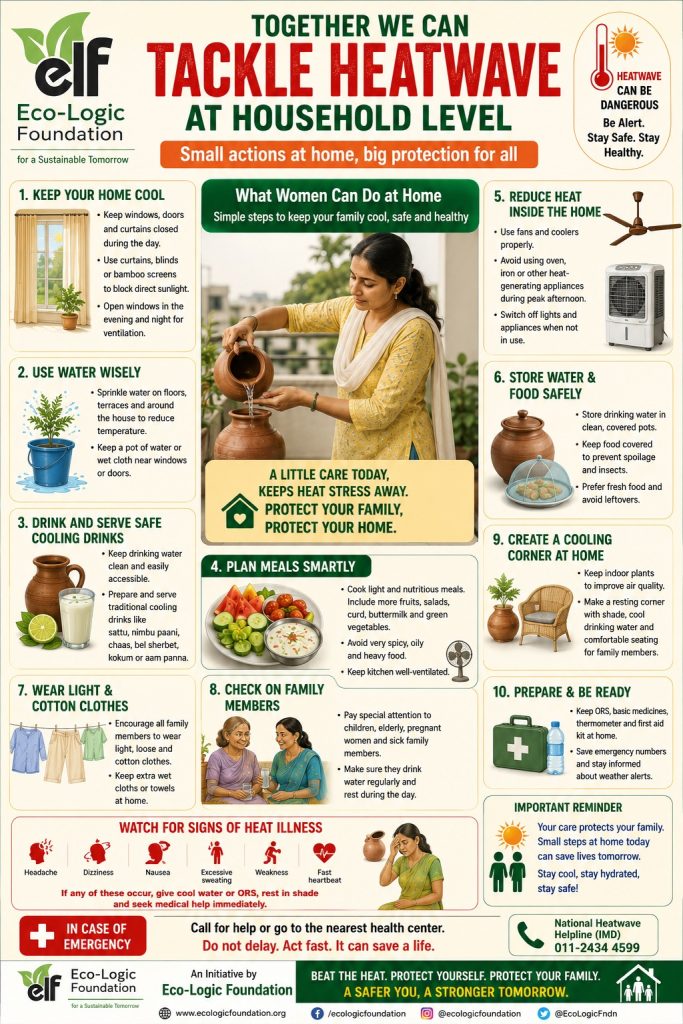
Women play a major role in protecting families from heat-related illnesses. Keeping safe drinking water accessible, preparing fresh and light meals, checking on elderly family members, children, and pregnant women, and maintaining emergency essentials such as ORS packets, first-aid kits, and emergency contact numbers are important household responsibilities during heatwaves. Creating small cooling corners at home with shade, drinking water, and ventilation can provide relief to family members.
Community-level action is equally important because heatwaves affect everyone collectively. Communities should focus on planting and protecting trees, which naturally reduce temperatures and provide shade. Public places such as bus stops, markets, schools, and construction sites should have shaded resting spaces and access to clean drinking water. Temporary water stalls or “Pyaus” can become lifesaving support systems during extreme summer periods.
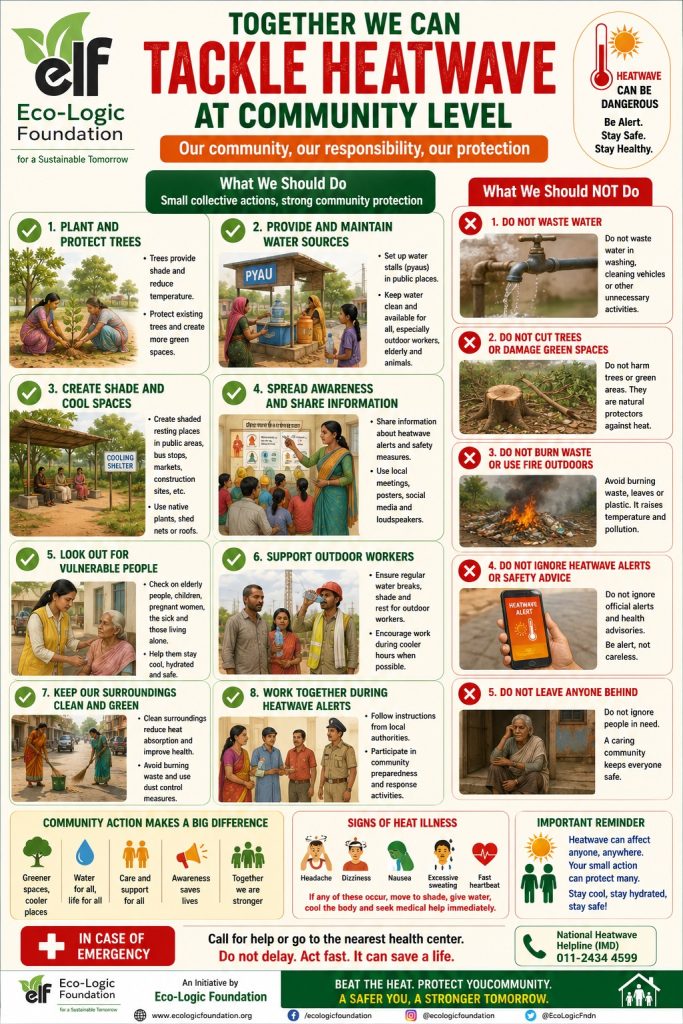
Awareness campaigns must be conducted regularly to educate people about heatwave safety, warning signs, and emergency responses. Local leaders, NGOs, schools, health workers, youth groups, and self-help groups can play a major role in spreading awareness through posters, social media, loudspeakers, and community meetings. Communities should also check regularly on vulnerable individuals such as elderly people living alone, sick individuals, and outdoor workers.
At the same time, harmful practices must be avoided. Wasting water, cutting trees, burning waste in open spaces, and ignoring official heatwave alerts worsen the situation. Urban areas with fewer green spaces and excessive concrete structures experience higher temperatures due to the “heat island effect.” Therefore, environmental protection and sustainable urban planning are critical for long-term resilience.
The rising heatwave crisis is a warning sign for India. Climate change is no longer a distant issue; it is directly impacting daily life, health, and survival. Governments, civil society organizations, communities, and citizens must work together to build a culture of preparedness, environmental responsibility, and collective care.
Heatwave protection does not always require expensive solutions. Simple actions such as staying hydrated, protecting vulnerable people, planting trees, conserving water, and spreading awareness can save thousands of lives. The message is clear: staying cool, staying alert, and supporting each other are essential steps toward building safer and healthier communities in an increasingly warming India.
