By Jinu Sam Jacob, Assistant Director, CYDA
I didn’t walk into the exhibition hall expecting to feel unsettled. Inspired, perhaps. Curious, definitely. But unsettled, in the best possible way, was not on the agenda.
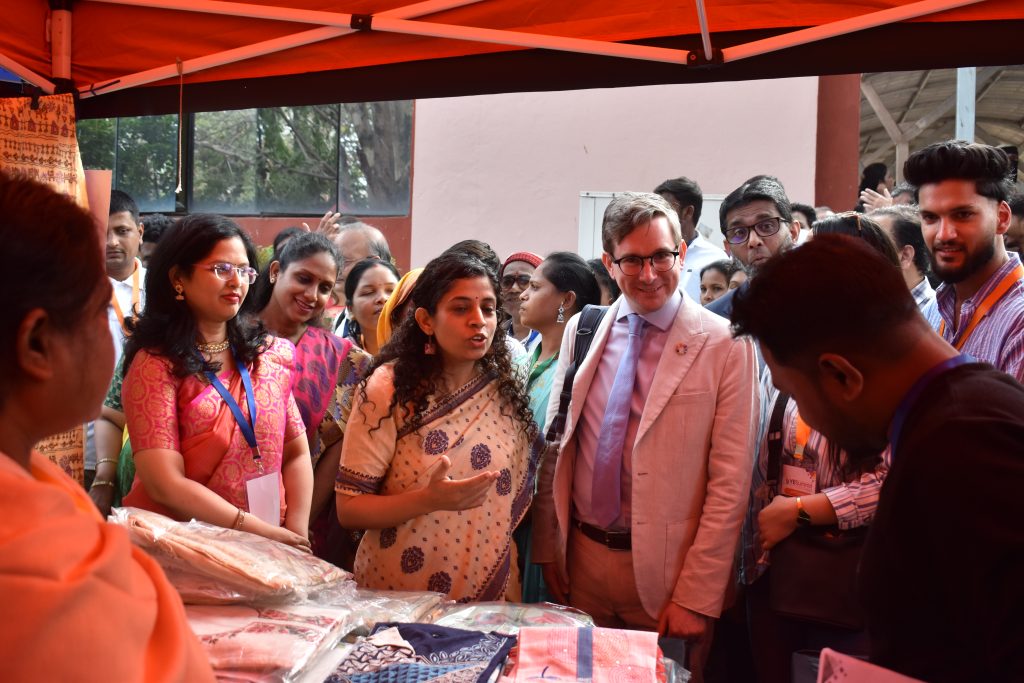
There were around 39 exhibition stalls at the YESummit. Almost all of them were run by women. Women from Jharkhand, Chhattisgarh, Uttarakhand, Telangana, Andhra Pradesh, Bengal, Maharashtra, Madhya Pradesh, Kashmir, Tripura, Karnataka, Kerala and Tamil Nadu set up their exhibition stalls made in the YESummit venue pluralistic and colourful. This made me feel proud of diverse and multicultural secular India. They represented rural villages and historically oppressed communities, carrying with them different languages, landscapes and climates, yet sharing an unmistakable confidence in how they occupied the space.
As I walked through the exhibition stalls, I kept making mental notes. “Walking through the exhibition stalls,” I wrote later, thinking of how the products of frontline communities were being demonstrated with such assurance. I had “interacted with them,” listening as conversations moved easily from “procurement of raw materials” to “organic processing,” and to the deliberate “involvement of neighbourhoods” in production.
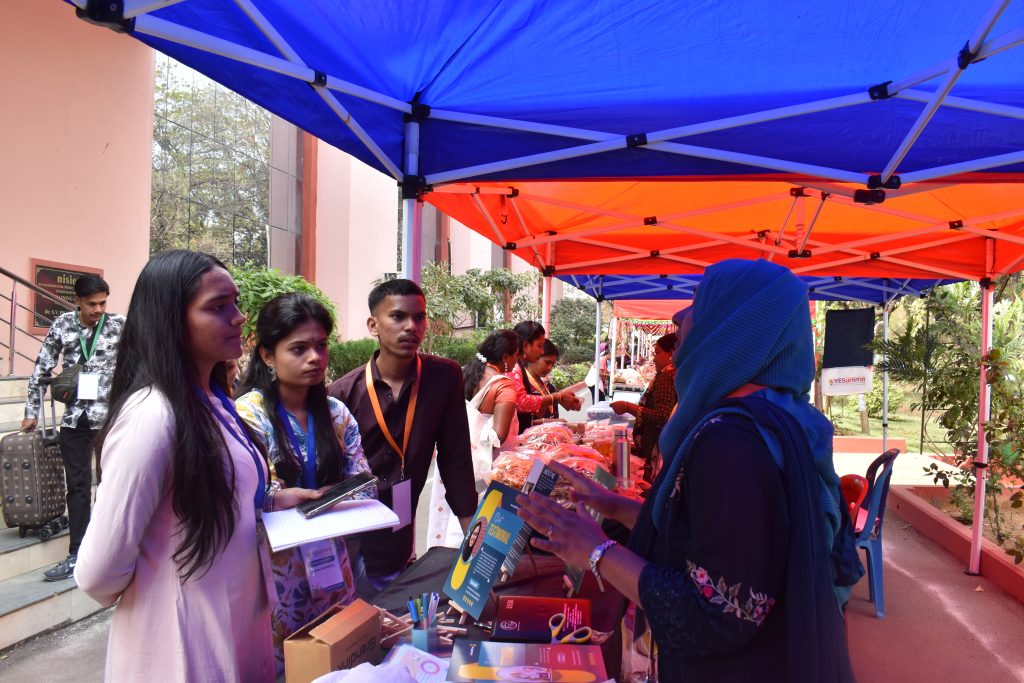
At one stall, a woman explained how sourcing was organised. “We don’t buy from outside unless we have to,” she said, almost casually. “The women in nearby hamlets collect what we need. Everyone knows what quality is required.” There was no romanticism in her tone. Just clarity.
What struck me most was the “confidence about their products,” and more importantly, the “empowered language as an entrepreneur.” At another stall, when I asked about pricing, the response was immediate. “This is not expensive,” one of them told me, smiling. “This is the real cost. Cheap products hide someone else’s loss.” It stayed with me long after I moved on.
Again and again, a realisation surfaced. “I feel it is the denial of opportunities” that had kept them out of markets for so long, not the absence of skill or innovation. One woman put it plainly. “We were always producing,” she said. “But no one was calling it business.”
The products carried stories of ethical supply chains and responsible business practices, but what stayed with me was something less visible. A quiet assertion of dignity. An ease with ownership. A refusal, subtle yet firm, to be framed as beneficiaries. When I asked a group how climate change had affected their work, one of them responded without hesitation. “We have always adapted,” she said. “The climate is changing faster now, but adaptation is not new to us.”
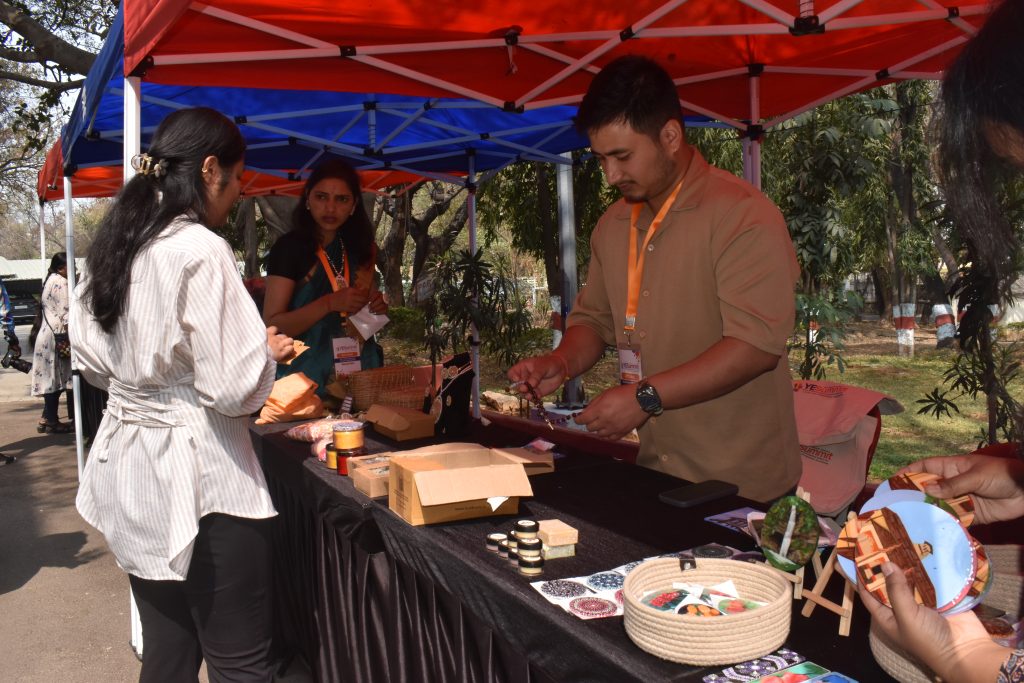
Walking from stall to stall, I could sense what I had earlier named only instinctively. “Intersectional economics,” unfolding through practices that were clearly “climate adaptive,” grounded in “ethical supply chains,” and shaped by an understanding of “responsible business” that did not need external validation. As one participant from a hill region told me, “If we damage the land, we damage ourselves. So we engage in business that conserve our ecology, land and habitation.”
By the time I reached the last stall, something had shifted. This was not an exhibition I was merely observing. It was an alternative economic imagination being lived out in real time. One where women from the margins were not waiting to be included, but were already building, trading, and leading on their own terms.
I walked out with fewer answers than I came in with, and that felt right. Some spaces are not meant to explain themselves fully. They exist to quietly unsettle what we think we know about markets, power, and who gets to be called an entrepreneur.
