
By Suryakant Chavan, Watershed Expert, Sangola
Diksal village in the Sangola block of Solapur district is located in one of the most drought-prone regions of Maharashtra. The area receives low and highly unpredictable rainfall, making agriculture extremely uncertain. Most farmers depend entirely on the monsoon for cultivation and grow crops such as jowar, bajra, maize, and fodder, which are highly vulnerable to moisture stress.
Challenges Faced by Farmers
In Diksal village, five farmers were almost completely dependent on rainfall for their farming. Even short dry spells during the monsoon caused severe crop stress. Groundwater levels had fallen sharply, leading to wells drying up frequently. Due to the absence of water storage facilities, large portions of agricultural land remained uncultivated during the Rabi and summer seasons.
Water scarcity also had a serious impact on livestock. Farmers struggled to arrange drinking water and fodder for their animals, which increased household expenses. Repeated crop losses and unstable income created mental stress among families. With limited livelihood options in the village, many youths were forced to migrate to nearby towns for 3–5 months every year in search of daily wage work. Although this migration was seasonal, it exposed families to insecure livelihoods and made them highly vulnerable to climate variability.
To address these challenges, there was a clear need to reduce farmers’ dependence on unpredictable monsoon rainfall, minimise crop losses, improve water availability, and strengthen rural livelihoods. Under the Comprehensive Village Development Programme, CYDA facilitated the construction of farm ponds in Diksal village with support from SBI Mutual Fund.
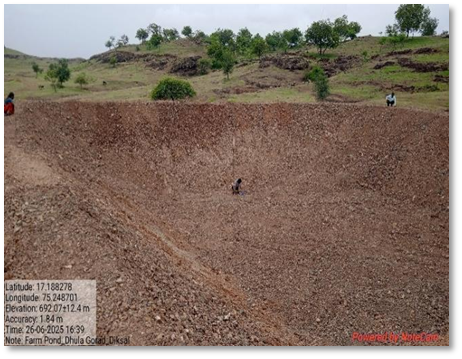
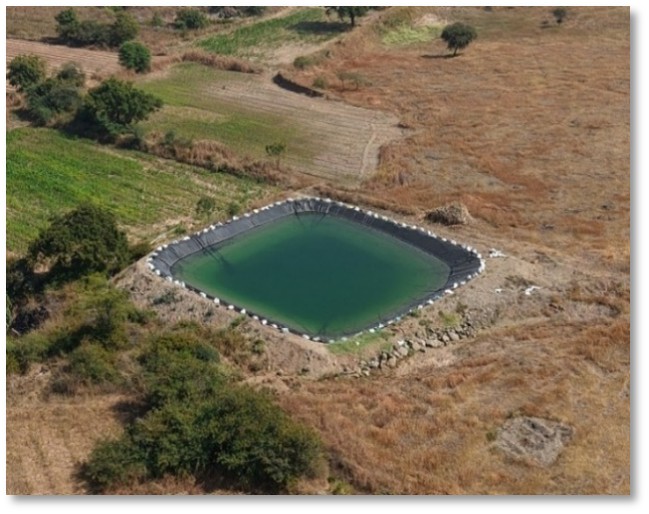
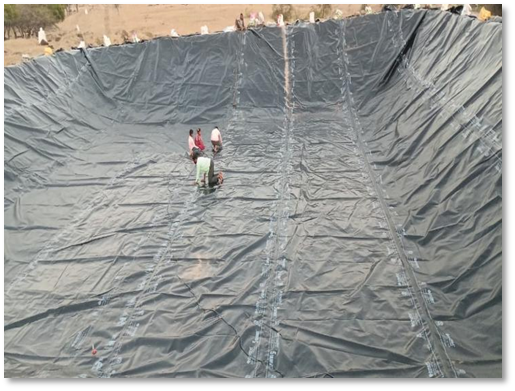
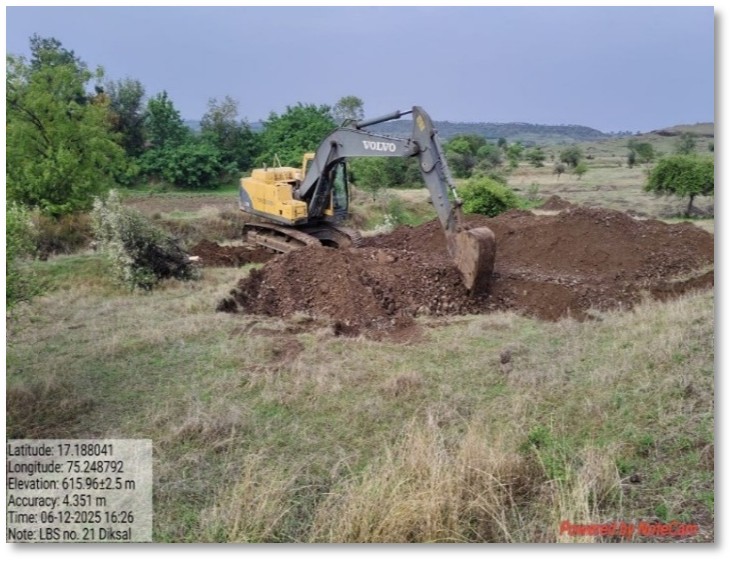
The initiative followed a participatory approach. Village-level consultations and meetings with the Village Development Committee were conducted to explain the objectives, benefits, and maintenance responsibilities. Five interested farmers provided their consent, and farm ponds were constructed on their own agricultural land.
Each farm pond was constructed using a standard trapezoidal design and lined with a 700-micron HDPE liner to prevent water seepage. The ponds were built close to cropped fields, allowing easy access to water for protective irrigation and livestock use. All five ponds were completed within a single season and are now actively harvesting rainwater.
Together, the five farm ponds have created a total water storage capacity of 71.26 lakh litres, with an average of 14.25 lakh litres per pond. This has significantly improved on-farm water availability, reduced dependence on erratic rainfall, and ensured a reliable source of drinking water for livestock.
Impact on Livelihood Security and Migration
The availability of stored rainwater has enabled farmers to protect their crops during dry spells and make better use of their agricultural land. Improved water access for livestock has reduced daily hardships and lowered household expenses. With more stable agricultural production and income, families are now less dependent on short-term wage labour. One farmer mentioned that, “Now, we have water available when rainfall is irregular. It has reduced stress on our farming and livestock.”
Most importantly, the intervention has reduced seasonal migration from the village. Youth who earlier migrated to nearby towns for 3–5 months in search of work are now able to stay back and engage in farming and allied activities. This has helped families remain together, ensured continuity in children’s education, reduced mental stress, and improved overall well-being. One youth from the village, while praising the intervention, mentioned that, “We can stay in the village and plan our work better. Migration has reduced and our livelihood feels more secure as we no longer depend only on rainfall. Because water is now available for our animals and farming needs.
By strengthening water security at the farm level, this intervention has enhanced agricultural sustainability, reduced migration, and built long-term resilience against climate uncertainty. The initiative demonstrates a simple, cost-effective, and replicable model for rural development in drought-prone areas.
