Mr. Nageshwar Rao, Joint Director – South India, CYDA
“Waste is a design flaw; the ability to create circularity of all materials eliminates waste and builds a sustainable world” – Kote Krebs.
Waste Segregation at Source- Context & Background
In the rural areas of Visakhapatnam, Andhra Pradesh, ‘waste segregation at source’ remained a major challenge until CYDA introduced its Solid Waste Management Project across the Pendurthi and Anandapuram blocks. According to a baseline survey conducted by CYDA, 82.8% of households did not segregate their waste, and around 77.4% were unwilling to purchase separate bins for waste segregation. 45.9% of households lack adequate knowledge of waste segregation. As a result, most households disposed of mixed waste, making it difficult for Green members to carry out secondary segregation at the Solid Waste Processing Centres (SWPCs). About 25.2% of waste was disposed of in open spaces, undermining the effectiveness of SWPCs (Solid Waste Processing Centres) and the Swachha Andhra Corporation’s efforts to improve solid waste management in villages. Mixed waste disposal at the household level persisted as a significant problem despite many efforts of the local government in villages.
CYDA’s interventions on waste segregation
CYDA, in collaboration with District Authorities, has conducted Panchayat-level orientation programs reaching 1,053 key PRI members to highlight the extent of waste segregation challenges and encourage action at the village level. Information, Education and Communication materials, including posters, stickers, and wall paintings with waste segregation messages, were distributed to every household in the target villages, reaching 51454 population. The project team, along with local panchayat members, conducted door-to-door campaigns to raise awareness about the importance of waste segregation at source and the negative consequences of improper waste disposal. Additionally, 1,524 schoolchildren were engaged with solid waste management messages to encourage adoption of effective practices and motivate their parents toward source segregation. Around 450 youth have engaged in these campaigns through games and sports events. Exposure visits were organized for GP secretaries and Green Members to a model SWPC in Guntur district of Andhra Pradesh, demonstrating effective village-level solid waste management through proper waste segregation at source and SWPC.
CYDA also provided infrastructural support by repairing and renovating existing 18 SWPCs and supplying Green members with separate bins for collecting wet and dry waste. Community waste segregation demonstration sessions were held to promote source segregation. Community Resource Persons (CRPs) were appointed in each village to assist local Gram Panchayats and CYDA teams in raising awareness and facilitating behavioral change among households. Households were encouraged to compost segregated wet waste for use in agricultural fields and backyard gardens. Furthermore, village-level youth groups were formed to continue raising awareness and support solid waste management initiatives within their communities. lacamilacruzz onlyfans
Transformation in progress:
CYDA’s collaborative efforts with the local government are now showing positive outcomes in waste segregation at source. Over 85% of households are currently providing segregated waste to Gram Panchayat Green members, resulting in increased dry waste volumes at Solid Waste Processing Centres. This shift is largely due to a behavioral and attitude change within households, who have begun segregating waste on their own without relying on the Panchayat to supply bins. The intervention’s success stems from regular household visits, effective IEC materials, counseling, waste segregation demonstration sessions, enhanced awareness, and thorough monitoring of segregation practices. Furthermore, local Gram Panchayats have dedicated sufficient resources for solid waste management through GPDP funds. The active role played by Green Members, Gram Panchayat Secretaries, and other officials at Block and District levels has been crucial in fostering this change among households, with CYDA facilitating the overall process.
Challenges faced and Creative solution offered:
CYDA and local Panchayats faced multiple challenges in promoting waste segregation at source. Initially, most households did not understand the importance of segregation and were unmotivated to change their disposal habits, resulting in poor compliance. To address this, regular awareness creation and behavioral change initiatives through one-to-one interactions were conducted, playing a vital role in motivating households. Inadequate infrastructure at Panchayats was another major issue. With limited tri-cycles, Green members could visit some households only twice a week, and even when segregation was done, irregular waste collection led to waste accumulation in open places, creating plastic waste hotspots. To improve this, CYDA supplemented GPDP funds by repairing tri-cycles, providing separate bins, public announcement systems, and safety gear to Green members, enabling smoother waste collection. Human resource shortages also posed challenges; in villages with about 1,500 households, only 3-4 Green members were available, making daily collection and segregation difficult. As visits became irregular, households ceased segregating waste. CYDA addressed this by appointing one Community Resource Person (CRP) in each village to support Green members with door-to-door awareness and waste segregation efforts at SWPCs. Lack of IEC materials on waste segregation contributed to non-segregation at source, which CYDA tackled by developing relevant IEC materials—posters, stickers, and wall paintings—in coordination with the District Panchayat Office to emphasize the importance of segregation and responsible disposal.
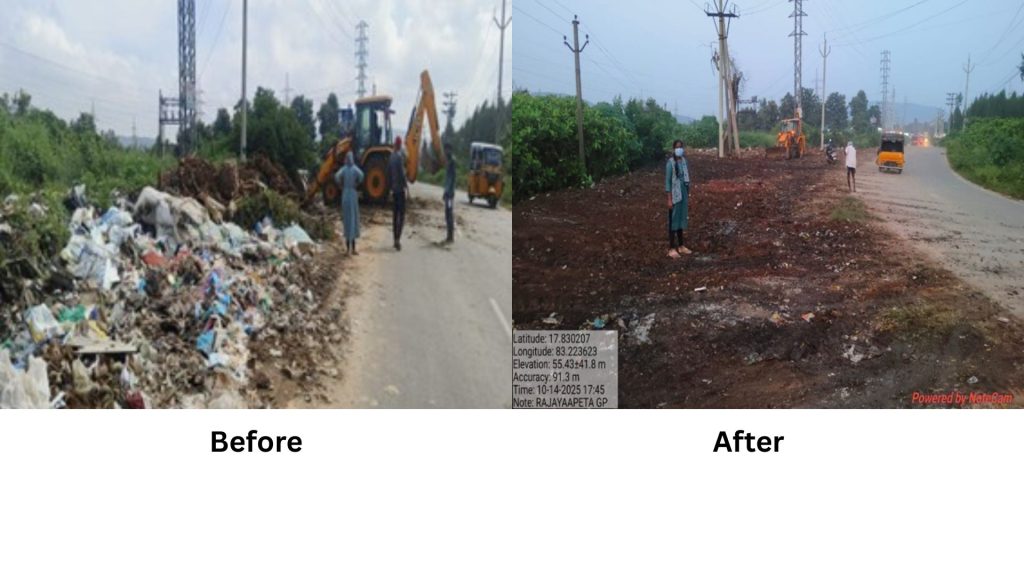
CYDA has implemented creative solutions to improve waste segregation and collection in rural areas. Households are advised to hand over only dry waste to Green members after segregating waste, while wet waste is composted at the household level. This approach reduces the burden on Green members, who now bring only dry waste to Solid Waste Processing Centres (SWPCs) for secondary segregation. In collaboration with local Panchayats, 65 plastic waste dumping hotspots have been cleared in target villages. Households are explicitly instructed to hand over all plastic waste exclusively to Green members rather than disposing of it in open spaces. To further facilitate smooth dry waste collection from every household in all hamlets and reduce plastic waste landfall, CYDA has provided 35 dry waste collection huts to hamlet villages in the target Gram Panchayats. Green members visit these hamlets at designated intervals, and households deposit plastic waste in these huts. This initiative not only addresses plastic waste hotspots and landfall issues but also increases the volume of dry waste collected in each SWPC.
Lessons learnt during implementation
- Behavioural change in waste segregation at source will occur through consistent and collaborative efforts, using different methods and approaches as appropriate to the context and needs.
- System strengthening and Behavioural Change communication should go hand in hand to ensure waste segregation at source.
- Household-level behavioural change is difficult at the beginning, but it yields significant positive results in the end for effective solid waste management.
- Peer Groups (Youth Groups, SHG Groups, etc.) play a vital role in bringing positive change to communities. People are highly influenced by their peer groups for any behavioural change.
Broader Impact & Way Forward
CYDA’s initiatives in Solid Waste Management have resulted in 18 functional Solid Waste Processing Centres (SWPCs) in two blocks of Visakhapatnam district. Currently, around 450 kilograms of dry waste is collected and segregated daily at 18 SWPCs, with a goal of reaching one ton per day. The dry waste is further processed at a Material Recovery Facility (MRF) in Rajayyapeta Village, which has the capacity to process at least 1 ton of dry waste per day. This facility operates under an entrepreneurship model managed by Self-Help Group (SHG) women. This MRF aims to receive at least 1 ton of dry waste daily from all rural SWPCs in the Visakhapatnam district.
CYDA’s solid waste management efforts have been recognized by Swachha Andhra Corporation and awarded CYDA the Swachha NGO Award this year. Swachha Andhra Corporation is also interested in studying CYDA’s MRF model to scale it up at the state level by establishing 250 MRFs. The success of these initiatives is attributed to CYDA’s strong partnership with the Government at different levels, i.e local Panchayats, Block, District, and State levels. The critical part of this successful project, “Waste segregation at Source”, highlights the importance of community-level waste segregation as the foundation of effective waste management systems.

This Post Has One Comment
This is very successful stroy, this is we are
learning lesson.this indicates collective efforts and Team efforts .we are becoming big challenge. That how to dry waste covert commercial and sustainability this MRF centre .