
(This article is based on a study conducted by Dr Kuldeepsingh Rajput and Dr Nitin Jadhav)
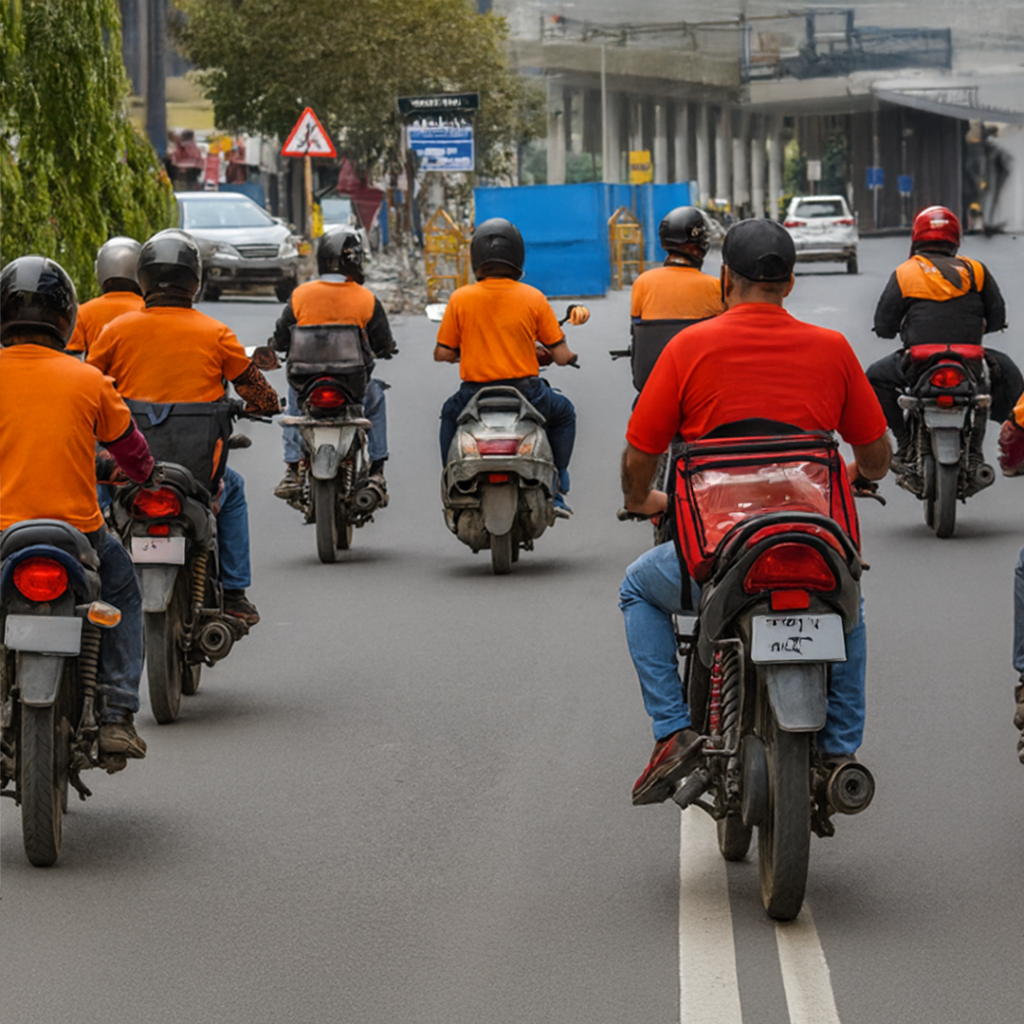
Have you heard of gig platform workers? Perhaps not by that name. But if you have ever ordered food from Zomato, groceries from Blinkit, or a product from Amazon, then you already know them. The person who delivers your order to your doorstep, often navigating traffic, weather, and strict deadlines, is a gig worker.
Gig workers have become an essential part of our daily lives. They ensure speed, convenience, and uninterrupted services in cities and towns. Yet, despite their growing presence, their work and struggles remain largely invisible. Behind every quick delivery lie long working hours, income uncertainty, lack of job security, and limited access to social protection.
To understand why gig workers face such deep insecurity today, it is essential to examine how this form of work came into existence.
Emergence of the Gig Work Culture
In its early form, capitalism created a clear divide between those who owned wealth and those who depended on labour to survive. Economic power remained concentrated among a few, while large sections of society lived with insecurity, low wages, and poor working conditions. Gradually, socialism emerged as a response to these inequalities. It advocated fair wages, workers’ rights, collective bargaining, and a stronger role for the state in ensuring welfare. For a period, these ideas helped reduce extreme disparities and improve labour protections.
However, from the late twentieth century onwards, global economic thinking shifted with the rise of neoliberalism. Neoliberal policies promoted free markets, reduced government intervention, privatisation of public services, and an emphasis on individual responsibility. Welfare spending was cut, labour laws were relaxed, and flexibility in employment was prioritised. At the same time, globalisation connected economies across borders, allowing capital, technology, and services to move freely. Together, neoliberalism and globalisation reshaped economic systems by placing market efficiency and profit above social protection.
This shift directly led to the rise of the gig platform economy. Digital platforms such as Uber, Ola, Zomato, Swiggy, Urban Company, and Amazon Mechanical Turk operate on neoliberal principles, including flexible labour, limited regulation, and competition-driven efficiency. Workers are classified as independent contractors rather than employees. This allows companies to avoid providing minimum wages, job security, and social protection.
Globalisation enables these platforms to expand rapidly and standardise operations across regions. Technology becomes a tool through which labour is monitored, controlled, and easily replaced. Risks are transferred from companies to workers, while profits are maximised by keeping labour costs low. The gig economy, therefore, is not accidental. It is a direct outcome of long-term neoliberal restructuring, where old inequalities reappear in digital form.
Technological Convenience and the Invisibility of Gig Workers
Advances in technology and internet access have made daily services highly convenient for consumers. Food, groceries, medicines, and parcels can now be delivered within minutes. This ease creates the impression that technology alone drives these services. In reality, every order depends on the physical labour of gig workers who pick, pack, ride, and deliver under constant time pressure.
While gig workers are briefly visible at the point of delivery, their labour remains socially invisible. Consumers often celebrate speed and convenience without recognising the human effort behind it. Gig workers face unsafe roads, accidents, long working hours, lack of rest, and algorithm-based penalties for delays, many of which are beyond their control. The comfort of the digital economy is built on their labour, yet they receive little recognition, respect, or fair compensation. This everyday invisibility is also reflected at the policy level, where recognition has yet to translate into meaningful protection.
Policy Recognition Without Real Labour Protection
India’s gig workforce has grown rapidly, from 7.7 million workers in 2020–21 to nearly 12 million in 2024–25. It now accounts for over 2 per cent of the national workforce. While recent policy announcements, including those in the 2025 Union Budget, have acknowledged gig and platform workers and proposed welfare measures, this recognition remains limited.
Existing data systems, including the Periodic Labour Force Survey (PLFS), still fail to fully capture the reality of gig work. This includes part-time engagement, multi-platform work, home-based tasks, and algorithm-controlled labour. Without accurate classification and data, gig workers remain excluded from labour protections such as minimum wages, occupational safety standards, health insurance, social security, and collective bargaining rights.
Absence of Collective Organisation and Worker Voice
Historically, labour movements and trade unions played a key role in improving working conditions, securing fair wages, and protecting worker dignity. A collective organisation gave workers a shared voice and bargaining power. In contrast, gig workers remain fragmented and isolated.
Platform-based work is assigned individually through mobile applications, leaving no shared workplace or space for interaction. This structural isolation weakens collective action and makes it difficult for workers to negotiate with powerful companies. Without strong unions or representative bodies, gig workers struggle to challenge unfair algorithms, sudden pay cuts, or unsafe working conditions.
“Partners” Without Protection: The Reality Behind the Label
Gig companies often refer to workers as “partners,” suggesting equality and shared benefits. However, this language is misleading. True partnership involves shared decision-making and shared profits, neither of which gig workers experience.
By classifying workers as independent contractors, companies deny them fundamental employment rights, including minimum wages, paid leave, job security, accident insurance, and Social Security benefits. All risks, including fuel costs, vehicle maintenance, health expenses, penalties, and income fluctuations, are pushed onto workers. This allows companies to reduce responsibility while increasing profits.
Health Insurance as a Safety Net: Gaps Between Policy and Practice
Health insurance is often presented as a crucial safety net, especially for workers engaged in high-risk, unstable forms of employment such as gig work. While its importance is widely acknowledged, access and effectiveness remain significant challenges.
Many gig workers lack the documents required to enrol in insurance schemes, such as employment records, identity proofs, or address verification. In several cases, platform companies or contractors do not provide or verify employment-related documents, further limiting access.
Even when insurance is available, coverage is often inadequate. Many common illnesses, injuries, and work-related health conditions are excluded. This forces workers to rely on out-of-pocket expenses and deepens financial insecurity. Awareness of schemes such as the Employees’ State Insurance Corporation (ESIC) is also low, leading to underutilisation of existing protections.
Exclusion from Welfare Schemes Due to Lack of Documentation
Access to government welfare schemes remains a major challenge for gig workers due to the absence of formal documentation. Without employment contracts, wage slips, or employer certification, workers cannot complete the application process. In many cases, platform companies fail to issue or sign the required documents.
This exclusion is even more severe for migrant gig workers. Many lack local identity proofs or updated records, making access to state and central schemes nearly impossible. Their mobility, which is essential to urban economies, ironically becomes the reason for their exclusion from social protection.
The combined effect of poor documentation, limited employer accountability, and low awareness creates a cycle of vulnerability. Gig workers remain visible as service providers but invisible as rights-bearing workers.
Need of the Hour: A Fair and Inclusive Gig Economy
Gig workers are no longer on the margins of the economy. They are central to how cities function today. From delivering essentials to enabling on-demand services, their labour sustains the digital economy. Yet, their growing importance has not been matched with adequate protection, dignity, or security.
The rise of gig work is rooted in the economic shifts shaped by neoliberal policies and technological expansion. While these changes have increased efficiency and convenience, they have also transferred risk and insecurity onto workers. Policy recognition without enforceable rights has created an illusion of inclusion, leaving gig workers exposed to unstable incomes, unsafe conditions, and limited social security.
If gig work is to remain a permanent feature of the labour market, urgent reforms are needed. These must include accurate worker classification, simplified documentation, universal and portable social security, greater awareness of schemes like ESIC, and spaces for collective organisation. Most importantly, gig workers must be recognised not just as service providers or partners, but as workers with rights and dignity. A digital economy built on invisible labour cannot be sustainable. Ensuring fair conditions for gig workers is not only a matter of justice. It is essential for creating a humane and inclusive future of work.
