By Vikas Mhaske, Program Manager, CYDA
Across India, many schools face water shortages. This lack of water harms children’s health and affects their learning and growth. Studies and global monitoring reports indicate that inadequate water and sanitation in schools lead to lower attendance and poorer academic performance (World Health Organisation, 2024). Girls are especially affected. When schools lack access to water and private toilets, students often miss classes during their menstrual cycle or drop out early. UNICEF and WHO note that shortages of water and poor WASH (Water, Sanitation, and Hygiene) services reduce enrolment and attendance (UNICEF, 2024).
Recent surveys in Indian cities also reveal that many government schools have either a weak or unreliable water supply. Some schools must rely on tankers or temporary arrangements, which disrupt classes and pose a threat to student health (The Times of India, 2024). However, rainwater harvesting in school grounds can change this situation. Indian case studies show that rooftop harvesting raises groundwater levels and provides safe water for toilets, cleaning, and handwashing. Schools with harvesting systems report better water availability and reduced dependence on tankers (Centre for Science and Environment, 2024).
For years, schools in villages like Paithankheda, Pangara, Dagadkhan, and Shivani in Chhatrapati Sambhajinagar district struggled with irregular and insufficient water supply. During the summer months, groundwater levels dropped sharply and schools were forced to rely on private tankers. Seasonal rainfall was uncertain making the situation worse. Recognizing this as a serious challenge Centre for Youth Development and Activities (CYDA), under its UTKARSH 2 – Green and Sustainable Schools project, supported by CIE India’s CSR initiative introduced rooftop rainwater harvesting systems (RRWHS) in these schools.
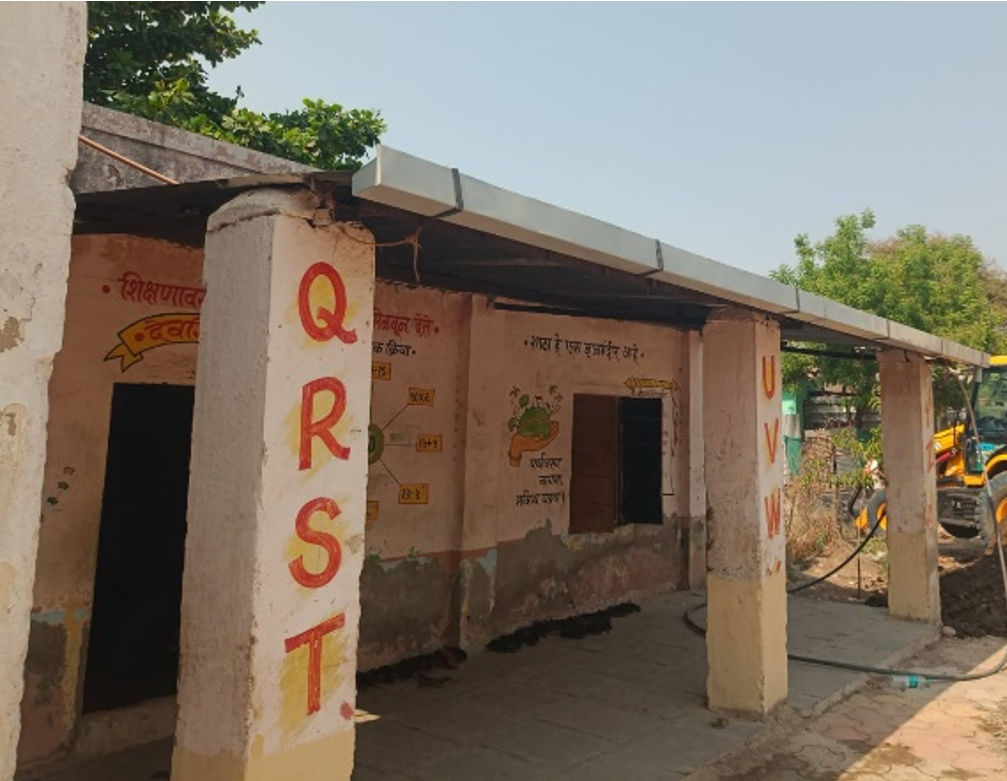
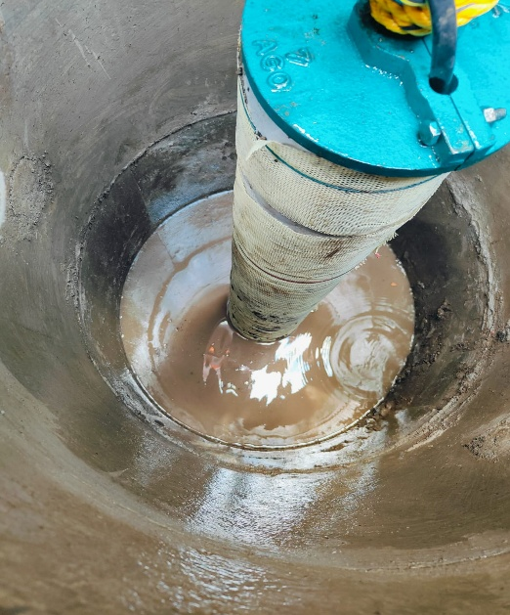
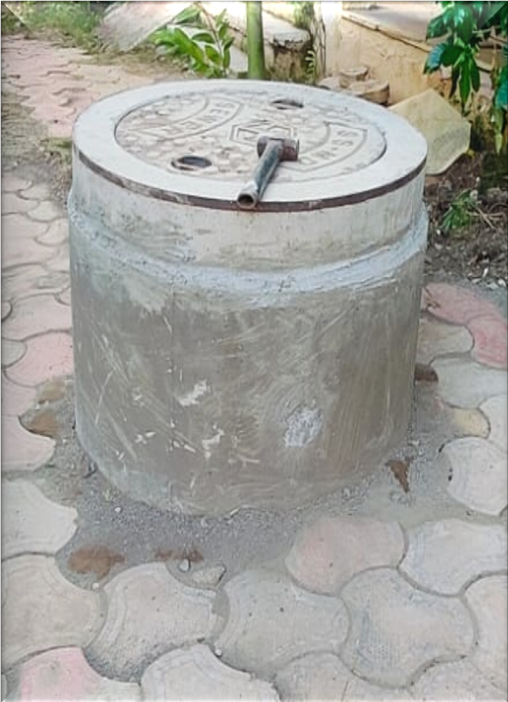
The goal was twofold. First is to ensure a dependable source of water for daily needs and to build awareness about water conservation among students, teachers, and the community. Each school’s rooftop was examined, cleaned, and equipped with gutters and downpipes to channel rainwater into a PVC conveyance system. The collected water was filtered through an automatic filter before being used for toilets, cleaning, and hand washing. Recharge pits about six feet deep were built and linked to 300-foot boreholes, allowing water to go underground and refill the underground water supply.
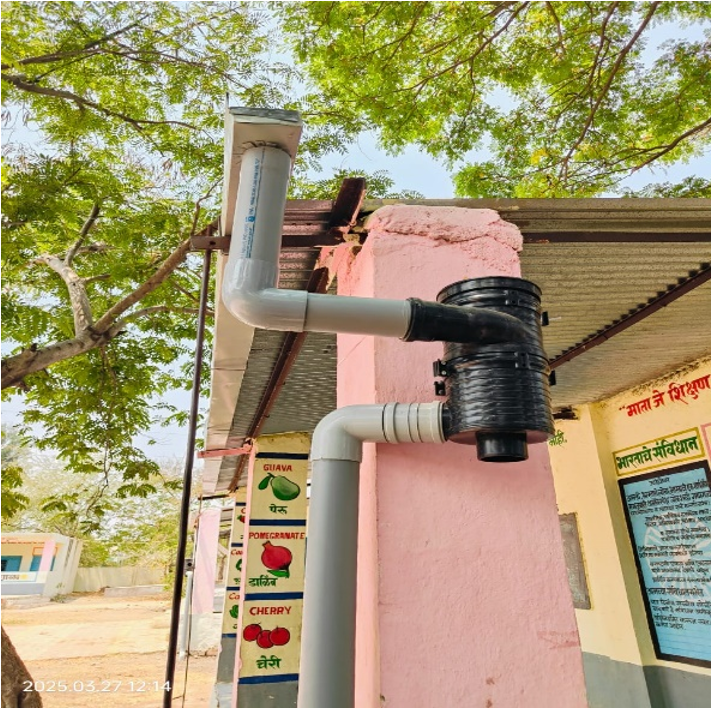
Teachers, students, and school committees were involved throughout the process, making it more than just a technical installation. It became a learning experience. Students observed how each drop of rain could be reused while teachers used the system as a live classroom model for environmental education. This participation created a strong sense of ownership and responsibility among everyone involved.
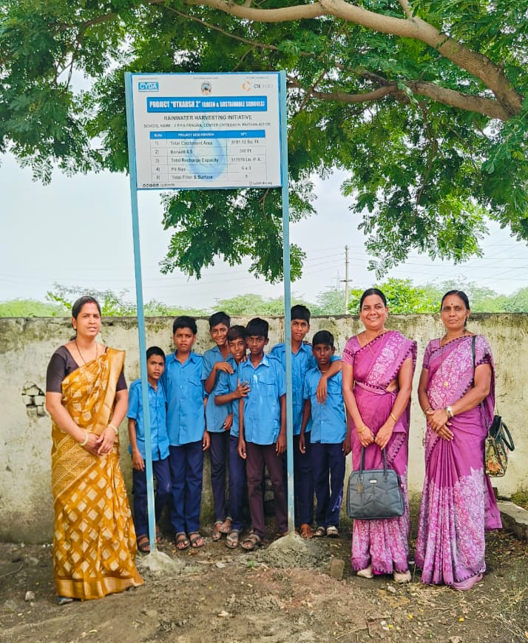
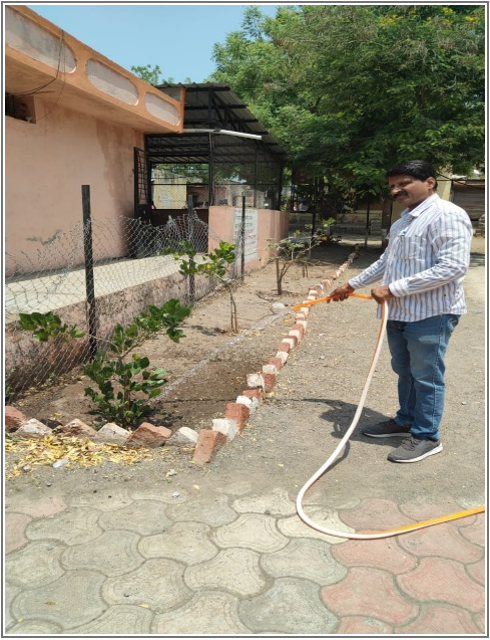
The impact has been impressive. Together, the four schools now harvest over 8,20,000 litres of rainwater annually. Paithankheda school collects around 19,676 litres, Pangara 3,17,970 litres, Dagadkhan 85,050 litres, and Shivani 2,20,960 litres. With this, the schools have reduced dependence on external water supply and improved the availability of water for sanitation, cleaning, and daily use. Recharge pits have also improved groundwater levels, benefiting nearby communities.
The project has also brought a significant change in attitude and learning. Students and teachers have become more aware and responsible about how they use water. The child cabinet in the school has been strengthened and trained to manage water effectively. The members of the cabinet conduct a daily check on water usage, ensure there is no wastage, and remind others about the importance of conserving water. Through these activities, students are learning that even small actions can make a big difference and they are growing into responsible caretakers of their environment.
This initiative, under the UTKARSH 2 project, has demonstrated how a simple, low-cost idea, such as rainwater harvesting, can transform school environments. It not only provides water security but also promotes sustainable thinking among the young generation. The project contributes directly to several Sustainable Development Goals (SDGs) – SDG 3 (Good Health and Well-being), SDG 4 (Quality Education), SDG 6 (Clean Water and Sanitation), SDG 13 (Climate Action), and SDG 17 (Partnerships for the Goals). By combining infrastructure, education, and community engagement, it ensures that every child learns in a healthy, water-secure environment while building the next generation’s commitment to sustainability.
References
- Centre for Science and Environment. (2024). The Shri Ram School’s Rainwater Harvesting System. Retrieved from https://www.cseindia.org/the-shri-ram-schools-rainwater-harvesting-system-746
- The Times of India. (2024, April 5). Power and water supply poor at many government schools: DoE survey. Retrieved from https://timesofindia.indiatimes.com
- UNICEF India. (2024). Clean India – Clean Schools. Retrieved from https://www.unicef.org/india/what-we-do/clean-india-clean-schools
World Health Organization. (2024). Progress on Drinking Water, Sanitation and Hygiene in Schools: Special Focus on Children with Disabilities. Geneva: WHO and UNICEF Joint Monitoring Programme. Retrieved from https://www.who.int
